
Is Creatine for Older Adults? A New Study Says Yes, With a Catch
Picture yourself carrying two heavy grocery bags up the porch steps, then scooping up a grandchild who comes running at you. Without thinking, you are relying on one of God’s most underrated gifts: your muscle. For many people over 45, that strength slowly slips away, and most of us don’t notice until a staircase feels steeper than it used to.
That is why a new study on creatine for older adults caught my eye. Most of my patients picture creatine as a powder in a bodybuilder’s gym bag. But researchers at Texas A&M University just tested it in ordinary, healthy men and women ages 45 to 65, and the results were encouraging.
As ScienceDaily reported, people taking creatine gained lean tissue and strength over 12 weeks, even in the group that did not join an exercise program. The bigger gains, however, came when creatine was paired with training and sensible eating. That “catch” is the most important part of the story, and it is where I want to spend our time together.
🔬 What the Study Found About Creatine for Older Adults
This was a human trial, not a study in mice or cells, and that matters. Researchers followed 64 healthy men and women ages 45 to 65 who completed the full 12 weeks. The trial was double-blind and placebo-controlled, meaning neither the volunteers nor the researchers knew who was getting creatine and who was getting a look-alike powder with nothing active in it.
Here is a detail many headlines skip. The volunteers chose for themselves whether to join an exercise and diet program or stay in a non-exercise group. Within each group, they were then randomly assigned to take 10 grams a day of creatine monohydrate or a placebo. The exercise group did resistance training plus aerobic exercise three times a week while eating a modest calorie deficit (slightly fewer calories than they burned).
The Results in Plain English
- Without an exercise program: people taking creatine gained about 2.4 pounds of lean tissue and improved their leg press and bench press strength.
- With exercise and a modest calorie deficit: people taking creatine gained nearly 3 pounds of lean tissue while losing fat. The placebo group on the very same program showed little change in lean tissue.
- Body fat: the creatine group in the exercise program had a larger drop in body fat percentage. The researchers say this is the first study to show that adding creatine to an exercise and diet weight-loss program reduces body fat percentage more than the program alone.
- Performance: with exercise, creatine added greater gains in leg press, bench press and time to exhaustion. It did not add anything to aerobic capacity (how well your heart and lungs deliver oxygen).
You can read the full Texas A&M release in the SciTechDaily reprint, and the original paper was published in the Journal of the International Society of Sports Nutrition.
An Honest Look at the Limits
I always tell my patients that one study is a signpost, not the final destination. This trial was small, with 64 people, and short, at only 12 weeks. Because volunteers picked their own exercise or non-exercise group, the comparison between those two groups was not randomized, so we should be careful comparing them head to head.
The researchers also looked at memory and thinking, but those measures were exploratory, so I would not draw conclusions about the brain from this study. The dose used, 10 grams a day, is higher than the amounts typically discussed for everyday use. The study was funded by the WoodNext Foundation through the Texas A&M Foundation, and lead investigator Dr. Richard Kreider has studied creatine for more than 30 years. That expertise is valuable, and it is also worth knowing as you weigh the findings.
Most importantly, this study does not show that creatine replaces exercise. The best results clearly came when creatine was combined with training.
💪 Why Muscle Matters So Much After 45
Muscle is far more than appearance. It is your engine for walking, climbing stairs, getting up off the floor, keeping your balance and living independently. It also plays a major role in your metabolism, because muscle is one of the main places your body uses the fuel you eat.
Research reviews report that we lose skeletal muscle at a rate of 3 to 8 percent per decade after age 40, and that this loss speeds up after 65, according to a scoping review on resistance training and sarcopenia risk. Sarcopenia is the medical term for age-related loss of muscle mass and strength. The same review notes that muscle matters for mobility, fall prevention and quality of life.
💡
Did You Know?
Creatine is not a lab invention. It is a naturally occurring compound found mainly in red meat and seafood, and about 95 percent of your body’s creatine is stored in your skeletal muscle, with small amounts in the brain and testes.
How Creatine Works in Your Muscles
According to the International Society of Sports Nutrition position stand, creatine is found mainly in red meat and seafood, and most of it lives in your muscles. There, it helps your muscle cells regenerate quick energy for short, powerful efforts, like pushing a heavy door, lifting a suitcase or finishing that last repetition at the gym.
More available energy can mean a little more work in each session, and over weeks, more work can help your body build and maintain muscle. That helps explain why the strongest results in this trial came when creatine met resistance training. Think of creatine as an assistant to the builder, not the builder itself.
Creatine and Sarcopenia: What We Can and Cannot Say
I know many readers will wonder about creatine and sarcopenia. This trial was done in healthy adults, not in people diagnosed with sarcopenia, so it does not tell us how creatine affects that condition. The NIH News in Health puts it well: experts stress resistance training and adequate protein as the core of managing age-related muscle loss, and some supplements show promise but need more research.
🛡️ Is Creatine Safe After 50?
This is the first question my patients ask, and it is a wise one. The good news is that creatine has been studied extensively. A 2025 safety analysis of 685 human clinical trials found that 13.7 percent of creatine groups reported side effects, compared with 13.2 percent of placebo groups. In other words, there was no meaningful difference. Note that this review was also led by Dr. Kreider’s group.
The Mayo Clinic says creatine is likely safe for many people at recommended doses for up to five years. It notes that weight gain is a possible side effect, and that studies in healthy people have not found kidney harm at recommended doses. Mayo also advises choosing third-party-tested products, meaning an independent lab has checked what is in the container.
A review of common safety concerns adds that digestive upset is dose-dependent (more likely with larger amounts), and that claims about dehydration and cramping are largely unsupported by controlled studies.
Who Should Talk With a Doctor First
- Anyone with kidney disease or a history of kidney problems, since evidence in this group is lacking. If kidney health is on your mind, my article on protecting your kidneys naturally is a helpful place to start.
- Anyone taking medications that affect the kidneys, or any prescription medication.
- Women who are pregnant or nursing.
- Anyone managing a diagnosed health condition.
I won’t recommend a specific dose here. The trial used 10 grams a day, which is on the higher end. If you and your physician decide creatine makes sense for you, follow the label and your doctor’s guidance. And don’t be alarmed if the scale ticks up slightly at first, since creatine can cause some water retention and weight gain, which is usually lean mass.
“Muscle is your savings account for the second half of life. Every squat, every set of stairs, every protein-rich meal is a deposit you will be grateful for at 75.”
Dr. Don Colbert, MD
🌿 How to Slow Muscle Loss as You Age: 6 Natural Foundations
Whether or not creatine is right for you, these foundations are where the real work happens. In my practice, I see people in their sixties and seventies transform their strength simply by being consistent with the basics.
🏋️
Resistance Training
NIH experts point to push-ups, squats and weights as key tools against age-related muscle loss. The trial participants trained three times a week. Start with what you can do safely and build gradually.
🥚
Adequate Protein
Muscle is built from protein. Aim to include a quality source at each meal: eggs, fish, poultry, grass-fed meat, Greek yogurt or legumes.
🐟
Creatine-Rich Foods
Red meat and seafood are the main natural food sources of creatine. Wild salmon and grass-fed beef fit beautifully into a Mediterranean or keto-style plate.
🚶
Aerobic Movement
The trial’s exercise group did aerobic work too. Brisk walks, cycling, swimming or a fun game of pickleball all keep your heart and lungs strong.
🌙
Restful Sleep
Your body repairs and rebuilds while you rest. A consistent bedtime and a dark, cool room support the recovery your muscles need.
🩺
A Conversation With Your Doctor
If you are curious about creatine, ask your physician whether it fits your health, medications and goals, and choose a third-party-tested product.
If you enjoy movement that feels more like play than work, read my article on the health benefits of pickleball. And for building meals around whole foods that support both body and brain, my piece on the MIND diet and healthy aging offers a delicious framework.
🙏 Strength for a Lifetime of Service
Some people feel that caring about muscle in later life is vanity. I see it very differently. The apostle Paul wrote, “Or do you not know that your body is the temple of the Holy Spirit who is in you, whom you have from God, and you are not your own? For you were bought at a price; therefore glorify God in your body and in your spirit, which are God’s.” (1 Corinthians 6:19-20, NKJV)
Staying strong is part of good stewardship. It keeps you able to serve your family, help at church, travel on mission trips and play on the floor with your grandchildren.
✦ Dr. Colbert’s Faith Perspective
Renewed Strength, Day by Day
Aging well is not about chasing youth. It is about ongoing faithfulness: showing up for the people God has placed in your life with energy and joy. Your body is fearfully and wonderfully made, designed by the Creator to respond when you challenge it, nourish it and rest it.
When I lift weights or take a long walk, I often turn the time into prayer and gratitude. Physical strength and spiritual strength grow best together, and both come ultimately from Him.
“But those who wait on the LORD shall renew their strength; they shall mount up with wings like eagles, they shall run and not be weary, they shall walk and not faint.” (Isaiah 40:31, NKJV)
From Dr. Colbert’s Bookshelf
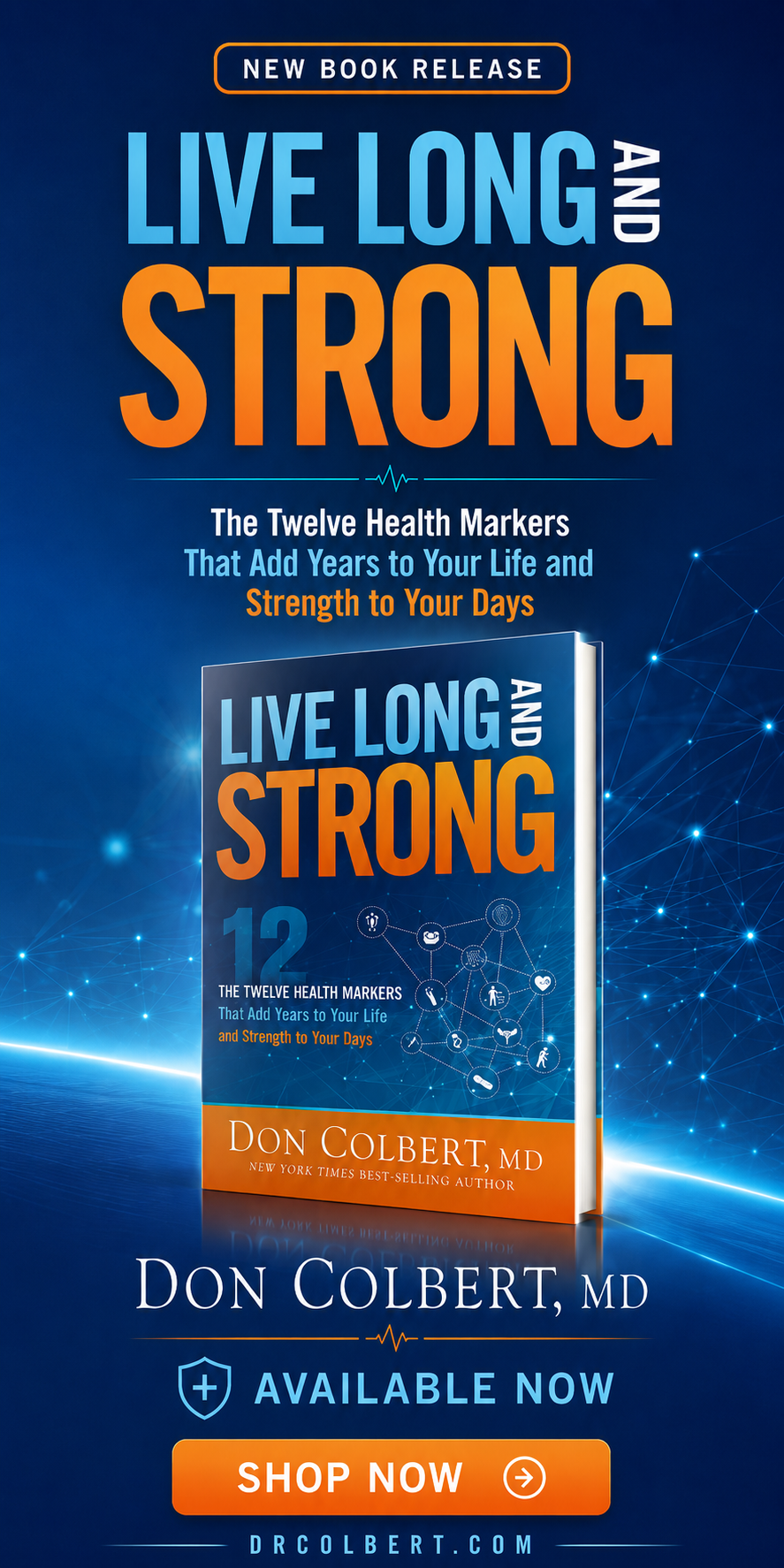
Live Long and Strong
In my newest book, I walk you through the twelve health markers that add years to your life and strength to your days. If this study has you thinking about muscle, mobility and independence, you will find a clear, faith-filled roadmap for measuring what matters and building a stronger second half of life.
📋 Your Action Plan to Build Muscle After 45
Here is what I tell my patients who want to protect their strength for the decades ahead. Pick one or two steps to start this week, then add more as they become habits.
- Schedule strength training. Put two or three sessions on your calendar this week. Bodyweight squats, wall push-ups and resistance bands are a fine beginning.
- Add protein to breakfast. Many people eat most of their protein at dinner. Try eggs, Greek yogurt or smoked salmon in the morning.
- Enjoy creatine-rich whole foods. Include fish or quality red meat a few times a week as part of a Mediterranean-style plate.
- Keep moving between workouts. Walk after meals, take the stairs and add aerobic activity you enjoy.
- Eat sensibly, not severely. The trial used only a modest calorie deficit. Crash dieting can cost you muscle. If you want a structured, whole-food plan, the free 21-Day Keto Zone Challenge is a great place to start.
- Protect your sleep. Aim for a consistent bedtime so your muscles can recover.
- Talk with your doctor about creatine. Especially if you have kidney concerns, take medications or are pregnant. If you both agree it fits, choose a third-party-tested product and follow the label.
- Pray over your health. Thank God for the strength you have today and ask Him for wisdom and perseverance for tomorrow.
❓ Frequently Asked Questions
Is creatine good for older adults?
A new 12-week Texas A&M trial in healthy adults ages 45 to 65 found that creatine helped increase lean tissue and strength, with larger gains when combined with exercise. It was one small, short study, so more research is needed. Talk with your doctor about whether creatine fits your health situation.
Can creatine build muscle without exercise?
In this trial, people who did not join an exercise program and took creatine gained about 2.4 pounds of lean tissue and improved some strength measures. However, the stronger results came when creatine was paired with resistance and aerobic training. Exercise and protein remain the foundation.
Is creatine safe for your kidneys after 50?
The Mayo Clinic notes that studies in healthy people have not found kidney harm at recommended doses. Because evidence is lacking for people with existing kidney conditions, anyone with kidney disease or taking medications that affect the kidneys should talk with their physician first.
Does creatine cause weight gain?
It can. Mayo Clinic lists weight gain as a possible side effect, and creatine can cause some water retention. In studies like this one, much of the gain is lean tissue rather than fat.
What foods contain creatine naturally?
Creatine is found mainly in red meat and seafood. Your body also stores about 95 percent of its creatine in skeletal muscle, which is why it is so closely linked to strength and muscle energy.
✨ The Final Word on Creatine and Strength After 45
This new study is a hopeful reminder that our bodies keep responding well past 45. Creatine may be a helpful assistant for some people, but it is not a shortcut. The real treasure is the daily faithfulness of lifting, walking, eating good protein, resting well and trusting God with the years ahead.
You were fearfully and wonderfully made, and your muscles were designed to answer the call when you challenge them. Start small this week, talk with your doctor about any supplement you are considering, and keep going. I believe your strongest, most purposeful years can still be in front of you.
Blessings and strength to you,
Dr. Don Colbert, MD
Sources
- Creatine may help build muscle even without exercise, researchers find, ScienceDaily (source: Texas A&M University), 2026
- Chun J, Liu Y, Kibler GL, et al., Kreider RB. Effects of creatine supplementation with and without exercise and diet intervention on body composition, cognitive function, and markers of health in middle-aged and older adults, Journal of the International Society of Sports Nutrition, 2026
- Researchers Find Creatine’s Benefits Extend Far Beyond the Gym, SciTechDaily / Texas A&M University, 2026
- Safety of creatine supplementation: analysis of the prevalence of reported side effects in clinical trials and adverse event reports, Journal of the International Society of Sports Nutrition, 2025
- Creatine, Mayo Clinic
- A short review of the most common safety concerns regarding creatine ingestion, PubMed Central (NIH/NLM)
- International Society of Sports Nutrition position stand: safety and efficacy of creatine supplementation in exercise, sport, and medicine, Journal of the International Society of Sports Nutrition / PubMed Central
- Effects of Resistance Training on Sarcopenia Risk Among Healthy Older Adults: A Scoping Review, PubMed Central (NIH/NLM)
- Slowing Sarcopenia, NIH News in Health, 2025