
Is Napping Bad for You? 3 Nap Habits a 19-Year Study Flagged

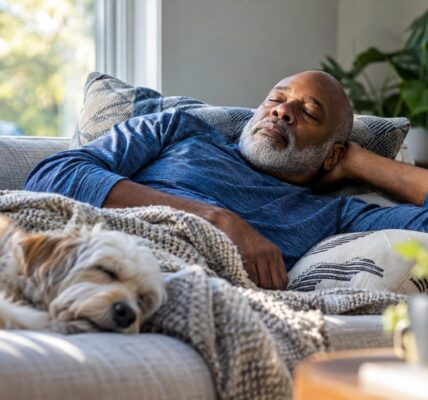
It is two o’clock on a Sunday afternoon. Church is over, lunch is finished, and the recliner is calling your name. For many of my patients, that short snooze is one of the sweetest moments of the week.
So when a headline links napping with death, I understand why people come into my office asking, “Dr. Colbert, is napping bad for you?” The honest answer is reassuring, but it comes with an important nuance that could matter for your health.
A new analysis, reported by ScienceDaily, comes from researchers at Mass General Brigham who used data from the Rush Memory and Aging Project. They followed more than 1,300 older adults for up to 19 years. People who napped longer, napped more often, or habitually napped in the morning had a higher risk of dying during the study. The researchers believe these nap patterns may be an early warning light for an underlying health issue. They do not see napping itself as the danger.
In this article I will walk you through what the study actually showed, why your nap habits might work like the dashboard light in your car, and how to nap the smart way so rest stays the gift God intended.
🔬 Is Napping Bad for You? What the 19-Year Study Found
The study was published in JAMA Network Open. It is a prospective observational cohort study. That means researchers measured people’s habits at the start and then watched what happened over time. They did not ask anyone to change how they napped.
The participants were 1,338 adults living in their own communities in northern Illinois. They were older: the average age was 81.4. About 76 percent were women and 93.3 percent were White. Follow-up lasted up to 19 years, with an average of 8.3 years, and 926 participants (69.2 percent) died during that time.
What makes this study stand out is how naps were measured. Most earlier research simply asked people how much they napped, and memory is not always reliable. Here, each person wore a wrist monitor, a watch-like device that tracks movement to estimate sleep, for an average of about 9.6 days. This method is called actigraphy. Any sleep between 9 am and 7 pm counted as a nap.
The Three Nap Patterns That Stood Out
After the researchers adjusted for many other factors, three patterns were linked to a higher risk of death from any cause:
- Longer naps. Each additional hour of daytime napping per day was linked to a 13 percent higher risk.
- More frequent naps. Each additional nap per day was linked to a 7 percent higher risk.
- Morning naps. People who habitually napped in the morning had a 30 percent higher risk than those who napped in the early afternoon. Compared with late-afternoon nappers, the difference was not statistically significant once all factors were considered.
To make the numbers easier to picture, the authors offered a comparison. One extra hour of napping a day carried about the same added risk as being 1.1 years older at the start of the study. Habitual morning napping matched being about 2.5 years older.
Two other findings deserve attention. First, the links held even after the researchers accounted for how long and how well people slept at night. The authors suggest napping may be an independent marker of risk, not just a way of catching up after a bad night. Second, and this is good news, irregular napping was not linked to higher risk. Taking a nap one day and skipping it the next did not show up as a problem.
Fast Fact
Napping was nearly universal in this group. A full 99 percent of participants napped at some point while wearing the monitor, and the average nap time was about 47 minutes a day. If you nap, you are in very good company.
What the Study Could Not Tell Us
I always want my readers to understand the limits of a study as clearly as its headlines. This research shows an association, not cause and effect. It does not prove that napping shortens life, and it never tested whether changing your nap habits would change your outcome.
The participants were mostly White, mostly women and quite elderly, so the results may not apply to adults in their 40s, 50s or 60s, to shift workers, or to cultures where an afternoon siesta is a normal part of life. A wrist monitor also cannot perfectly tell the difference between true sleep and simply sitting very still. Naps were measured only once, at the start, and the study did not look at causes of death.
One more honest detail: when the researchers looked only at people without memory or thinking problems, the morning nap link was no longer significant. The nap duration link became borderline, and nap frequency stayed only marginally significant. That tells me early brain changes may explain part of the picture. One study is never the final word, but this one gives us a useful question to ask about our own rest.
🧠 Why Long or Morning Naps May Be a Warning Light
Think about the check engine light in your car. The light itself is not what is wrong with your engine. It is a signal that something under the hood deserves a look. According to the lead author, excessive napping in older adults likely works the same way. It may point to an underlying disease, a chronic condition, a sleep disturbance, or a disruption of the body’s internal clock.
In their discussion, the authors suggest several possible connections. One is sleep apnea, a condition in which breathing repeatedly pauses during the night, leaving a person drowsy the next day. Another is circadian disruption. Your circadian rhythm is the built-in 24-hour clock that tells your body when to be alert and when to sleep. They also point to possible links with blood pressure and inflammation, the body’s alarm response that can do harm when it stays switched on for too long.
The morning finding makes good common sense to me. If you slept through the night and woke at 7, your body should not need to go back to sleep by 10. When that becomes a habit, it is worth asking why. In my practice, persistent tiredness has turned out to have many different explanations, which is why I wrote about it in detail in Why Am I Always Tired?
There is also reassuring context in the paper. The authors cite a dose-response meta-analysis (a study that pools many earlier studies and looks at how risk changes as the amount goes up). It found that naps under 1 hour showed no significant increase in mortality risk, while naps of 1 hour or more did. They also note that somewhere between 20 and 60 percent of older adults nap. A modest nap is simply a normal part of life for a great many people.
What About Napping and Dementia Risk?
A separate study from the Johns Hopkins Bloomberg School of Public Health adds another piece to the puzzle. Researchers followed nearly 1,000 Medicare beneficiaries aged 65 and older for up to 10 years.
Recent Research
In the Johns Hopkins study, napping most days or every day was linked to a 48 percent higher risk of dementia. Unintentional napping, dozing off when you did not plan to, was linked to a 39 percent higher risk.
This is also observational research. The Hopkins researchers describe the relationship as likely two-way: napping may contribute to risk, and early changes in the brain may also cause people to nap more. So napping should not be blamed as the cause of dementia. What stands out to me is the difference between a nap you choose and a nap that takes you. If you find yourself nodding off unexpectedly, mention it to your doctor.
Light and rhythm matter for the aging brain, too. If this subject interests you, you may enjoy my article on daylight and dementia risk, because morning sunlight is one of the simplest ways to help set your internal clock.
😴 How Long Should a Nap Be? 6 Smart Napping Habits
Here is the encouraging part. According to Mayo Clinic, naps can offer healthy adults real benefits: relaxation, less tiredness, more alertness, better mood, quicker reaction time and better memory. Mayo recommends keeping naps to 20 to 30 minutes and taking them in the early afternoon. It also notes that some research links naps longer than an hour a day with higher risks of high blood pressure, diabetes and heart disease.
So what is the best time to nap? The Mayo Clinic News Network describes the ideal nap as 15 to 30 minutes, taken around 2 or 3 p.m. Mayo Clinic Press adds that about 20 minutes is generally considered optimal because it keeps you in lighter sleep, so you wake refreshed instead of groggy. Here is how I put all of that into practice:
Keep It Short
Aim for 15 to 30 minutes, with about 20 minutes as a sweet spot. Set a gentle alarm so a quick rest does not turn into a two-hour sleep.
Time It for Early Afternoon
Around 2 or 3 p.m. fits the body’s natural afternoon dip. Naps late in the day can make it harder to fall asleep at night.
Plan It, Don’t Fall Into It
A chosen rest in a quiet spot is very different from dozing off in your chair without meaning to. Notice which kind you are having.
Protect Your Nighttime Sleep
Night is where deep restoration happens. If you struggle with insomnia or poor night sleep, Mayo suggests you may do better skipping naps altogether.
Get Morning Light and Movement
A morning walk outdoors helps set your internal clock and builds healthy alertness, which may ease the urge to doze before lunch.
Ask Why You Started
Mayo advises asking why you began napping. A new or growing need for daytime sleep is information worth sharing with your doctor.
Good nighttime sleep is the foundation that makes all of this work. Poor night sleep affects far more than your energy, as I explain in my article on sleep loss and brain health. In The Seven Pillars of Health, I describe sleep as one of the seven foundations our health rests on, alongside water, food, movement, detox, supplements and stress management. When one pillar is cracked, the others have to carry extra weight.
🩺 Excessive Daytime Sleepiness in Older Adults: When to Get Checked
The most valuable lesson of this study is not “stop napping.” It is “pay attention.” Here is what I tell my patients: a short, planned nap is usually fine, but certain patterns deserve a conversation with your doctor. Please make an appointment if you notice any of these:
- Heavy daytime sleepiness that lasts for weeks, even after a full night in bed
- Loud snoring, or a bed partner who notices you gasping or pausing your breathing at night
- Dozing off when you did not intend to, such as while reading, watching television or talking
- A sudden increase in how long or how often you nap
- A new habit of needing sleep in the morning, only a few hours after waking
There are many possible explanations, and only your physician can sort them out. Possibilities include sleep apnea, side effects from medications, thyroid or heart problems, depression, and early changes in memory and thinking. Many of these are very manageable once they are identified, which is exactly why noticing the signal early is a blessing.
If you take medications, please do not stop or change any of them on your own. Instead, bring a complete list to your doctor and ask whether any of them could be making you drowsy. And remember that some people are in a different season altogether: shift workers, new parents, people recovering from illness or surgery, and anyone whose doctor has advised extra rest. For them, more daytime sleep may be exactly what the body needs.
✦ Dr. Colbert’s Faith Perspective
Rest Is a Gift, Not Laziness
Some of my patients feel guilty about resting, as if it were a sign of weakness. Scripture paints a very different picture. When the disciples were worn out from ministry, Jesus said to them, “Come aside by yourselves to a deserted place and rest a while” (Mark 6:31, NKJV). Rest was His idea before it was ever ours.
Peaceful sleep at night is also a picture of trust. David wrote, “I will both lie down in peace, and sleep; For You alone, O LORD, make me dwell in safety” (Psalm 4:8, NKJV). When we lay down our worries in prayer, our bodies follow our hearts into rest.
At the same time, Paul reminds us that our bodies are temples of the Holy Spirit, entrusted to us by God (1 Corinthians 6:19 to 20). Good stewardship means receiving rest with gratitude and also listening, without fear, when the body tells us something has changed. Your body is fearfully and wonderfully made (Psalm 139:14), and even its signals are part of that wonderful design.
“For so He gives His beloved sleep.” (Psalm 127:2, NKJV)
“A short nap can be a gift. A growing need for sleep in the middle of the day is a message. Receive the gift with gratitude, and listen to the message without fear.”
Dr. Don Colbert, MD
From Dr. Colbert’s Bookshelf
The Seven Pillars of Health
If this study has you rethinking your energy, this book is the place to start. Sleep is one of the seven foundations I teach, together with water, food, movement, detox, supplements and stress management. You will learn how to protect your nighttime rest, build daily movement into your routine, calm stress, and look for the root of persistent tiredness rather than simply covering it up. It is a practical, faith-filled roadmap for anyone who wants to feel more alive in this season of life.
✅ Your Smart Napping Action Plan
- Keep a simple nap log for one week. Write down when you napped, how long, and whether it was planned or you dozed off unexpectedly. Patterns become clear quickly on paper.
- Shorten your naps to 15 to 30 minutes. Set a gentle alarm. About 20 minutes is ideal for most people because it keeps you in lighter sleep.
- Move your nap to the early afternoon. Around 2 or 3 p.m. works well. Avoid napping late in the afternoon, when it can steal from your night sleep.
- Guard your bedtime. Keep a regular wind-down routine, a cool and dark bedroom, and screens off well before lights out. Strong nights usually mean fewer heavy days.
- Start your day with sunlight and movement. A morning walk outdoors helps set your internal clock and builds natural alertness.
- Watch for the warning signs. Morning sleepiness, unplanned dozing, loud snoring or gasping, and a sudden increase in napping are all reasons to schedule a visit.
- Bring your nap log and medication list to your doctor. Ask plainly, “Why am I so sleepy?” Never stop or change a medication on your own.
- Rest with gratitude. Before you close your eyes, thank God for the gift of rest and hand Him whatever is weighing on your heart.
❓ Frequently Asked Questions
Is napping bad for you if you are over 50?
For most people, a short, planned nap is not harmful, and Mayo Clinic lists benefits such as better alertness, mood and memory. The new study linked longer, more frequent and morning naps with higher risk in adults whose average age was 81. Researchers see those patterns as a possible warning sign of an underlying issue, not as a cause of harm.
How long should a nap be?
Mayo Clinic sources recommend 15 to 30 minutes, with about 20 minutes often considered optimal. A short nap keeps you in lighter sleep, so you are less likely to wake up groggy. Longer naps can also interfere with your sleep that night.
What is the best time to nap?
The early afternoon, around 2 or 3 p.m., is generally best. In the new study, habitual morning nappers had a 30 percent higher mortality risk than early-afternoon nappers. Naps late in the afternoon can make it harder to fall asleep at bedtime.
Is it bad to nap in the morning?
An occasional morning nap after a rough night is not cause for alarm. However, a regular need to sleep a few hours after waking may be a signal worth discussing with your doctor. Notably, the morning nap link was no longer significant when researchers looked only at people without memory or thinking problems.
Does napping cause dementia?
There is no proof of that. A Johns Hopkins study linked napping most days with higher dementia risk, but the researchers describe the relationship as likely two-way: napping may play a role, and early brain changes may also cause more napping. If you notice yourself dozing off unexpectedly, talk with your doctor.
🙏 A Final Word on Rest
The headline about this study sounded frightening, but the message underneath is actually hopeful. Your nap habits can give you valuable information about your health, and information is something you can act on. A brief, planned rest in the early afternoon is still a wonderful gift. A growing need for daytime sleep is simply your body asking for a closer look.
So take your 20-minute rest without guilt. Protect your nights, step into the morning light, and keep moving. If something has changed, have that conversation with your doctor sooner rather than later. God designed your body to speak to you, and He gives His beloved sleep. Listen with peace, not fear.
Blessings to you and your family,
Dr. Don Colbert, MD
Sources
- A 19-year study reveals a troubling link between napping and death, ScienceDaily, 2026
- Gao C, Cai R, Zheng X, et al. Objectively Measured Daytime Napping Patterns and All-Cause Mortality in Older Adults, JAMA Network Open, 2026;9(4):e267938
- Excessive Napping May Be a Warning Sign of Underlying or Developing Health Conditions in Older Adults, Mass General Brigham, 2026
- Napping: Do’s and don’ts for healthy adults, Mayo Clinic
- Is there a wrong way, or time, to nap?, Mayo Clinic News Network
- The science of the short snooze and the benefits of a nap, Mayo Clinic Press
- Frequent, Unintended Napping Tied to Higher Dementia Risk, Johns Hopkins Bloomberg School of Public Health, 2026
Was this helpful?
Get Dr. Colbert's weekly health tips
Simple, faith-filled health tips in your inbox once a week. Plus a free gift: the 21-Day Keto Zone Challenge.
Unsubscribe anytime. We never share your email.
What stood out to you most, and have you tried any of this yourself?
Tell us on Facebook