Wall Squats Lowered Blood Pressure Nearly 14 Points in New Study

Picture this: no gym, no treadmill, no fancy equipment. Just you, a sturdy wall and a few quiet minutes in your living room. Could something that simple really make a difference for your heart?
A new randomized controlled trial suggests it might. Researchers studying wall squats blood pressure effects found that adults who held a series of wall squats at home three times a week saw their systolic blood pressure drop by an average of 13.73 points over 8 weeks. You can read the summary in this ScienceDaily story on the surprisingly simple exercise.
In my practice, I often hear patients say, “Dr. Colbert, I know I should exercise, but I just don’t have the time.” This study speaks directly to that concern. It also carries an important lesson about consistency, because when people stopped, the benefits faded. Let’s walk through what the researchers found, what it does and does not mean for you, and how to get started safely.
🔬 What the Wall Squats Blood Pressure Study Found
The study was published in BMJ Open Sport & Exercise Medicine by Harry Swift, Jonathan Wiles and colleagues. You can find the original research paper here. It was a human trial, which matters, because many headlines are based on animal or cell studies that may never apply to people.
The researchers enrolled 100 adults with an average age of 37.4. None of them were doing regular structured exercise. Their systolic blood pressure (the top number) ranged from 120 to 140 mmHg, which is normal to high normal. None had been diagnosed with hypertension, none took blood pressure medication, and all were nonsmokers without injury or illness.
Phase One: Building the Habit
Participants were randomly placed in a control group or one of four exercise groups. For the first 4 weeks, all four exercise groups followed the same home program: four wall squat holds per session, with 2 minutes of seated rest between each hold, three times a week.
After those 4 weeks, every exercise group had significantly lower systolic pressure, diastolic pressure (the bottom number) and mean arterial pressure than the control group. Mean arterial pressure is simply the average pressure in your arteries across a full heartbeat.
Phase Two: How Often Is Enough?
Here is where the study gets interesting. For the next 4 weeks, the exercise groups were split up. One group kept going three times a week, one dropped to twice a week, one dropped to once a week, and one stopped completely.
- Three times a week: systolic pressure fell an average of 13.73 mmHg from where it started.
- Twice a week: systolic pressure fell 6.95 mmHg.
- Once a week: systolic pressure fell 6.56 mmHg.
- Stopped: by week 8, readings were no longer statistically different from the control group.
The once and twice weekly groups kept meaningful improvements in systolic and mean arterial pressure compared with the control group. However, neither kept a statistically significant improvement in diastolic pressure. Only the three times a week group also held onto improvements in two deeper measures of cardiovascular health, which I will explain in a moment.
Fast Fact
Cutting back to once or twice a week kept roughly half of the systolic benefit, but only for the 4 weeks studied. Three sessions a week delivered the biggest and most complete gains.
An Honest Look at the Limitations
I always want you to know what a study can and cannot tell us. This trial lasted only 8 weeks, with just 4 weeks in the maintenance phase. The participants were young and healthy, with an average age of 37.4, and none had diagnosed high blood pressure.
That means we cannot assume the exact same results for adults over 40, over 60, or for anyone already managing hypertension. The authors themselves say longer follow-up is needed. One study is never the final word, but it does add to a growing body of research.
❤️ Why Isometric Exercise and Blood Pressure Are Linked
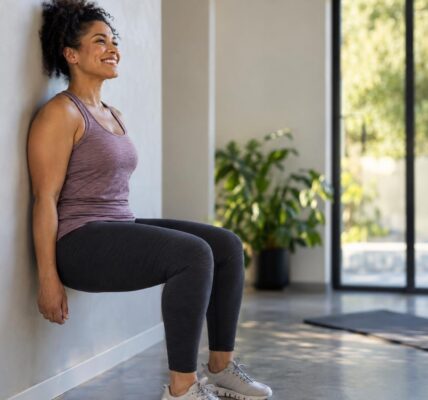
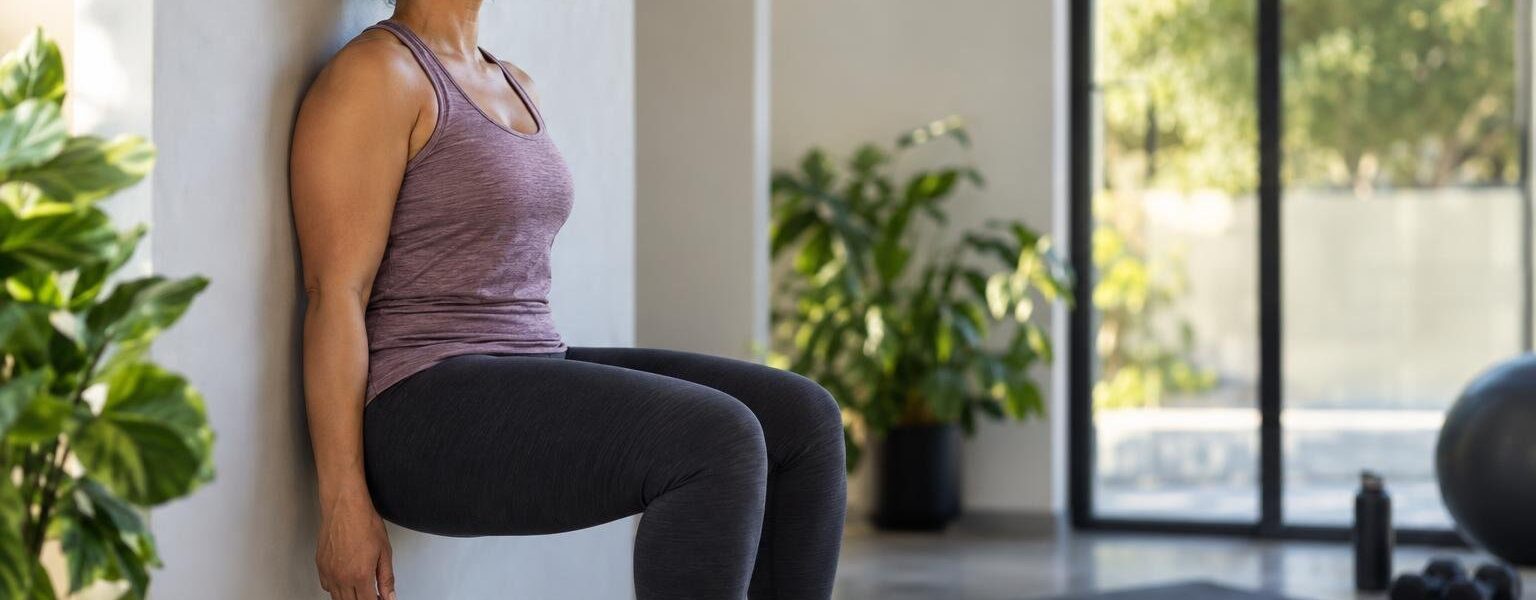
A wall squat is an isometric exercise. That simply means your muscles are working hard while holding still. Instead of moving up and down, you hold one position, like sitting in an invisible chair with your back against the wall.
In this study, the three times a week group kept improvements in total peripheral resistance. That term describes how much resistance your blood vessels put up as your heart pushes blood through them. Lower resistance generally means your heart does not have to push as hard.
That same group also kept improvements in heart rate variability, which is the natural, tiny variation in time between one heartbeat and the next. Healthy variability is generally a sign that your nervous system is balanced and adaptable. Taken together, these findings suggest the body was adapting in a deeper way, not just showing a temporary change on a cuff.
Recent Research
A large network meta-analysis in the British Journal of Sports Medicine, covering 270 randomized trials and 15,827 participants, concluded that various forms of exercise improve resting blood pressure, particularly isometric exercise.
This Study Builds on Earlier Work
This new trial did not appear out of nowhere. The Edwards network meta-analysis reviewed randomized trials published from 1990 to early 2023, and wall squats were among the isometric methods studied.
A separate meta-review published in PubMed Central looked at adults ranging from prehypertension to established hypertension. It reported that isometric resistance training was associated with average reductions of 7.31 mmHg systolic, 3.90 mmHg diastolic and 5.94 mmHg mean arterial pressure. Researchers are now registering new trials, such as this ClinicalTrials.gov study on wall squats in adults with hypertension, to keep exploring the question.
I find this encouraging. We were fearfully and wonderfully made, and our bodies respond to small, faithful efforts in remarkable ways. If you enjoyed learning how short bursts of effort add up, you may also like my article on strength training for seniors in just 4 minutes.
🌿 How to Support Healthy Blood Pressure Naturally
Wall squats are one tool, not the whole toolbox. When patients ask me how to lower blood pressure naturally, I remind them that the heart responds to the whole way we live. Here are the habits I encourage, alongside any plan your own doctor gives you.
Hold a Gentle Wall Squat
Back flat against the wall, feet a comfortable distance out, slide down only as far as feels safe. Breathe normally. Never hold your breath.
Aim for Three Days a Week
In this trial, three sessions a week gave the largest and most lasting gains. Pick three days and put them on your calendar.
Keep Moving Every Day
Walking, gardening and playing with grandchildren all count. Movement is even more enjoyable when you share it with someone you love.
Eat Close to the Garden
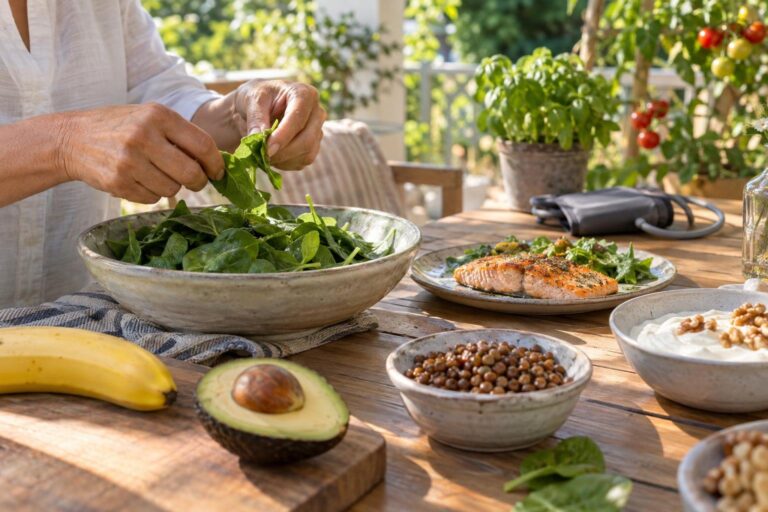
Fill your plate with vegetables, olive oil, nuts, fish and whole foods in the Mediterranean style, and limit heavily processed foods.
Protect Your Rest
A consistent bedtime, a dark room and a calm evening routine help your whole body recover and reset.
Practice Peace
Prayer, gratitude and Scripture meditation help quiet a stressed mind. A peaceful heart is a gift to a hard working heart.
If you would like another simple heart habit to pair with your wall squats, read what research says about tea and heart health. And if motivation is your challenge, consider my thoughts on exercising with your spouse, because accountability makes consistency much easier.
A Word About Safety
The ScienceDaily summary does not state how long each hold lasted in this study, so I am not going to invent a number for you. Start with a short, comfortable hold, rise up out of it gently, and sit down to rest between holds as the participants did.
Stop right away if you feel dizzy, lightheaded, short of breath or have any chest, knee, hip or back pain. If you have diagnosed high blood pressure, heart disease, balance problems or joint pain, please talk with your doctor before starting. Wall squats are not a replacement for any medication, and you should never stop or change a medication on your own.
✦ Dr. Colbert’s Faith Perspective
Strength Found in Stillness
There is something beautiful about an exercise that asks you to hold still. Our culture tells us we must always be rushing, striving and doing more. Yet a wall squat builds strength by staying steady, and that reminds me of the way God builds strength in our spirits.
The next time you hold a wall squat, try using those moments to pray or meditate on a verse. Let your body grow stronger while your soul grows quieter. Scripture reminds us that our bodies are not our own, and caring for them is a way of honoring the One who made us.
“Be still, and know that I am God; I will be exalted among the nations, I will be exalted in the earth!” (Psalm 46:10, NKJV)
“Or do you not know that your body is the temple of the Holy Spirit who is in you, whom you have from God, and you are not your own? For you were bought at a price; therefore glorify God in your body and in your spirit, which are God’s.” (1 Corinthians 6:19-20, NKJV)
“Your heart does not need a dramatic overhaul. It needs a faithful friend who shows up a few minutes at a time, three days a week, week after week.”
Dr. Don Colbert, MD
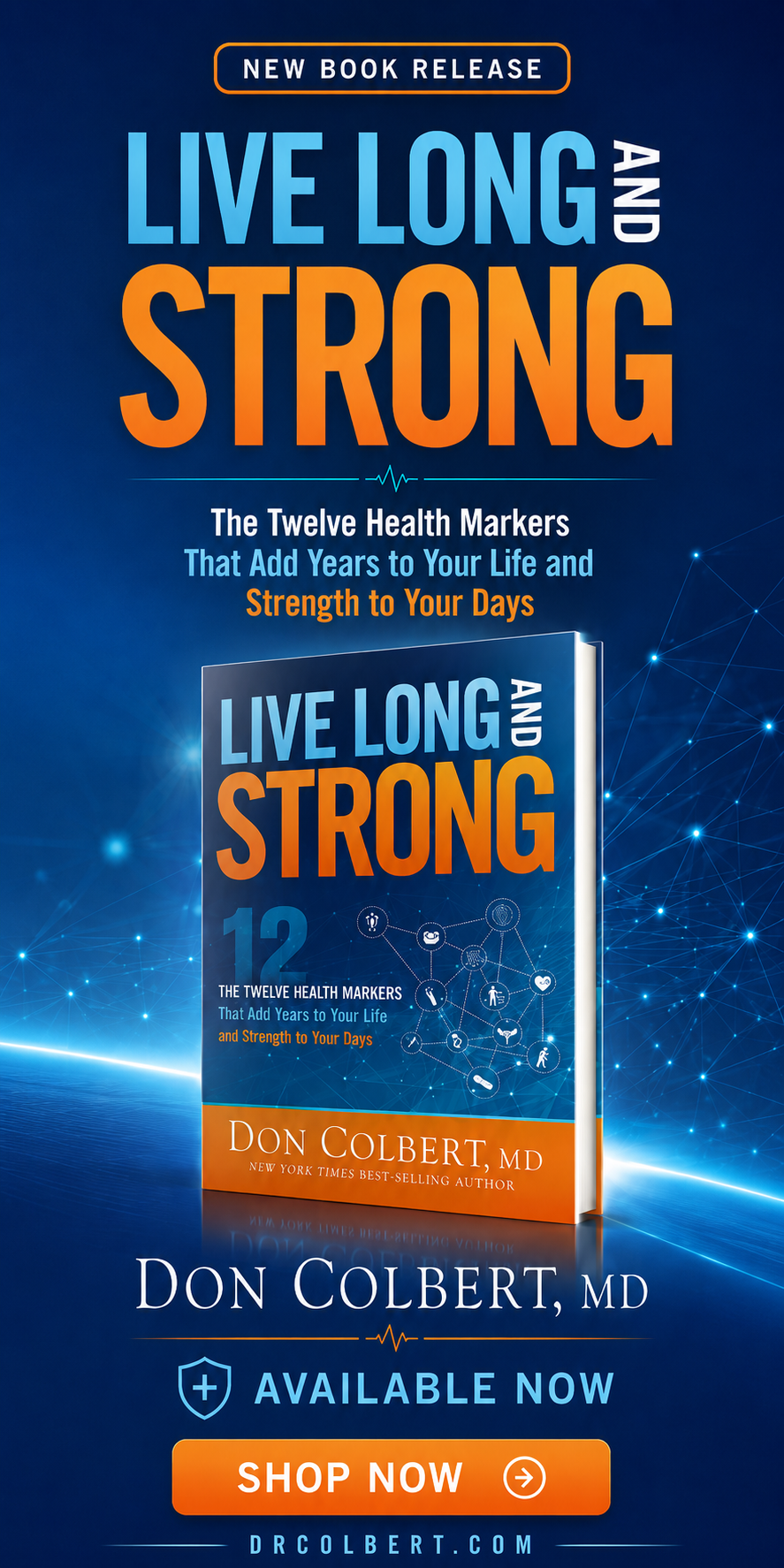
I have written extensively about the simple habits and health markers that help us stay vibrant as we age. Strength, steady movement and paying attention to the numbers your doctor tracks are central to that message, and that is a big part of why I wrote my newest book, Live Long and Strong.
From Dr. Colbert’s Bookshelf
Live Long and Strong
In my newest book, I walk you through twelve health markers that can add years to your life and strength to your days. You will learn practical ways to protect your muscle, stay active and approach aging with confidence and hope. If this study inspired you to build simple strength habits, this book will help you see the bigger picture of lifelong vitality.
✅ Your Wall Sit for Blood Pressure Action Plan
Here is exactly what I would tell a patient who wants to try this at home this week.
- Talk with your doctor first. This is especially important if you have high blood pressure, heart disease, balance concerns or knee, hip or back pain.
- Know your numbers. Ask your doctor about your current blood pressure and how often you should check it, so you can follow your progress together.
- Find a safe wall. Choose a smooth, sturdy wall with nonslip flooring and a chair right beside you for resting.
- Start gently. Slide down only to a depth that feels comfortable, keep your knees over your ankles, and hold for a short time you can manage with good form.
- Breathe the whole time. Holding your breath while straining is something to avoid. Breathe slowly and steadily, perhaps praying or reciting a verse.
- Follow the study’s structure. The participants did four holds per session with 2 minutes of seated rest between each one.
- Schedule three sessions a week. Monday, Wednesday and Friday mornings work well for many of my patients.
- Stay consistent. The group that stopped lost its gains within 4 weeks. Think of this as a lasting habit, not a short challenge.
- Build the whole foundation. Pair wall squats with daily walking, whole foods, good sleep and time in prayer.
❓ Frequently Asked Questions
Do wall squats really lower blood pressure?
In this 8-week randomized trial of 100 healthy adults, wall squats done three times a week were linked with an average 13.73 mmHg drop in systolic pressure. Larger reviews also suggest isometric exercise supports healthier resting blood pressure. However, this study involved younger adults without hypertension, so results may differ for you.
How many times a week should I do wall squats?
Three sessions a week gave the biggest and most complete benefits in this study. Once or twice a week kept some systolic improvement for 4 weeks, but diastolic gains were not maintained. Your doctor can help you decide what is right for your situation.
Can wall squats replace my blood pressure medication?
No. This study did not include anyone taking blood pressure medication, and you should never stop or change a medication without your physician. Think of exercise as a healthy habit that works alongside your doctor’s care.
Is a wall sit safe for people over 50?
Many people can do a gentle wall sit safely, but it depends on your joints, balance and heart health. Start with a shallow position, breathe normally and stop if you feel dizzy or have pain. Check with your doctor first if you have any health conditions.
🌅 The Final Word
I love studies like this because they remind us that good health is often found in simple, faithful steps. You do not need an hour on a treadmill to care for your heart. A sturdy wall, a few minutes and a willing spirit can be a wonderful place to begin.
Just remember the other lesson from this research: use it or lose it. The benefits came from showing up consistently, and they faded when people stopped. That is true of so much in life, including our walk with God. As Scripture encourages us, “And let us not grow weary while doing good, for in due season we shall reap if we do not lose heart” (Galatians 6:9, NKJV).
So find your wall, talk with your doctor, and take that first steady step this week. I am cheering you on.
Dr. Don Colbert, MD
Sources
- The surprisingly simple exercise that could lower your blood pressure, ScienceDaily (source: BMJ Group), 2026
- Swift HT, Pedlar C, Coleman DA, Buckley JP, Wiles JD. Isometric exercise training and blood pressure control: exploring the dose-response to training frequency in a randomised controlled trial, BMJ Open Sport & Exercise Medicine, 2026
- Edwards et al. Exercise training and resting blood pressure: a large-scale pairwise and network meta-analysis of randomised controlled trials, British Journal of Sports Medicine, 2023
- Efficacy and moderators of isometric resistance training on resting blood pressure among patients with pre- to established hypertension: a multilevel meta-review and regression analysis, PubMed Central (NIH/NLM)
- Effects of Isometric Wall Squat Training on Blood Pressure in Adults With Hypertension (NCT07868822), ClinicalTrials.gov, U.S. National Library of Medicine
Was this helpful?
Get Dr. Colbert's weekly health tips
Simple, faith-filled health tips in your inbox once a week. Plus a free gift: the 21-Day Keto Zone Challenge.
Unsubscribe anytime. We never share your email.
What stood out to you most, and have you tried any of this yourself?
Tell us on Facebook