Potassium and Blood Pressure: The Missing Half of the Salt Story

Picture the last time a doctor or nurse wrapped that cuff around your arm, read the numbers, and said, “You need to watch your salt.” Most of my patients over 40 have heard those words. Many of them have dutifully hidden the salt shaker, squinted at food labels, and wondered why their readings still are not where they want them to be.
Here is something encouraging. A new expert report on potassium and blood pressure says that the “cut the salt” message, while important, is only half the plan. The other half is not another restriction. It is an addition: more potassium from the real, God-given foods many of us are not eating enough of.
The report, written by physicians and nutrition experts and published in The American Journal of Clinical Nutrition, argues that raising potassium deserves equal emphasis with lowering sodium. As ScienceDaily reported in its story on the University of Vermont paper, the authors believe today’s sodium-only approach should be broadened.
In this article, I will walk you through what the report actually says, where the evidence is strong and where it is still mixed, which foods carry the most potassium, and the important safety cautions some readers must not skip.
🔬 What the New Potassium and Blood Pressure Report Found
First, let me be clear about what kind of paper this is, because honesty matters. This is not a new clinical trial. No volunteers were enrolled, and no one was randomly assigned to eat bananas or skip the salt. It is an expert evidence review, sometimes called a position report, written by a team that includes Naomi K. Fukagawa and Paul A. Welling.
The authors looked at the evidence behind current sodium and potassium recommendations. They examined practical ways people can cut sodium and raise potassium, the barriers that make that hard, and the gaps in research and public policy that still need attention.
According to the ScienceDaily coverage, here are the key points the experts make:
- Sodium reduction stays important. The report calls it “a foundational strategy.” Nobody is saying salt no longer matters.
- Potassium deserves equal attention. The authors argue that combining more potassium with less sodium may control blood pressure better than cutting sodium alone.
- Most of the world is falling short. They describe potassium intake as “far below optimal levels in both developed and developing nations,” while many people eat too much sodium.
- Food comes first. The sources named include fruits, vegetables, legumes and dairy, such as bananas, potatoes, beans, leafy greens and yogurt.
- Potassium is not right for everyone. People with kidney disease or those on certain medications may struggle to regulate potassium and need medical guidance.
The honest limitations
Because this is an expert review and opinion piece, it cannot prove cause and effect. It is a well-reasoned argument for a broader approach, not proof that potassium works as well as cutting salt. One report is never the final word.
The trial evidence on potassium by itself is also mixed. The NIH Office of Dietary Supplements notes that a Cochrane review of six high-quality trials found blood pressure drops with potassium supplements that were not statistically significant. A review by the Agency for Healthcare Research and Quality (AHRQ) also found that adding potassium did not lower blood pressure further once sodium had already been reduced.
For full transparency, ScienceDaily states that the report was supported by the IAFNS Sodium in Food and Health Implications Committee. I mention that simply so you have the whole picture. You may also have seen an earlier version of this news story in July 2026; the source behind both stories is this same journal report.
Fast Fact
According to Harvard’s Nutrition Source, Americans average about 3,300 mg of sodium a day but only about 2,900 mg of potassium. For most of us, the scale is tipped the wrong way.
⚖️ Why Sodium and Potassium Balance Matters
I like to tell my patients that sodium and potassium are partners, like two children on a seesaw. Your kidneys work around the clock to keep that seesaw balanced. When sodium piles up on one side and potassium is light on the other, the whole system is under strain.
That is why researchers increasingly look at the sodium-to-potassium ratio, not just sodium alone. A ratio simply compares the two numbers. A high ratio means lots of sodium and little potassium.
Harvard’s Nutrition Source describes a pooled analysis of 10,709 generally healthy adults from six cohort studies (studies that follow groups of people over time). Each 1,000 mg per day higher sodium, measured in urine, was linked to an 18 percent higher cardiovascular risk. Each 1,000 mg per day higher potassium was linked to an 18 percent lower risk. A higher sodium-to-potassium ratio was tied to higher risk.
Keep in mind that cohort studies show associations, not proof. Still, the pattern is striking, and it lines up with what the new report is saying.
The DASH clue
The DASH eating pattern (short for Dietary Approaches to Stop Hypertension) is rich in fruits, vegetables, beans and low-fat dairy, which makes it naturally high in potassium. According to the NIH, DASH lowers systolic pressure (the top number) by an average of 5.5 mmHg and diastolic pressure (the bottom number) by 3.0 mmHg.
To be fair, DASH also raises magnesium and calcium, so scientists cannot separate out potassium’s effect by itself. But it does show what happens when you fill your plate with the foods God designed: good things tend to come together.
This is also why I am such a fan of a Mediterranean style of eating. If you would like to see how that pattern supports the body at the cellular level, read my article on the Mediterranean diet and healthy aging.
📏 How Much Potassium Per Day Do You Need?
The NIH sets an Adequate Intake (the amount believed to meet the needs of nearly all healthy people) for adults 19 and older, including those over 51:
- Men: 3,400 mg per day
- Women: 2,600 mg per day
Now compare that with what Americans actually eat. National survey data from 2013 to 2014 show average intake from food of 3,016 mg for men and 2,320 mg for women. That shortfall is why the government lists potassium as a nutrient of public health concern. You may also see 4,700 mg on food labels; that is the FDA Daily Value used for labeling.
Here is the good news. In healthy people with normal kidney function, extra potassium from food is cleared in the urine, and no upper limit has been set for food sources. That is why a food-first approach is so appealing for most people.
Nutrition Spotlight
According to the NIH, most potassium supplements contain only about 99 mg or less per serving. One cup of cooked lentils has about 731 mg. When it comes to potassium, your grocery cart beats the pill bottle.
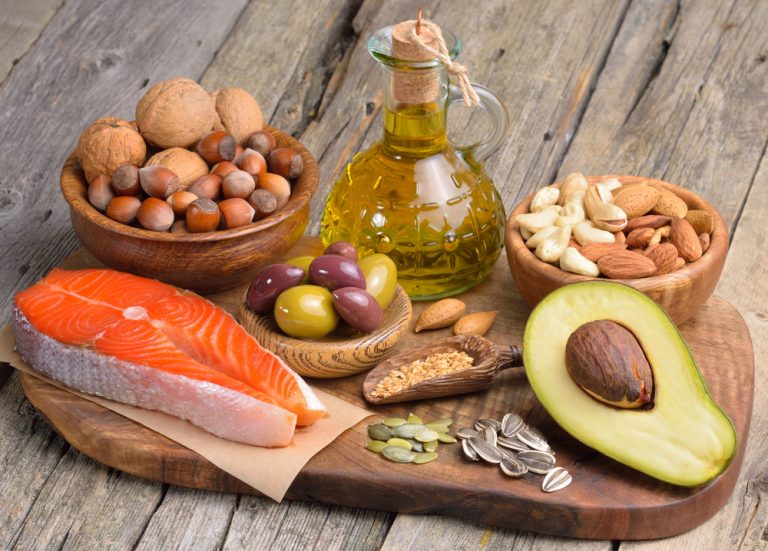
🥬 Potassium Rich Foods: 6 Simple Ways to Fill Your Plate
If you want to lower blood pressure naturally, the first and most important step is working with your doctor. Alongside that partnership, these whole foods are an easy, delicious place to start. The potassium amounts below come from the NIH fact sheet.
Lentils and Beans
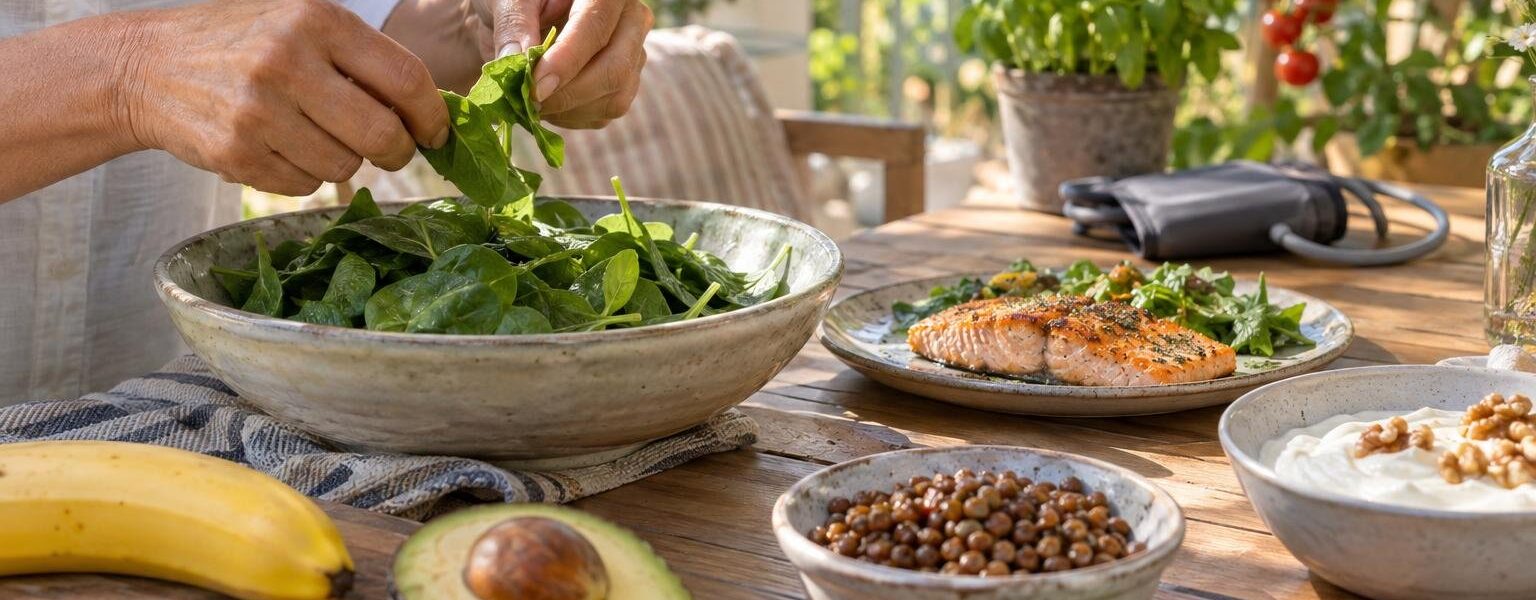
One cup of cooked lentils provides about 731 mg of potassium. Beans and legumes are named in the new report as key sources. Try them in soups, salads or a simple Mediterranean side dish.
Leafy Greens
Two cups of raw spinach give about 334 mg. Spinach and other leafy greens are keto friendly and easy to add to eggs, smoothies or a big lunch salad.
Wild Salmon
A 3 ounce serving of salmon has about 326 mg of potassium, plus the healthy fats I recommend so often. Season it with herbs and lemon instead of extra salt.
Avocados and Tomatoes
Harvard lists avocados, tomatoes, broccoli and winter squash among good potassium sources. Avocado is a favorite in my house because it fits both Mediterranean and keto eating.
Greek Yogurt
Six ounces of Greek yogurt offer about 240 mg. Choose plain, unsweetened yogurt and top it with nuts or berries for a satisfying breakfast.
Potatoes and Bananas
A medium baked potato has about 610 mg and a medium banana about 422 mg. They are starchier choices, so if you follow a keto lifestyle, lean on greens, avocado and salmon instead.
Don’t forget the other half: sodium
Remember, the report calls cutting sodium “foundational.” Potassium is added to that plan, not used as a replacement. Since about 75 percent of the sodium Americans eat comes from processed foods, the most powerful step is often not the salt shaker at all. It is the packaged snacks, deli meats, canned soups and restaurant meals.
When you cook more meals at home from whole ingredients, you naturally lower sodium and raise potassium at the same time. That is the beauty of real food: one choice does double duty.
If you enjoy a warm drink with your meals, you might also like my article on tea and heart health, another simple habit that fits a heart-friendly day.
⚠️ Who Should Be Careful With Potassium
This is the section I most want you to read carefully. Potassium from food is safe for most healthy people, but not for everyone.
The NIH explains that people with kidney disease, and people taking ACE inhibitors, ARBs (angiotensin receptor blockers) or potassium-sparing diuretics, can develop hyperkalemia even when their intake is below the Adequate Intake. Hyperkalemia means potassium in the blood climbs too high, and it can be dangerous.
Other medications, such as thiazide and loop diuretics, can have the opposite effect and lower potassium. That is exactly why any adjustment belongs in the hands of the doctor who prescribes your medications. Please do not stop, reduce or change any medication on your own.
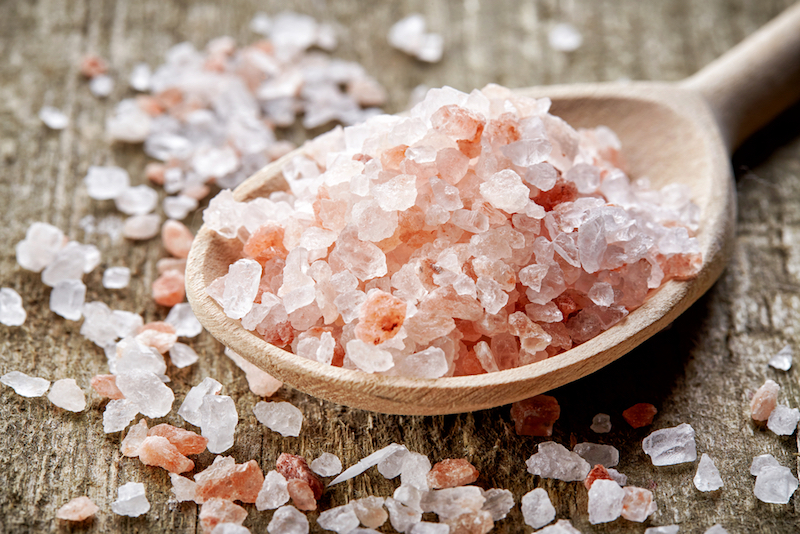
Salt substitutes deserve special mention. Many are made with potassium chloride and can contain roughly 440 to 2,800 mg of potassium per teaspoon. Harvard notes they can taste bitter when heated, and the new report mentions that too much potassium salt gives food a metallic taste. More importantly, if you have kidney concerns or take any of the medications above, check with your doctor before using a potassium salt substitute or any potassium supplement.
The National Heart, Lung, and Blood Institute recommends increasing potassium through potassium-rich food for adults with high blood pressure who are otherwise healthy. That phrase “otherwise healthy” matters. Your doctor can help you know where you stand.
✦ Dr. Colbert’s Faith Perspective
Salt of the Earth, Fruit of the Garden
It moves me that Jesus chose salt as a picture of His people. In Matthew 5:13 He said, “You are the salt of the earth.” Salt is precious, and a little goes a long way. It was never meant to be the whole meal. God built our bodies, and our lives, to work in balance.
Look at the very first food instruction in Scripture. Before there were any packaged foods, God pointed Adam and Eve to seed-bearing plants and fruit trees (Genesis 1:29). Centuries later, Daniel asked for vegetables and water and was found healthier than those eating the king’s rich food (Daniel 1:12 to 15). The foods richest in potassium are the very foods God placed in that first garden.
Your body is fearfully and wonderfully made (Psalm 139:14), and it is a temple of the Holy Spirit (1 Corinthians 6:19 to 20). Caring for your blood pressure is not about fear or guilt. It is joyful stewardship, and the Lord desires your wellbeing in body and soul.
“Beloved, I pray that you may prosper in all things and be in health, just as your soul prospers.” (3 John 1:2, NKJV)
“For years my patients heard only what to take off their plates. I love telling them what to put back on: the greens, beans, fish and fruit God planted for us from the very beginning.”
Dr. Don Colbert, MD
This report is a perfect example of something I have taught for decades: food is one of the most powerful tools God has given us. I wrote Let Food Be Your Medicine to help people understand the research behind everyday food choices and turn it into meals they actually enjoy. And if you love tracking your progress, my newest book, Live Long and Strong, is built around twelve health markers that add years to your life and strength to your days.
From Dr. Colbert’s Bookshelf
Let Food Be Your Medicine
The heart of this new report is a food-as-medicine message: healthier blood pressure may come from what you add to your plate, not only what you remove. In this book, I walk you through the nutrition research behind real food choices and show you how to build a way of eating rooted in vegetables, legumes, healthy fats and quality proteins. It is a practical, hopeful guide for anyone who wants to let the kitchen work for their health.
Want to explore the twelve markers in my newest book? You can find Live Long and Strong here.
✅ Your Potassium and Blood Pressure Action Plan
- Talk with your doctor first. Ask whether your kidney function and current medications make extra potassium a good fit for you. This step is essential if you take blood pressure medicine.
- Know your numbers. Check your blood pressure at home on a regular schedule and keep a simple log to share at your next visit.
- Add one potassium-rich food to every meal. Spinach in your morning eggs, lentils or salmon at lunch, avocado and greens at dinner.
- Cut processed foods before the salt shaker. Since about 75 percent of sodium comes from processed foods, trade packaged snacks and deli meats for whole, home-cooked options.
- Season with herbs and lemon. Garlic, rosemary, basil, black pepper and citrus add bold flavor without extra sodium.
- Choose food over pills. Potassium supplements usually hold only about 99 mg per serving. Do not use potassium supplements or potassium salt substitutes without your doctor’s approval.
- Build a Mediterranean-style plate. Fill half your plate with vegetables, add a palm-sized portion of fish or legumes, and include healthy fats like olive oil and avocado.
- Pray over your plate and your progress. Thank God for His provision and ask for wisdom and consistency. Lasting change grows best in a peaceful heart.
If you would like to learn more about understanding your heart health beyond the blood pressure cuff, my article on the coronary artery calcium score explains another helpful marker to discuss with your doctor.
❓ Frequently Asked Questions
Does potassium help lower blood pressure?
Experts writing in The American Journal of Clinical Nutrition argue that combining more potassium with less sodium may control blood pressure better than cutting sodium alone, and the potassium-rich DASH pattern lowers blood pressure on average. However, trials of potassium by itself show mixed results. The best approach is to eat potassium-rich whole foods while also cutting sodium, under your doctor’s guidance.
How much potassium per day should adults get?
The NIH Adequate Intake is 3,400 mg per day for men and 2,600 mg per day for women, including adults over 51. Most Americans fall short, averaging about 3,016 mg for men and 2,320 mg for women from food. Your doctor may advise a different amount based on your kidney health and medications.
What foods are highest in potassium?
According to the NIH, cooked lentils (about 731 mg per cup), baked potatoes (about 610 mg each) and bananas (about 422 mg each) are excellent sources. Spinach, salmon, Greek yogurt, avocados, tomatoes, broccoli, beans and winter squash are also good choices. A variety of these foods across the day adds up quickly.
Can you get too much potassium?
In healthy people with normal kidneys, extra potassium from food is usually cleared in the urine. But people with kidney disease or those taking ACE inhibitors, ARBs or potassium-sparing diuretics can develop dangerously high potassium, even from food. If any of these apply to you, talk with your doctor before increasing potassium.
Are potassium salt substitutes safe?
For some people they can be a helpful option, but they can contain roughly 440 to 2,800 mg of potassium per teaspoon. That is a lot for anyone with kidney concerns or on certain medications. Always check with your doctor before using one.
🌅 A Final Word of Encouragement
I find this report so hopeful. For years, heart health advice has felt like a long list of things you cannot have. Now experts are reminding us that what we add to our plates matters too, and those additions are some of the most colorful, satisfying foods on earth.
You do not have to overhaul everything this week. Start with one bowl of greens, one serving of lentils, one fillet of salmon. Work with your doctor, watch your numbers, and trust that small, faithful steps add up. God designed your body to respond to good care, and He walks with you every step of the way.
Blessings to you and your family,
Dr. Don Colbert, MD
Sources
- Experts say high blood pressure guidelines are missing half the equation, ScienceDaily (source: University of Vermont), 2026
- Fukagawa NK, Welling PA, Johnson J, Reimers K, Lee SY, Zecca P. Rethinking the impact of dietary sodium and potassium on blood pressure to advance public health, The American Journal of Clinical Nutrition, 2026; 124(2): 101396
- Potassium: Health Professional Fact Sheet, NIH Office of Dietary Supplements
- Potassium, Harvard T.H. Chan School of Public Health, The Nutrition Source
- Getting More Potassium Fact Sheet, National Heart, Lung, and Blood Institute, 2020
Was this helpful?
Get Dr. Colbert's weekly health tips
Simple, faith-filled health tips in your inbox once a week. Plus a free gift: the 21-Day Keto Zone Challenge.
Unsubscribe anytime. We never share your email.
What stood out to you most, and have you tried any of this yourself?
Tell us on Facebook