Avocado and Mango Every Day? What 8 Weeks Did for Arteries

Picture a garden hose left out in the sun all summer. By fall it is stiff, it kinks easily, and it no longer flexes the way it should. Your arteries are not garden hoses, of course. They are living tissue, and new research suggests they can respond to what is on your plate in a matter of weeks.
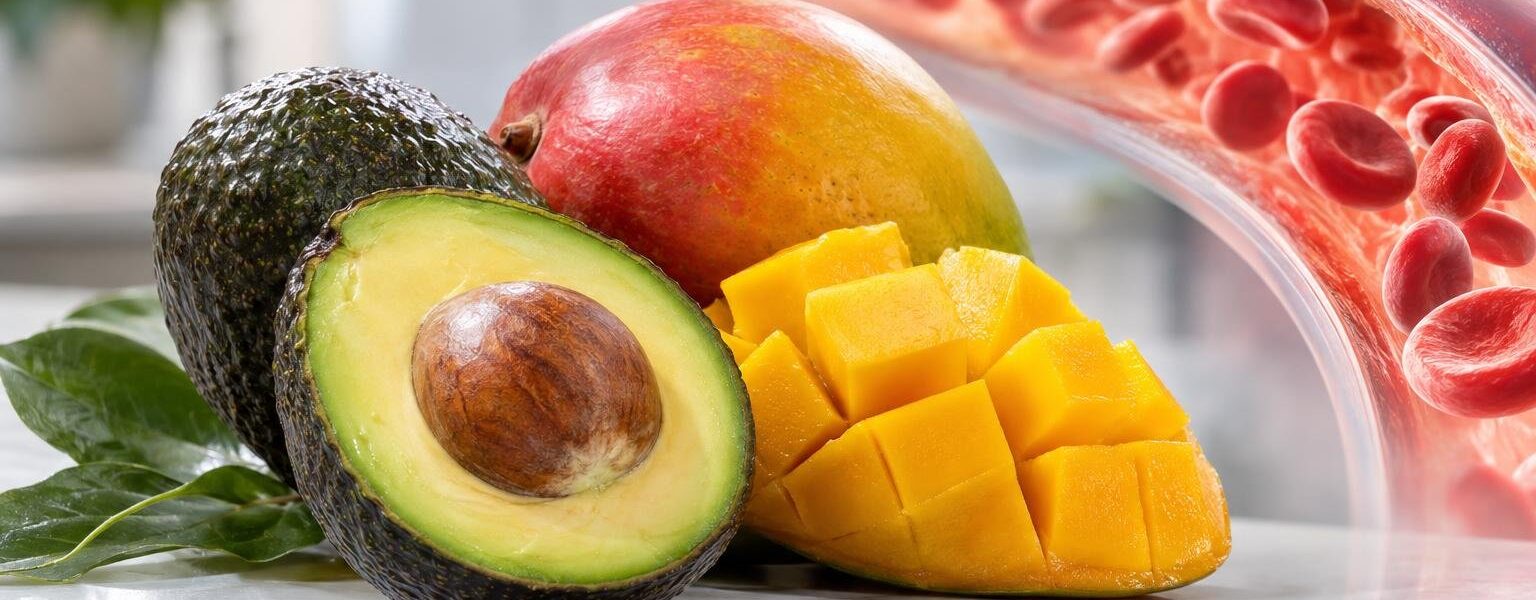
A recent study on avocado and mango heart health caught my attention this week. Researchers at Illinois Tech asked adults with prediabetes to eat one avocado and one cup of mango every day for 8 weeks. By the end, their blood vessels were widening better. Meanwhile, the group that ate low-fiber carbohydrate foods in their place moved in the opposite direction.
As ScienceDaily reported, the improvement showed up without anyone losing or gaining weight. In this article I will walk you through what the study found, what it did not find, and how you can put it to work in your own kitchen this week, even if you keep your carbs low.
🔬 What the Avocado and Mango Heart Health Study Found
The trial was published in February 2026 in the Journal of the American Heart Association. It was a randomized, controlled feeding study. That means volunteers were assigned by chance to one of two groups, and the researchers supplied most of what they ate.
The meals provided covered 75 percent of each person’s estimated calorie needs, and participants chose the rest. That is a level of control most nutrition studies never reach, and it is one reason I take this study seriously.
The 82 volunteers were adults aged 25 to 60 who had prediabetes along with overweight or obesity. According to the CDC, prediabetes means blood sugar is higher than normal but not yet in the diabetes range. The participants were generally healthy non-smokers with no major chronic conditions and no special diets.
The Two Groups
One group ate one medium Hass avocado plus one cup of fresh mango every day. The comparison group ate the same number of calories from carbohydrate-based foods in place of the fruit. Men’s Journal, citing the trial, describes those foods as low in fat and low in fiber.
In other words, this was not “fruit versus nothing.” It was real, whole fruit versus the kind of refined, low-fiber foods many people reach for every afternoon.
The Main Result: Flexible Arteries
The researchers’ main measurement was something called flow-mediated dilation, or FMD. It is an ultrasound test that measures how much an artery in the arm widens when blood flow increases. A healthy, responsive artery opens up nicely. A stiffer, struggling one does not.
After 8 weeks, FMD rose significantly to 6.7 percent in the avocado and mango group. In the comparison group it fell to 4.6 percent. That is a difference of about 2.1 percentage points between the two groups.
Other Findings Worth Knowing
- No weight change. Body weight and total calorie intake did not change significantly. The blood vessel benefit appeared without weight loss or weight gain.
- Better nutrition. The fruit group took in more fiber, more vitamin C and more monounsaturated fat (the heart-friendly kind of fat found in olive oil and avocado).
- Kidney markers. Some markers of kidney function, including eGFR (an estimate of how well your kidneys filter blood), also improved.
- Blood pressure. Modest blood pressure differences were reported, mainly in men. However, not every blood pressure measure reached statistical significance, so I would not lean on this finding.
- What did not change. Cholesterol, blood sugar and inflammation markers were largely unchanged compared with the control group.
Did You Know?
According to the CDC, more than 2 in 5 US adults have prediabetes, and 8 in 10 of them do not know it. The CDC also notes it can lead to heart disease, stroke and type 2 diabetes, and that it can often be reversed. If you have not had your blood sugar checked lately, ask your doctor at your next visit.
The Honest Limitations
I always want you to know what a study can and cannot tell us. This one lasted only 8 weeks, and it included a narrow group: adults 25 to 60 with prediabetes and extra weight. Many of my readers are over 50, so we cannot assume the exact same results for everyone.
The study measured a risk marker, not heart attacks or strokes. Men’s Journal notes that no one yet knows whether the change lasts or lowers those events. Because both fruits were eaten together, the study also cannot tell us whether the combination works better than either fruit alone.
Finally, the trial was funded by an unrestricted grant from the National Mango Board and the Hass Avocado Board. ScienceDaily reports that the funders had no role in the design or findings. Still, industry funding is worth knowing about, and one study is never the final word.
🫀 Why Endothelial Function Matters for Your Heart
Lining the inside of every blood vessel is a thin, delicate layer of cells called the endothelium. When your blood vessels work well, this lining helps them relax and widen whenever your body needs more blood flow, such as when you climb stairs or walk briskly.
According to an expert consensus in the European Heart Journal, FMD reflects a widening of the arteries driven largely by nitric oxide, a gas your blood vessel lining makes to help vessels relax. FMD is affected by cardiovascular risk factors, and it independently predicts cardiovascular outcomes. That is why researchers care so much about it.
A review in the International Journal of Environmental Research and Public Health explains that FMD is used mainly in research rather than in routine checkups. Assessing how well the blood vessel lining works, even in people without obvious heart disease, helps estimate their future risk.
Putting 6.7 Percent and 4.6 Percent in Context
Researchers who published reference values for FMD found that it declines with age, by about 0.4 percentage points per decade, and that smoking lowers it. In healthy people, an FMD above 6.8 percent fell in the top third, while below 5.4 percent fell in the bottom third.
Labs measure FMD a little differently, so these comparisons are rough. But it is encouraging that the fruit group ended near the healthy top range, while the low-fiber group slipped below the bottom range for healthy people. That is a meaningful shift for just 8 weeks of everyday food choices.
Why Whole Fruit May Have Helped
The study did not prove which part of the fruit made the difference. What we do know is that the fruit group ate more fiber, vitamin C and monounsaturated fat. When God packages food, He packs many helpful nutrients together, and they likely work as a team.
Just as important is what the fruit replaced. In my practice I often see patients whose afternoons revolve around crackers, chips and white bread. This study suggests that swapping those refined foods for real fruit may matter as much as anything you add. If you want to understand how silent changes build up in arteries over time, read my article on silent atherosclerosis and artery plaque.
🥑 Daily Avocado Benefits: What Other Research Shows
This is not the only recent avocado study. A 6-month Penn State trial of 786 adults with abdominal obesity found that one avocado a day lowered LDL particle concentration by 49 nmol/L. LDL particles are the tiny carriers that transport cholesterol through the blood.
The researchers estimated that change at about a 4 percent lower heart disease risk, with no change in body weight or waist size. Here is what I love: they openly called that 4 percent modest compared with the 14 to 29 percent lower risk linked to improving the overall diet. That trial was supported by the Avocado Nutrition Center.
The lesson is clear. No single food is a magic bullet. An avocado is a wonderful addition, but it shines brightest as part of a whole-food, Mediterranean-style pattern. My article on the Mediterranean diet and healthy aging explains why that overall pattern matters so much.
Nutrition Spotlight
According to the study’s press release, 50 grams of avocado (about one third of a medium fruit) provides 3 grams of fiber and 250 mg of potassium. Mango is an excellent source of vitamin C, with 50 percent of the Daily Value in just 3/4 cup.
Most of us fall short on fiber. If you are not sure whether that includes you, take a look at my 10 signs you may need more fiber.
🌿 Food-First Heart Health: 6 Simple Steps for Blood Vessel Health
Here is what I tell my patients who want to care for their blood vessels naturally. None of these steps is complicated, and you can start any of them today.
Make Avocado Your Daily Fat
Slice it onto eggs, mash it on a salad, or eat half with sea salt and lime. It brings fiber, potassium and monounsaturated fat in one creamy package.
Enjoy Mango With Wisdom
Choose fresh, whole mango instead of juice or dried mango. Pair it with protein or healthy fat, such as Greek yogurt, nuts or a few avocado slices.
Swap, Don’t Just Add
In this study the fruit replaced low-fiber carbohydrate foods. Trade the crackers, chips or pastries for real fruit, and calories stay steady.
Build a Mediterranean Plate
Fill half your plate with colorful vegetables and greens, then add olive oil, fish, nuts and legumes. The overall pattern counts more than any one food.
Keep Blood Flowing
Your arteries were designed to widen with movement. A daily walk after meals is a simple way to give your blood vessels regular exercise.
Protect What You Build
Smoking lowers FMD, so avoiding tobacco protects your progress. Restful sleep and a peaceful heart round out the picture.
A Word for My Keto and Low-Carb Friends
Many of you follow my Keto Zone or Mediterranean keto approach, so let me speak to you directly. Avocado fits beautifully into low-carb eating. Mango is another story, because it is one of the higher-sugar fruits.
This is my own advice, not something the study tested. Go avocado-first, and if you include mango, start with a smaller portion, such as a few slices or half a cup, eaten earlier in the day alongside protein and fat. Berries are a lower-sugar alternative many of my patients enjoy. Just remember that smaller portions and berry swaps are not exactly what the researchers studied.
If you would like guidance on eating low-carb with plenty of healthy fats, my free 21-Day Keto Zone Challenge is a great place to start.
Important: A whole avocado plus a full cup of mango adds real calories each day. If you are watching your weight or take medication for blood sugar, talk with your doctor before making this a daily habit. Avocado is also rich in potassium, so if you have kidney disease or take potassium-affecting medicines such as ACE inhibitors, ARBs or potassium-sparing diuretics, check with your doctor first.
✦ Dr. Colbert’s Faith Perspective
Guarding the Heart God Gave You
Long before there were nutrition labels, God gave mankind seed-bearing plants and fruit-bearing trees for food (Genesis 1:29). I find it beautiful that modern science keeps returning to that first provision. Whole foods from the earth were part of His design from the very beginning.
Scripture tells us our bodies are temples of the Holy Spirit, and that we honor God in how we care for them (1 Corinthians 6:19-20). Choosing a piece of fruit over a bag of chips is not about earning anything. It is a small act of gratitude and stewardship for a body that is fearfully and wonderfully made.
The Bible calls us to guard our hearts, both the spiritual heart and, I believe, the physical one that beats faithfully every second of every day.
“Keep your heart with all diligence, For out of it spring the issues of life.” (Proverbs 4:23, NKJV)
“Your arteries are listening to every meal you eat. Give them real food from God’s garden, be patient with yourself, and let small daily choices do their quiet work.”
Dr. Don Colbert, MD
The lead author of this study described the findings as a food-first approach, and that phrase is close to my heart. I wrote Let Food Be Your Medicine to help people see how the research on everyday foods can guide their choices at the grocery store and the dinner table.
From Dr. Colbert’s Bookshelf
Let Food Be Your Medicine
If this study inspired you to look at your plate in a new way, this book is your next step. I walk you through what nutrition research really shows about whole foods, healthy fats, fiber and the eating patterns that support lifelong health, then help you turn it into simple meals your family will enjoy.
📋 Your 7-Step Action Plan for This Week
- Talk with your doctor first if needed. This matters especially if you take blood sugar or blood pressure medication, have kidney concerns, or are watching your weight closely.
- Buy a few avocados at different ripeness. That way you will have a ripe one ready every day of the week.
- Identify one refined snack to replace. Pick the crackers, chips or pastry you eat most often and swap it for whole fruit.
- Add avocado to one meal daily. Try it on eggs at breakfast, in a lunch salad or beside grilled fish at dinner.
- Choose your mango portion wisely. Enjoy fresh mango with protein or fat. If you eat low-carb, start small or use berries instead.
- Walk after one meal each day. Gentle movement gives your blood vessels a daily workout.
- Bless your food and give thanks. Begin each meal with gratitude, recognizing these foods as gifts from your Creator.
❓ Frequently Asked Questions
Is eating avocado and mango every day good for your heart?
In this 8-week study of adults with prediabetes, eating both fruits daily was associated with better blood vessel function compared with eating low-fiber carbohydrate foods. That is an encouraging sign for heart health. However, the study measured a risk marker rather than heart attacks or strokes, so we need longer research to know the full picture.
How much avocado and mango did the study use?
Participants ate one medium Hass avocado and one cup of fresh mango each day for 8 weeks. Those foods replaced calorie-matched carbohydrate foods, so total calories stayed about the same. Body weight did not change significantly.
Is mango too high in sugar if I follow a keto or low-carb diet?
Mango is one of the higher-sugar fruits, so if you eat low-carb I recommend a smaller portion paired with protein or fat, or choosing berries instead. Avocado, on the other hand, fits easily into keto eating. If you have prediabetes or take blood sugar medication, ask your doctor what portions are right for you.
What is flow-mediated dilation?
Flow-mediated dilation, or FMD, is an ultrasound test that measures how much an artery in the arm widens when blood flow increases. It largely reflects nitric oxide released by the lining of the blood vessels. It is mostly used in research, and higher values generally indicate healthier blood vessel function.
Can I eat just avocado or just mango and get the same benefit?
We do not know yet. This study tested both fruits together, so it cannot say whether the combination works better than either fruit alone. A separate Penn State trial did find that one avocado a day was linked to fewer LDL particles over 6 months.
🙏 A Final Word of Encouragement
I find studies like this one so hopeful. In just 8 weeks, a simple change, real fruit in place of refined snacks, made a measurable difference in how blood vessels behaved. Nobody had to count every calorie or lose a single pound to see it.
Your body is fearfully and wonderfully made, and it is always ready to respond to good stewardship. Start with one avocado, one smart swap and one grateful prayer at your table. Then build from there, one meal at a time.
My prayer for you echoes the words of the apostle John: “Beloved, I pray that you may prosper in all things and be in health, just as your soul prospers.” (3 John 1:2, NKJV)
Dr. Don Colbert, MD
Sources
- Scientists discover surprising heart benefits of eating avocado and mango every day, ScienceDaily, 2026
- Preiss C, et al. Effects of Increasing Total Fruit Intake With Avocado and Mango on Endothelial Function and Cardiometabolic Risk Factors in Adults With Prediabetes, Journal of the American Heart Association, 2026
- Study Finds a Heart Health Benefit From Eating Avocado and Mango Every Day, Men’s Journal, 2026
- Eating one avocado a day may lower heart disease risk, ScienceDaily / Penn State, 2026
Was this helpful?
Get Dr. Colbert's weekly health tips
Simple, faith-filled health tips in your inbox once a week. Plus a free gift: the 21-Day Keto Zone Challenge.
Unsubscribe anytime. We never share your email.
What stood out to you most, and have you tried any of this yourself?
Tell us on Facebook