
Parasites and Brain Fog: Can Parasites Cause Fatigue and Bloating?
Gut & Digestion • Brain & Memory
By Don Colbert, MD • Board-certified in family practice and integrative medicine • Updated October 2026
Quick answer
Yes, parasites can contribute to brain fog and fatigue. Intestinal parasites can inflame the gut, disrupt the microbiome, and drain nutrients like iron and B12 that your brain needs, and some parasites, such as Toxoplasma gondii, can affect the brain directly.
Brain fog has many possible causes, so the smart path is to look at the whole picture: your symptoms, your exposure risks, and proper testing with a doctor before starting any cleanse.
Millions
of Americans carry Toxoplasma, according to the CDC
Most
people with it have no obvious symptoms, so it often goes unnoticed
3
stool samples on different days improve the odds of detection
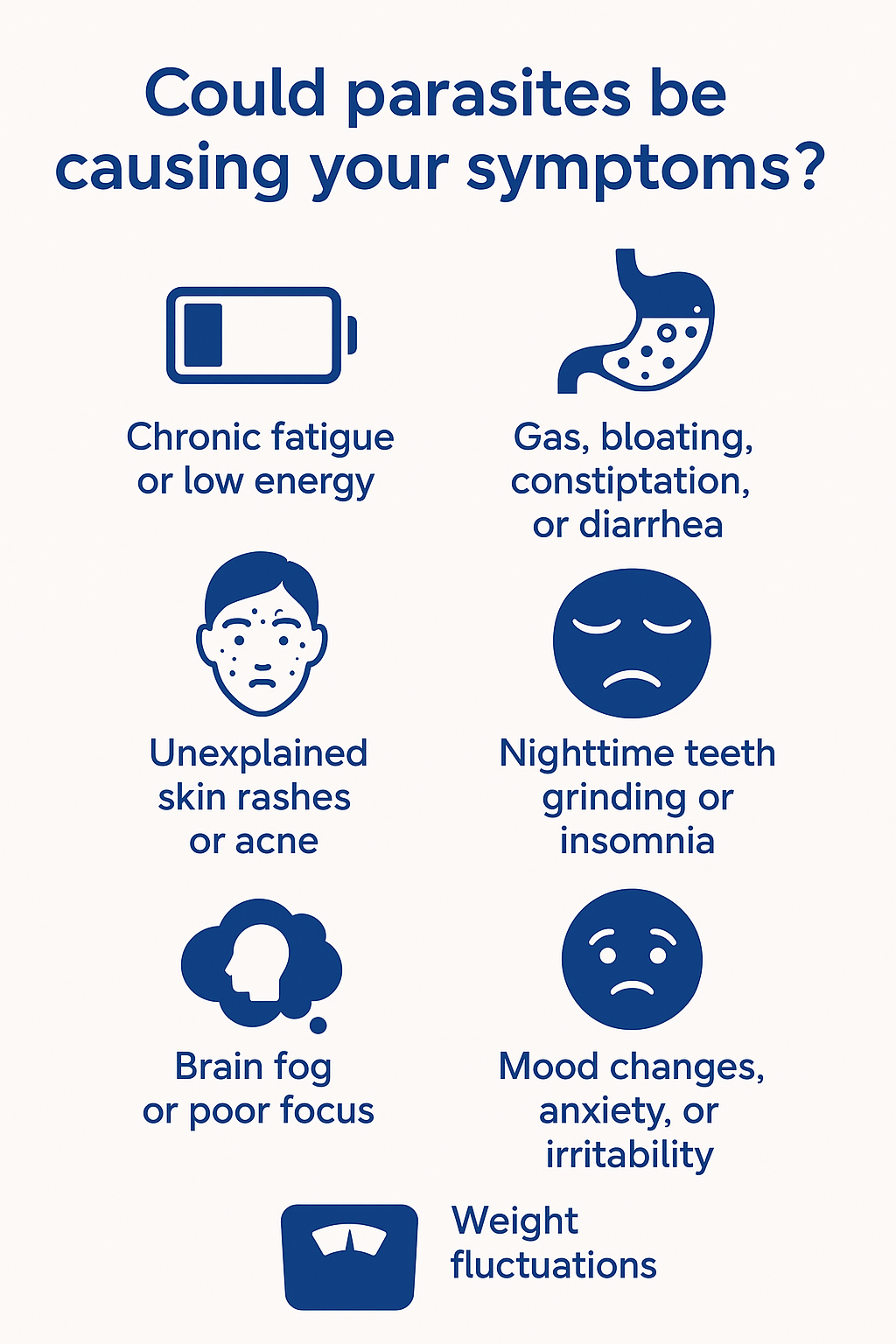
Symptoms that may point to parasites
Parasitic infections are often overlooked because their symptoms look like so many other problems. They are commonly mistaken for IBS, anxiety, or food sensitivities. Watch for clusters like these, especially after travel, camping, well water, or close contact with animals:
Trouble concentrating or finding words.
Low energy, sometimes from iron or B12 loss.
Constipation, diarrhea, or both.
Including itching around the anus at night.
Restless nights, waking often.
Irritability, anxiety, or low mood.
How parasites can affect your brain
Your gut and brain are in constant conversation through nerves, hormones, and immune signals. When parasites take up residence in the gut, that conversation can change in three main ways:
- Inflammation. The immune response to a parasite releases inflammatory messengers that can leave you foggy, tired, and achy.
- Nutrient theft. Some worms and protozoa interfere with absorption of iron, B12, and other nutrients the brain depends on.
- Microbiome disruption. Parasites can upset the balance of beneficial gut bacteria that help produce calming neurotransmitters.
One parasite goes further. Toxoplasma gondii, picked up from undercooked meat, unwashed produce, or cat litter, can form cysts in brain tissue. Researchers have linked long-term infection with changes in neurotransmitters and behavior (CDC).
How to find out if you have parasites
Guessing is not a plan. Many parasitic infections in the U.S. go undetected simply because no one tests for them. Ask your doctor about:
- Stool ova and parasite (O&P) testing, ideally on three samples collected on different days, since parasites shed intermittently.
- Stool antigen or PCR tests for common culprits like Giardia and Cryptosporidium.
- Blood tests for Toxoplasma antibodies, plus a blood count to check for anemia or elevated eosinophils.
- A comprehensive stool analysis, which many integrative physicians use to look at parasites, gut bacteria, and inflammation together.
A confirmed infection, severe symptoms, pregnancy, or a weakened immune system all call for medical treatment, not a home cleanse alone.
5 ways to prevent parasites
1. Wash your hands, often and well
Scrub with soap and warm water for 20 seconds before eating or cooking, after the bathroom, and after touching pets, soil, or raw meat. It is the simplest and most overlooked protection.
2. Cook meat to safe temperatures
Undercooked pork, wild game, and ground meat can carry Trichinella, tapeworms, and Toxoplasma. Cook whole cuts of pork to 145°F with a 3-minute rest, ground meat to 160°F, and wild game to 165°F.
3. Filter your water
Giardia and Cryptosporidium resist chlorine and turn up in wells, streams, and occasionally public water. Use a filter rated for cysts, boil water when camping or after floods, and test private wells regularly.
4. Wash produce thoroughly
Soak leafy greens, herbs, and berries in 1 part vinegar to 3 parts water, then rinse. Scrub root vegetables, and wash organic produce just as carefully.
5. Travel smart
In higher-risk regions, drink only bottled or filtered water, skip raw produce and ice, and support your gut with a daily probiotic.
A gentle, natural cleanse
Rather than relying on medication alone, Dr. Colbert favors a gentle approach that supports the body’s own detox systems while addressing exposure risks. Talk with your doctor before starting, especially if you are pregnant, nursing, or take medication.
Wormwood, black walnut, and clove have been used for centuries against intestinal worms. Wormwood is potent, so it is meant for short courses only.
Garlic’s allicin and oregano oil’s carvacrol show broad antimicrobial activity in research, including against some parasites.
Daily fiber keeps elimination regular so the gut can clear what the cleanse loosens. Prebiotic fiber also feeds your good bacteria.
Your liver processes the byproducts of a cleanse. Milk thistle, NAC, leafy greens, and beets help support healthy liver function.
Pair the cleanse with immune basics: zinc, vitamin C, probiotics, and fewer sugars, which parasites and unhealthy gut microbes thrive on. For more on whole-body cleansing, see 7 red flag signs you need a body cleanse.
Physician-formulated support
Liver Gallbladder Cleanse
Milk thistle extract, NAC, and organic beet root to support healthy liver and gallbladder function, bile flow, and the body’s natural detox pathways.*
Fiber Zone
Prebiotic fiber to nourish beneficial gut bacteria and support regularity and gut health. Available in Berry and Lemon-Lime.*
Watch Dr. Colbert’s parasite series
Dr. Colbert covers parasites in depth in a three-part series on Dr. Colbert’s Broadcast:
“Beloved, I pray that you may prosper in all things and be in health, just as your soul prospers.”
3 JOHN 1:2 (NKJV)
Frequently asked questions
Can parasites cause brain fog?
They can contribute. Gut inflammation, nutrient losses such as iron and B12, and microbiome disruption can all affect focus and energy, and Toxoplasma can affect the brain directly. Because brain fog has many causes, testing is the best way to know.
How do I know if I have parasites?
Symptoms alone cannot confirm it. Ask your doctor for stool testing on three separate days, antigen or PCR tests for common parasites, and blood work if Toxoplasma or anemia is a concern.
What is a natural parasite cleanse?
A natural cleanse typically combines traditional herbs such as wormwood, black walnut, clove, garlic, and oregano oil with daily fiber and liver support. It should be short, supervised, and paired with good hygiene to prevent reinfection.
How long does a parasite cleanse take?
Herbal protocols commonly run two to four weeks, sometimes repeated after a break to catch hatching eggs. Your doctor can tailor the length to your test results and health history.
References
- Centers for Disease Control and Prevention: Toxoplasmosis
- Flegr J. et al. Toxoplasmosis and behavior. Proceedings of the Royal Society B, 2015.
- Force M. et al. Inhibition of enteric parasites by emulsified oil of oregano in vivo. Phytotherapy Research, 2000.
- Ross Z.M. et al. Antimicrobial properties of garlic oil. Applied and Environmental Microbiology, 2001.
- Saller R. et al. The use of silymarin in liver disease. Drugs, 2001.

Written and medically reviewed by Don Colbert, MD
Dr. Colbert has been board-certified in family practice and in anti-aging and integrative medicine for more than 25 years and is a New York Times bestselling author. More about Dr. Colbert
This article is for educational purposes only and is not medical advice. Do not start a parasite cleanse without talking to your healthcare provider, especially if you are pregnant, nursing, have a medical condition, or take medication. *These statements have not been evaluated by the Food and Drug Administration. These products are not intended to diagnose, treat, cure, or prevent any disease.
Was this helpful?
Get Dr. Colbert's weekly health tips
Simple, faith-filled health tips in your inbox once a week. Plus a free gift: the 21-Day Keto Zone Challenge.
Unsubscribe anytime. We never share your email.
What stood out to you most, and have you tried any of this yourself?
Tell us on Facebook