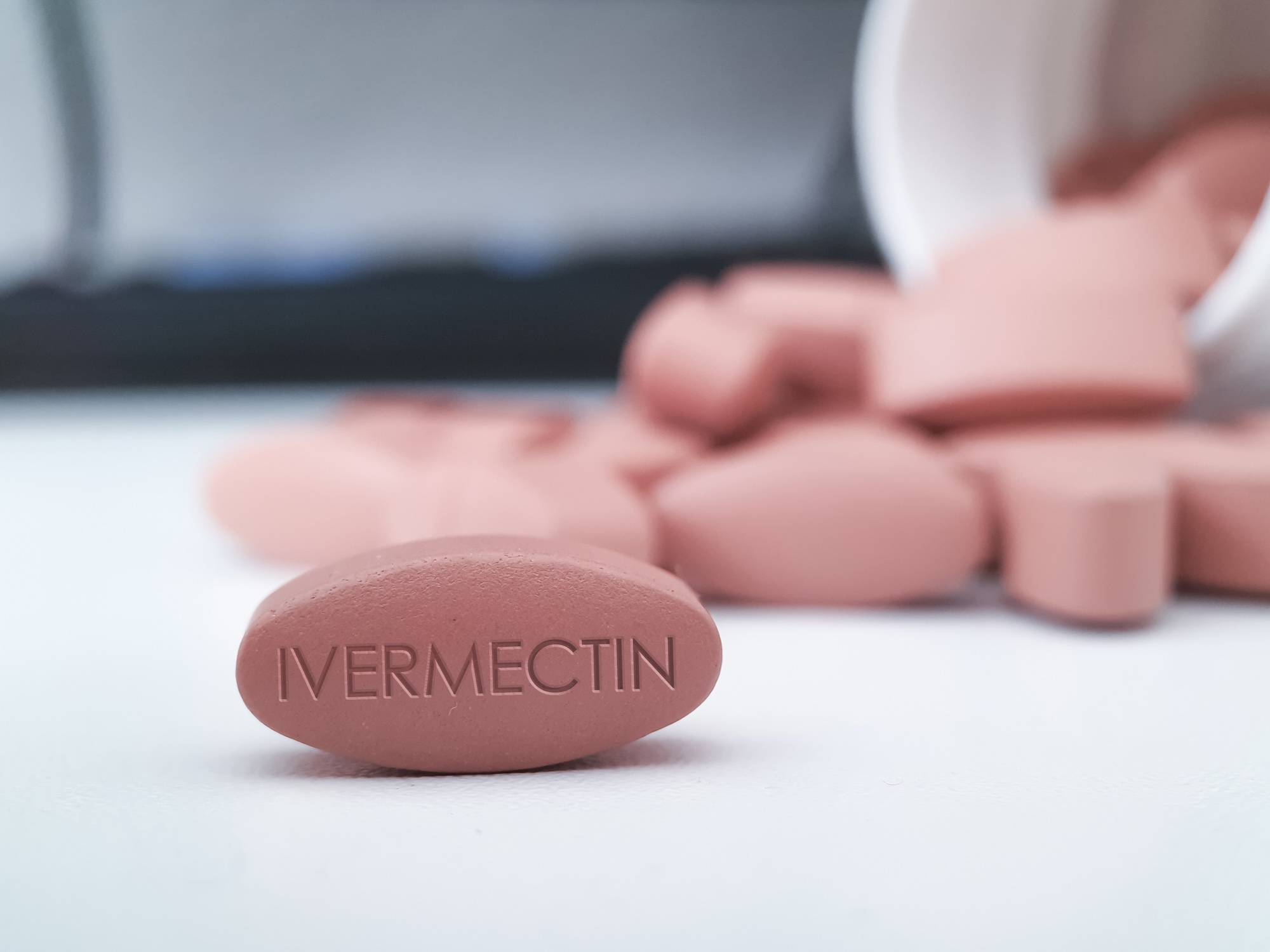
Ivermectin: The Nobel Prize Medicine Explained by Dr. Colbert
Few medicines in modern history have a story quite like ivermectin. It was discovered in soil bacteria in Japan, won a Nobel Prize in 2015, has been administered billions of times across every continent, and is on the World Health Organization’s list of Essential Medicines. It has been called a “wonder drug” by some of the most respected scientific journals in the world.
It has also, more recently, been one of the most politically charged and misunderstood medications in American history.
The truth about ivermectin is far more interesting — and far more useful for your health — than what most headlines have led people to believe. This guide is an evidence-based, doctor-friendly look at what ivermectin actually is, what it’s proven to do, what researchers are studying, who it can help, who should avoid it, and how to get it the right way.
What Is Ivermectin?
Ivermectin is an antiparasitic medication originally derived from Streptomyces avermitilis, a soil-dwelling bacterium discovered in the 1970s by Japanese microbiologist Satoshi Ōmura. Working with American parasitologist William C. Campbell, the team developed ivermectin into a medicine that has since transformed global public health.
In humans, ivermectin works by binding to specific channels in the nervous systems of parasites — glutamate-gated chloride ion channels — that simply don’t exist in mammals. This causes paralysis and death of the parasite while leaving the human host unharmed. Combined with the fact that ivermectin doesn’t readily cross the blood-brain barrier in humans, this is why the drug has such a remarkable safety profile when used at standard human doses.
The Nobel Prize Story
In 2015, Ōmura and Campbell were awarded the Nobel Prize in Physiology or Medicine for their work on ivermectin and related compounds. The Nobel Committee specifically cited the medicine’s impact on onchocerciasis (river blindness) and lymphatic filariasis (elephantiasis) — two devastating diseases that had blinded, disfigured, and disabled tens of millions of people, primarily in Africa, Latin America, and parts of Asia.
Through the Mectizan Donation Program — one of the largest medical donation efforts in history — Merck has donated ivermectin to people in endemic areas for more than 30 years. The result has been the near-elimination of river blindness in multiple countries and the prevention of countless cases of permanent disability. By any reasonable measure, ivermectin is one of the most important medicines of the 20th century.
“Few drugs can seriously lay claim to the title of ‘wonder drug,’ penicillin and aspirin being two that have perhaps had greatest beneficial impact on the health and well being of mankind. But ivermectin can also be considered alongside those worthy contenders.”
— Crump & Ōmura, Trends in Parasitology, 2014
FDA-Approved Uses for Ivermectin
In the United States, ivermectin is FDA-approved for the following conditions:
Oral Ivermectin (Stromectol and generics)
- Strongyloidiasis — an intestinal infection caused by Strongyloides stercoralis, a parasitic roundworm. Standard dose is approximately 200 mcg per kg of body weight as a single dose.
- Onchocerciasis — river blindness caused by the parasitic worm Onchocerca volvulus. Standard dose is approximately 150 mcg/kg, sometimes repeated every 6–12 months.
Topical Ivermectin
- Rosacea — Soolantra (1% ivermectin cream) is FDA-approved for inflammatory lesions of rosacea, an extremely common chronic facial inflammatory condition. This is one of ivermectin’s newer and most successful applications.
- Head lice — Sklice (0.5% ivermectin lotion) is FDA-approved for head lice in patients 6 months and older.
Other Common Off-Label Parasitic Uses
Physicians around the world also commonly use ivermectin to treat:
- Scabies — particularly crusted (Norwegian) scabies and resistant cases. Usually two oral doses, one week apart.
- Lice (when topical treatment fails)
- Ascariasis (roundworm)
- Cutaneous larva migrans (creeping eruption)
- Demodex mite infestations (linked to rosacea, blepharitis, and certain skin conditions)
How Ivermectin Works in the Body
Beyond its well-known antiparasitic effects, ivermectin has several other documented mechanisms that have generated substantial scientific interest in recent years:
- Glutamate-gated chloride channels — the primary antiparasitic mechanism. Paralyzes invertebrate parasites without harming human nerve cells.
- GABA receptor activity — at higher doses, ivermectin can interact with GABA receptors, which is part of why dosing matters.
- NF-κB pathway modulation — research published in Cureus (2024) and other peer-reviewed journals has documented that ivermectin can inhibit the nuclear factor kappa-B (NF-κB) pathway, a master regulator of inflammation linked to autoimmunity, chronic disease, and certain cancers.
- Cytokine modulation — preliminary studies suggest ivermectin may lower pro-inflammatory cytokines such as TNF-α (tumor necrosis factor alpha) and IL-6 (interleukin-6) while supporting balance with anti-inflammatory cytokines like IL-10.
This last point is particularly interesting because it overlaps with the same immune-regulation framework Dr. Colbert teaches in his work on inflammation, vitamin D, and chronic disease. Lowering inflammatory cytokines (TNF-α, IL-6) and supporting anti-inflammatory ones (IL-10) — along with quieting NF-κB activity — is at the heart of how the body keeps inflammation in check. That same biology is now driving emerging research into ivermectin’s broader potential.
📊 Did You Know?
- Ivermectin has been distributed more than 3.7 billion times globally since the 1980s.
- It is on the WHO’s List of Essential Medicines — a list of medicines considered most important to a basic health system.
- The medication is so safe that it is given in mass drug administration programs to entire populations in endemic regions, often without individual screening.
Emerging Research: What Scientists Are Studying
Beyond its FDA-approved uses, ivermectin is currently being investigated by researchers around the world for a wide range of potential applications. Important: these are research areas. None of the uses below are FDA-approved, and the evidence ranges from promising to inconclusive. A responsible reader should understand them as ongoing scientific questions, not established treatments.
Anti-Inflammatory and Immune-Modulating Research
This is one of the most active areas of ivermectin research. Studies in cell cultures and animal models have suggested that ivermectin’s ability to dampen NF-κB and lower inflammatory cytokines could have implications for inflammatory and autoimmune conditions. Human clinical trials remain limited and early-stage.
Antiviral Research
In laboratory (in vitro) studies, ivermectin has shown activity against a wide range of RNA and DNA viruses, including dengue, Zika, yellow fever, and others. The challenge with these in vitro findings is that the concentrations used in lab dishes are often far higher than what can be safely achieved in human blood, which limits real-world application. Translating in vitro results into clinical benefit has historically been difficult.
COVID-19
Ivermectin became one of the most discussed and disputed treatments of the COVID-19 era. Early laboratory studies and observational reports generated significant interest. However, the largest randomized controlled trials — including TOGETHER (3,515 patients), ACTIV-6, and COVID-OUT — did not find statistically significant benefit on the primary outcomes they measured. Smaller studies have shown more mixed results, and some physicians continue to advocate for its use, particularly as part of multi-drug protocols. The official position of the NIH, FDA, and WHO is that ivermectin is not currently recommended for COVID-19 outside of clinical trials. Readers should make decisions in this area only with their personal physician based on their individual circumstances.
Cancer Research
A growing body of preclinical research — primarily in cell cultures and animal models — has explored ivermectin’s potential effects on certain cancer cell lines. A 2024 review in Cureus summarized this preclinical work and the proposed mechanisms (NF-κB inhibition, effects on cancer cell signaling pathways). It is critical to understand that there are no completed large-scale randomized human trials demonstrating ivermectin as a cancer treatment. Some integrative oncologists use it off-label, but this remains an experimental area, and patients pursuing this should do so only under qualified medical supervision and as part of — not instead of — proven cancer care.
Who Might Benefit From Ivermectin
Talk to your physician about whether ivermectin may be appropriate if you fit one of the following situations:
- You have a confirmed or suspected parasitic infection (especially after international travel)
- You have rosacea that has not responded to other therapies
- You have scabies, head lice, or another approved indication
- You have unexplained chronic GI symptoms and your physician recommends parasite testing
- You live or have traveled in regions where parasitic infections are common
- Your physician identifies a clinical situation where ivermectin is appropriate as part of your care
Who Should Avoid Ivermectin or Use Caution
Ivermectin has a strong safety record at standard doses, but it is not for everyone. People in the following categories should avoid it or use it only under close medical supervision:
- Children weighing less than 15 kg (33 lb) — safety has not been established
- Pregnant women — safety in pregnancy has not been adequately studied; generally avoided
- Breastfeeding women — ivermectin passes into breast milk in small amounts; discuss with your physician
- People with a history of seizure disorders — caution advised
- People with severe liver disease — ivermectin is metabolized by the liver and may require dose adjustment or avoidance
- People with a known allergy or hypersensitivity to ivermectin or any component of the formulation
- People at risk for high Loa loa microfilarial loads (relevant in some Central African regions) — can cause serious neurological complications
Drug Interactions to Know About
Ivermectin is metabolized by the CYP3A4 enzyme system in the liver, which means it can interact with a wide range of other medications. Always inform your physician and pharmacist of every medication and supplement you take. Notable interactions include:
- Warfarin — ivermectin may increase the anticoagulant effect; INR should be monitored
- Strong CYP3A4 inhibitors (certain antifungals, some antibiotics, grapefruit juice) — may raise ivermectin levels
- Strong CYP3A4 inducers (rifampin, certain seizure medications) — may lower ivermectin levels
- Other neurologically active medications — caution advised, especially in people with conditions affecting the blood-brain barrier
Are There Generic Versions of Ivermectin?
Yes. Ivermectin has been generic in the United States for many years, which is one of the reasons it is inexpensive. The brand-name oral version is Stromectol, manufactured by Merck. Multiple generic manufacturers now produce ivermectin tablets in 3 mg strength, and these generics are pharmacologically equivalent to the brand-name product. Generic ivermectin can typically be obtained at any standard pharmacy with a valid prescription, often at very low cost — sometimes under $30 for a course of treatment, depending on dosing and pharmacy.
How to Get Ivermectin Safely and Legally
In the United States, ivermectin for human use is a prescription-only medication. There are three legitimate pathways:
- Your primary care physician. If you suspect a parasitic infection or have an FDA-approved indication, your doctor can evaluate you, order any needed testing, and write a prescription.
- An infectious disease specialist or travel medicine clinic. Especially helpful if your situation involves international travel or unusual parasitic exposure.
- A telehealth service. A growing number of licensed telehealth providers offer consultations and, when clinically appropriate, will write prescriptions for ivermectin that can be filled at U.S. pharmacies. This can be particularly useful if your local doctor is unfamiliar with or unwilling to discuss ivermectin.
Once you have a prescription, you can fill it at most major pharmacies (CVS, Walgreens, Walmart, independent pharmacies, etc.) or through reputable mail-order and compounding pharmacies.
⚠️ Critical Safety Warning: Never Use Veterinary IvermectinVeterinary ivermectin formulations — including paste, drench, pour-on, and injectable products sold for horses, cattle, sheep, or other livestock — are not safe for human use under any circumstances. They are formulated for animals weighing hundreds to thousands of pounds, contain inactive ingredients not tested in humans, and are far more concentrated than human medications. People who have taken veterinary ivermectin have ended up hospitalized with serious neurological symptoms, severe nausea and vomiting, dangerous drops in blood pressure, and even death. Use only human ivermectin, prescribed by a licensed physician, dispensed by a licensed pharmacy.
Side Effects and What to Watch For
At standard human doses, ivermectin is generally well tolerated. The most common side effects include:
- Mild dizziness
- Fatigue or drowsiness
- Nausea or upset stomach
- Mild headache
- Itching or skin rash (sometimes from die-off of parasites rather than the drug itself)
- Loose stools
Most side effects are mild and resolve within a day or two. More serious side effects are rare but can include severe allergic reactions, neurological symptoms, or significant changes in blood pressure — these require immediate medical attention. Some symptoms that look like “side effects” after a dose are actually the body’s response to parasites dying, sometimes called a Herxheimer-like reaction.
Practical Tips for Taking Ivermectin
- Take it with a glass of water, generally on an empty stomach unless your physician advises otherwise. (Note: research suggests taking it with a fatty meal can substantially increase absorption — your doctor will guide you based on the indication.)
- Follow the exact dose your physician prescribes. More is not better. Standard parasitic dosing is precisely calibrated to your weight.
- Stay hydrated, especially in the days following treatment, as your body processes both the medication and any parasitic die-off.
- Support your liver and gut with a clean, anti-inflammatory diet, ample fiber, fermented foods, and adequate protein during and after treatment.
- Avoid alcohol for at least 48–72 hours before and after a dose.
- Watch for re-infection. Some parasitic conditions require a second dose 1–2 weeks after the first to kill newly hatched parasites that the first dose missed.
- Track how you feel. Keep a simple journal of energy, digestion, sleep, and skin during and after treatment — it helps you and your physician see what’s working.
Supporting Your Body Through Parasite Treatment
If your physician has determined that ivermectin is appropriate for you, a few well-established health practices can support your body during and after treatment:
- Increase your fiber intake. Soluble and insoluble fiber helps escort dying parasites and toxins out of the digestive tract. Aim for 30–40 grams per day from real food and a quality fiber supplement.
- Support your liver. The liver is your detoxification headquarters. Cruciferous vegetables (broccoli, cauliflower, Brussels sprouts), garlic, onions, lemon water, and good hydration all support healthy liver function.
- Rebuild your gut microbiome. Fermented foods (sauerkraut, kimchi, kefir, yogurt with live cultures) and a quality probiotic help restore the beneficial bacteria that protect against future infections.
- Cut sugar and processed carbs. Parasites and yeast both feed on sugar. Reducing your intake while you treat is one of the most powerful things you can do.
- Optimize your vitamin D. Vitamin D plays a critical role in immune regulation. A target blood level of 50–80 ng/mL is associated with stronger immune defense and lower inflammation. Have your level checked and supplement if needed.
- Get adequate sleep. Your immune system does most of its repair work overnight. 7–9 hours, every night, is non-negotiable for recovery.
The Faith Factor
At Dr. Colbert’s practice, true health has always been about body, mind, and spirit. The same principle applies here. A medication — even a Nobel Prize-winning one — is a tool, not a savior. Our bodies were designed by God with extraordinary self-healing capacity, and our role is to steward them well: feeding them real food, moving them daily, resting them properly, protecting them from harm, and treating them with the reverence due to a temple of the Holy Spirit.
If you are facing a health concern that has you exploring ivermectin or any other treatment, take heart. Pray about it. Talk with a physician who will listen. Ask the right questions. And remember that healing rarely comes from a single pill — it comes from a body, a mind, and a spirit aligned with the Creator’s design.
The Bottom Line
Ivermectin is a remarkable medicine with a Nobel Prize-worthy track record against parasitic disease, an excellent safety profile when used correctly, an established role in dermatology, and a fascinating emerging research portfolio in inflammation and immune regulation. It is also a medication that demands respect: the right diagnosis, the right dose, the right form, and the right supervision.
If you suspect you may benefit from ivermectin, talk to a physician you trust. Get evaluated. Get a prescription if it is clinically appropriate. And use it the way it has helped billions of people worldwide — as one tool, used wisely, in service of a body designed to thrive.
Medical Disclaimer: This article is for educational and informational purposes only and is not intended to diagnose, treat, cure, or prevent any disease. Statements regarding ivermectin reflect current scientific understanding and FDA-approved indications, with clear notation where research is preliminary or off-label. Ivermectin is a prescription medication in the United States and should be used only under the supervision of a licensed healthcare provider. Always consult your physician before starting any new medication, supplement, or treatment plan, especially if you are pregnant, nursing, taking other medications, or have a chronic medical condition. The information here has not been evaluated by the FDA.