Protein and Testosterone: Does Meat Really Help Men Over 40?

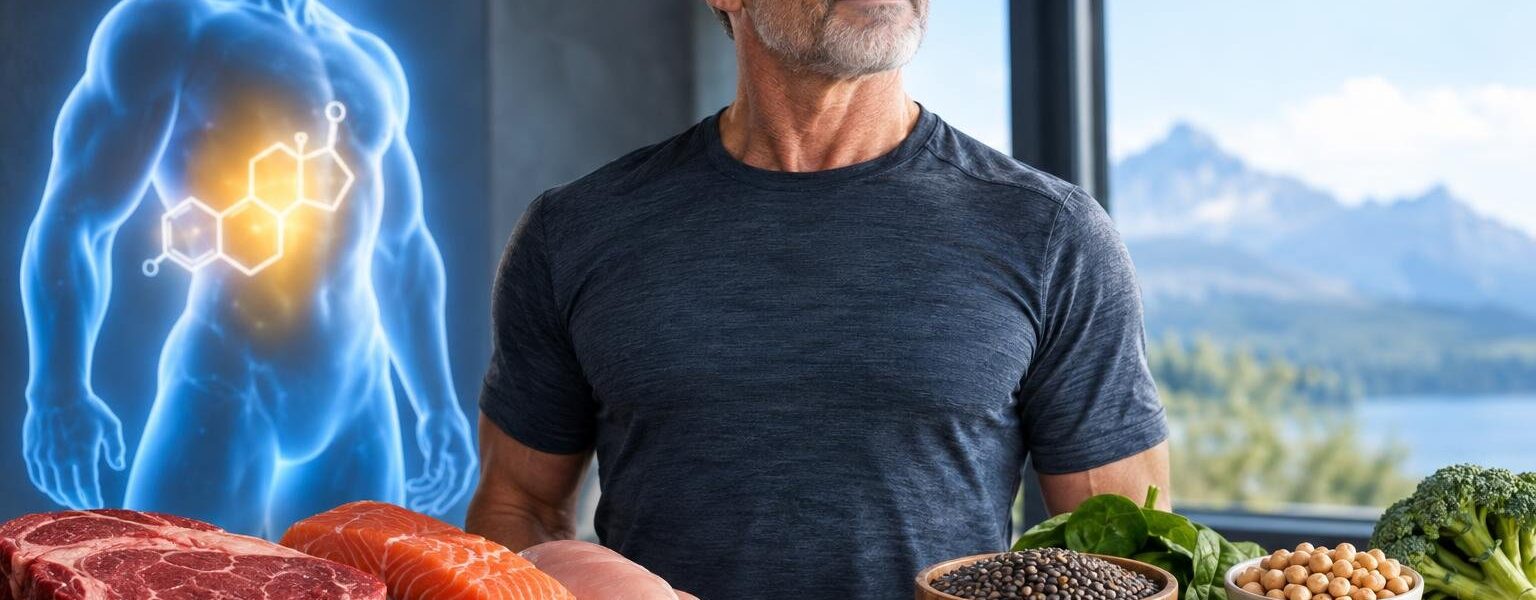
Scroll through social media for five minutes and you will probably meet him: the confident fellow holding up a raw steak, promising that an all-meat diet will send your testosterone soaring. Many of the men I see in my practice have watched those videos. Some of their wives have, too, and they come in asking, “Should I be cooking more red meat for my husband?”
It is a fair question, and now we have some fresh research on protein and testosterone that speaks to it. Researchers at the University of Eastern Finland studied 2,546 men in their 40s and 50s, and the pattern they found was not what the “real men eat meat” crowd would expect.
As ScienceDaily reported, men who ate the most animal protein had slightly lower testosterone, while men who ate the most plant protein had slightly higher levels. Before you clear the meat out of your freezer, though, there is much more to this story. Let me walk you through what the study really shows, what it cannot show, and what I tell men over 40 who want to keep their hormones and their strength in good shape.
🔬 What the Protein and Testosterone Study Found
The study, published in the International Journal of Food Sciences and Nutrition, drew on a long-running project called the Kuopio Ischaemic Heart Disease Risk Factor Study. It included 2,546 men aged 42 to 60 from eastern Finland. Each man kept a detailed four-day food record, and each gave a blood sample so researchers could measure his hormones.
The researchers then split the men into four groups, from lowest to highest protein intake, and compared their testosterone. They also measured something called SHBG, which stands for sex hormone-binding globulin. Think of SHBG as a carrier protein in the blood that grabs onto testosterone and holds it. How much SHBG you have affects how much testosterone is bound up and how much is circulating freely.
Here is what they found:
- Animal protein: Men in the highest quarter of animal protein intake had total testosterone about 1.2 nmol/L lower than men in the lowest quarter. (A nmol/L, or nanomole per liter, is simply the unit labs use to measure testosterone in your blood.)
- Plant protein: Men in the highest quarter of plant protein intake had total testosterone about 1.1 nmol/L higher than men in the lowest quarter.
- SHBG: The carrier protein showed similar opposite patterns for animal and plant protein.
- Dairy protein: This was linked to lower total testosterone and lower SHBG.
- Meat protein: This was linked to lower SHBG but showed no link at all to total testosterone.
- Vegetable and non-cereal plant protein: Protein from sources such as vegetables, legumes and nuts was linked to higher total testosterone, according to ScienceAlert’s report.
These links held up even after the researchers adjusted for age, body weight (BMI) and other diet, lifestyle and health factors. That is good, careful science.
The Honest Limitations
Now for the part the headlines often skip. This was a cross-sectional study, which means it looked at a snapshot of diet and hormones at one point in time. It can show that two things travel together, but it cannot prove that one causes the other.
The lead researcher, Miika Wynne-Ellis, said in the University of Eastern Finland press release that the differences were statistically significant but relatively small, and that the health implications cannot be established. He also noted the results may be related to other parts of the diet or to metabolic factors rather than protein itself.
There are a few more things to keep in mind:
- The diet records and blood samples were collected from 1984 to 1989, so the data are more than 35 years old.
- All the men came from one region of Finland, and the group was mostly Caucasian.
- According to ScienceAlert, when the researchers modeled swapping animal protein for plant protein, that change was not significantly linked to total or free testosterone.
- The study abstract also reports that higher total protein intake was linked to lower testosterone and SHBG. So the pattern is not only about animal protein.
Fast Fact
In this study, meat protein itself showed no association with total testosterone. The animal protein link was driven in part by dairy protein, which was tied to both lower testosterone and lower SHBG.
So, does this study prove that steak lowers testosterone or that lentils raise it? No. One observational study is never the final word. What it does do is poke a real hole in the popular claim that piling on animal protein is the key to manly hormones.
🧬 Animal Protein vs Plant Protein and Testosterone: Why It Might Matter
Why would plant protein go along with slightly higher testosterone? The honest answer is that nobody knows yet. The researchers themselves said the study cannot tell whether protein type changes how testosterone is made or how it acts in the body.
ScienceAlert mentioned a few possible explanations, such as differences in inflammation and in how the body responds to insulin, the hormone that moves sugar from your blood into your cells. But it was clear that these ideas are speculative. They are worth studying, not worth building a diet plan around.
There is one thing I find very practical, though. Protein never comes alone. It arrives packaged with everything else in the food. As ScienceAlert pointed out, plant protein sources bring more fiber and unsaturated fat, while animal sources bring more saturated fat and cholesterol. In other words, the man who eats plenty of beans, nuts and vegetables is often eating a very different overall diet from the man who lives on cheeseburgers and milkshakes.
That is why I keep coming back to the whole plate, not one nutrient. Your body is fearfully and wonderfully made, and your hormones respond to the total picture: what you eat, how much you weigh, how you sleep, how you move and how you handle stress.
What About Dairy?
Some of you will remember my recent article on full-fat dairy, cholesterol and weight. That research looked at a completely different question: weight, cholesterol and insulin resistance. This Finnish study looked at hormones. Both can be true at the same time, and neither one is the final word.
If you enjoy dairy and tolerate it well, I do not think this single study is a reason to panic. But if you are a man over 40 and dairy makes up a big share of your daily protein, it may be wise to round things out with more variety from fish, eggs, legumes and nuts.
Does Protein Source Matter for Muscle?
Many men worry that eating more plant protein will cost them muscle. A 2025 feeding trial from the University of Illinois, covered by ScienceDaily, offers some useful context. It followed 40 healthy adults aged 20 to 40 who were doing resistance training. Whether they ate a vegan diet or an omnivore diet (with about 70 percent of protein from animal sources), there was no difference in muscle protein synthesis, the process of building new muscle, at a moderate intake of 1.1 to 1.2 grams of protein per kilogram of body weight per day.
That trial had its own limits. The participants were young, and it was funded by the Beef Checkoff program. Still, it suggests that when you eat enough protein, the source may matter less for muscle than many people think. If you want to know more about how much protein you need as you age, see my article on how much protein per day you need as you age.
Recent Research
ScienceAlert noted two points every man should hear: more testosterone is not necessarily better, and the popular claims that a carnivore diet boosts testosterone lack robust evidence.
🌿 How to Support Healthy Testosterone Naturally After 40
Here is the good news. You do not need a trendy protein “hack.” The foundations that support healthy hormones are simple, and most of them are things you can start this week. These are the foods that affect testosterone in men most reliably in my experience: not one magic food, but a balanced pattern combined with good daily habits.
Balance Your Protein Plate
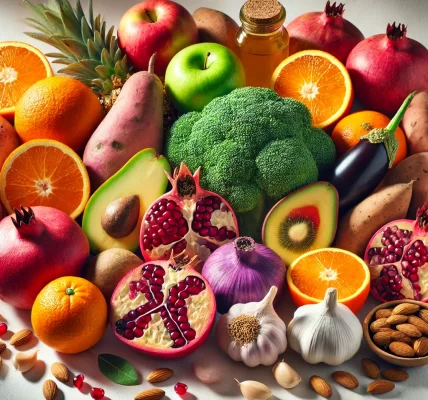
Enjoy quality animal protein such as wild fish, pastured eggs and lean meats, and add plant protein from beans, lentils, nuts and vegetables. Variety, not extremes.
Add One Plant Protein Daily
A handful of walnuts or almonds, a cup of lentil soup or a side of black beans brings protein plus fiber and healthy unsaturated fats.
Lift Something Heavy
Strength training helps you hold on to muscle as you age. Bodyweight squats, resistance bands and light dumbbells are a great place to start.
Move Toward a Healthy Weight
Extra belly fat is one of the biggest hormone disruptors I see in men. Whole foods, fewer sugars and refined carbs, and steady activity go a long way.
Guard Your Sleep
Your body does much of its hormone work during deep, restful sleep. Keep a steady bedtime, a cool dark room and screens out of the bedroom.
Lay Down Your Stress
Chronic stress keeps your body on high alert. Prayer, gratitude, time outdoors and honest conversation with people you love help bring peace.
On the strength side, you do not need hours in a gym. Even short sessions add up, as I described in my article on strength training in just a few minutes. Muscle is one of the most valuable assets you have after 40, and I devote a great deal of attention to it, along with eleven other key health markers, in my newest book, Live Long and Strong.
I also want to say a word to the wives who plan the meals. You do not need to choose between “his steak” and “your salad.” A plate with grilled salmon, a scoop of herbed lentils, a big green salad dressed in olive oil and a few walnuts on top serves you both beautifully. That is the kind of balanced, Mediterranean-style eating I have recommended for years.
✦ Dr. Colbert’s Faith Perspective
Wisdom Over Trends
Scripture tells us our bodies are temples of the Holy Spirit and that we are to glorify God in them (1 Corinthians 6:19, 20). Stewardship means using wisdom, not chasing every new online food trend that promises to make us stronger overnight. God’s desire is for our whole person to flourish, body and soul together.
I have always loved the story of Daniel. Surrounded by the rich food of the king’s table, he asked for something simple and trusted God with the outcome. After ten days, he and his friends looked healthier than the young men eating the royal delicacies. Daniel’s example is not about rejecting all meat forever. It is about humble, food-first, balanced living that honors God.
“Please test your servants for ten days, and let them give us vegetables to eat and water to drink.” (Daniel 1:12, NKJV)
“Strong men are not built by one food or one trend. They are built plate by plate, night by night and prayer by prayer, with the steady habits God designed our bodies to thrive on.”
Dr. Don Colbert, MD
If you want to go deeper into how food, weight and daily habits shape your hormones, I wrote Dr. Colbert’s Hormone Health Zone for exactly this season of life.
From Dr. Colbert’s Bookshelf
Dr. Colbert’s Hormone Health Zone
In this book I explain how hormones like testosterone work, why they shift after 40, and how food, body weight, sleep, stress and lifestyle shape them. You will find practical eating plans and everyday steps to help you restore energy and feel like yourself again, written in plain English and grounded in faith. If this study got you thinking about your own hormones, this is the next step I would hand you.
✅ Your Action Plan for Protein and Healthy Hormones
- Look at your plate, not just your protein. For the next week, notice where your protein comes from. If nearly all of it is meat, cheese and milk, you have room to add variety.
- Add one plant protein each day. Try lentils, chickpeas, black beans, walnuts, almonds or a generous serving of vegetables alongside your usual meal.
- Keep quality animal protein. Wild fish, pastured eggs and lean meats still have an honored place on a healthy table. This study is not a reason to give them up.
- Skip the extremes. Be cautious of all-meat or all-anything diets that promise hormone miracles. The evidence simply is not there.
- Start strength training. Begin with a few short sessions a week using your own body weight or light weights, and build gradually.
- Protect your sleep. Set a regular bedtime, keep your room cool and dark, and put the phone away before bed.
- Release stress daily. Spend a few quiet minutes in prayer and gratitude each morning and evening.
- Get checked if something feels off. If you notice fatigue, low libido or loss of muscle, ask your doctor about a blood test. Do not try to self-treat with diet, and never stop or change a medication without your doctor’s guidance.
❓ Frequently Asked Questions
Does eating meat lower testosterone?
This study does not show that. Meat protein itself had no association with total testosterone in these Finnish men, though it was linked to lower SHBG. The broader animal protein link was small, observational and partly tied to dairy, so it cannot prove that meat lowers testosterone.
Is plant protein better for testosterone?
Men who ate the most plant protein had slightly higher testosterone, but the study cannot show that plant protein caused it. In the researchers’ models, swapping animal protein for plant protein was not significantly linked to testosterone, as reported by ScienceAlert. Plant protein is a healthy addition to your plate, not a hormone fix.
Should men over 40 stop eating dairy?
Not based on this one study. Dairy protein was linked to lower testosterone here, but the differences were small and the study was observational. If dairy is a large share of your protein, consider adding more variety, and talk with your doctor if you have concerns about your hormones.
What foods affect testosterone in men?
Research has not identified a single food that reliably raises testosterone. What I see help most is an overall pattern: whole foods, varied quality protein, vegetables, legumes, nuts and healthy fats, combined with a healthy weight, strength training, good sleep and lower stress.
How do I know if my testosterone is low?
Symptoms such as ongoing fatigue, low libido or loss of muscle are worth discussing with your doctor. The only way to know your levels is a blood test interpreted by a physician. Remember, higher is not automatically better, so the goal is a healthy balance, not the biggest number.
💙 A Final Word
I am always grateful when good research cuts through the noise. This study of protein and testosterone does not tell men to give up steak, and it does not crown lentils as a hormone miracle. What it does is remind us that extreme claims rarely hold up, and that balance and food quality matter more than any trend.
God made your body with remarkable wisdom. When you feed it a variety of whole foods, move it, rest it and bring your worries to Him, you give it what it needs to serve you well for many years. As the apostle John prayed, “Beloved, I pray that you may prosper in all things and be in health, just as your soul prospers” (3 John 1:2, NKJV). That is my prayer for you, too.
Start with one small change this week, perhaps a bowl of lentil soup or a short strength workout, and build from there. You are never too old to grow stronger.
Dr. Don Colbert, MD
Sources
- Animal vs. plant protein reveals a surprising testosterone divide, ScienceDaily, 2026
- Wynne-Ellis MM, et al. Associations of dietary proteins with serum total testosterone and sex hormone-binding globulin concentrations in middle-aged men, International Journal of Food Sciences and Nutrition, 2026
- Associations of dietary proteins with serum total testosterone and SHBG concentrations in middle-aged men (abstract), Taylor & Francis, 2026
- Animal and plant proteins show different associations with testosterone levels in men, University of Eastern Finland, 2026
- Popular Claims About Meat And Testosterone Get a Reality Check From a New Study, ScienceAlert, 2026
- Omnivorous? Vegan? Makes no difference to muscle building after weight training, study finds, ScienceDaily / University of Illinois Urbana-Champaign, 2025
Was this helpful?
Get Dr. Colbert's weekly health tips
Simple, faith-filled health tips in your inbox once a week. Plus a free gift: the 21-Day Keto Zone Challenge.
Unsubscribe anytime. We never share your email.
What stood out to you most, and have you tried any of this yourself?
Tell us on Facebook