

Last reviewed and updated: October 30, 2026
Every Tuesday, millions of Americans celebrate Taco Tuesday. If you are eating in the Keto Zone, you can join right in with shell-less tacos or crisp lettuce wraps.
There is just one catch: the seasoning packet.
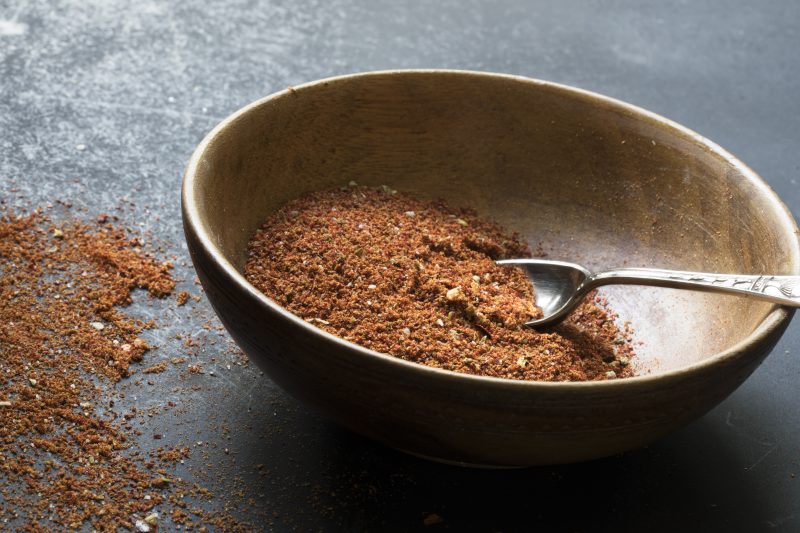
Most people assume taco seasoning is simply a blend of a few spices. As it should be. But turn the packet over and read the label, and you will often find fillers, starches, flavor enhancers, and preservatives that have nothing to do with flavor. The fix is simple. My homemade keto taco seasoning takes five minutes, uses nine pantry spices, and contains nothing you cannot pronounce.
Keto Zone Recipe
Homemade Keto Zone Taco Seasoning
Prep time: 5 minutes | Makes: about 3 tablespoons, enough for 1 pound of meat | Net carbs: less than 1 gram per teaspoon
Ingredients
- 1 Tbsp chili powder
- 1 Tbsp ground cumin
- 1/2 tsp paprika
- 1/4 tsp garlic powder
- 1/4 tsp onion powder
- 1/4 tsp crushed red pepper flakes
- 1/4 tsp dried oregano
- 1 tsp black pepper
- 1/2 to 1 tsp sea salt (more or less to taste)
Instructions
- Add all of the spices to a small airtight jar and shake well to combine.
- Use 2 to 3 tablespoons of the mix for 1 pound of meat or other protein. Taste and add salt while cooking.
- Store the jar in a cool, dry place. Give it a good shake before each use to break up any clumps.
Tip: Double or triple the batch so a jar is always ready for Taco Tuesday.
How to Make Keto Zone Lettuce Wrap Tacos
- Brown 1 pound of grass-fed ground beef (or ground turkey or chicken) in a skillet over medium heat. Drain if needed.
- Stir in 2 to 3 tablespoons of the taco seasoning and 1/4 to 1/2 cup of water. Simmer 5 minutes, until the sauce thickens.
- Spoon into crisp lettuce cups (butter lettuce or romaine hearts work well) or over a bed of chopped greens.
- Top with avocado or guacamole, salsa, chopped cilantro, shredded cheese, sour cream, and a squeeze of lime.
Free 21-Day Keto Zone Challenge
Ready to put this recipe to work? My free 21-Day Keto Zone Challenge gives you meal plans, shopping lists, and daily coaching. Join the Keto Zone Challenge free
What Is Really in a Taco Seasoning Packet?
When I first wrote about this, a popular packet listed these ingredients: maltodextrin, salt, chili pepper, onion powder, spice, monosodium glutamate, corn starch, yellow corn flour, partially hydrogenated soybean oil, silicon dioxide, natural flavor, and ethoxyquin.
Formulas change, and many brands have cleaned up their labels since then. Still, it is very common to find some of these ingredients in seasoning mixes today. Here is what they are and why I prefer to leave them out.
Maltodextrin, Corn Starch, and Corn Flour
These are inexpensive fillers and thickeners. Maltodextrin in particular is a highly processed starch that raises blood sugar quickly. A sprinkle will not knock most people out of ketosis, but they add carbohydrates with no nutritional value, and they are often the first ingredients listed, which means there is more filler than chili pepper.
Sodium and Monosodium Glutamate (MSG)
Many packets deliver several hundred milligrams of sodium per serving, much of it from added salt and flavor enhancers such as MSG. Some sodium from natural sea salt or Himalayan salt is fine for most people, especially on a low-carb diet. The problem is that packaged foods make it easy to get far more than you realize.
MSG is a controversial ingredient. Many people report headaches, flushing, or palpitations after eating it. To be fair, controlled studies have not shown consistent reactions in people who believe they are sensitive, especially when MSG is eaten with food. My advice is practical: if you notice you feel unwell after foods with MSG, avoid it. Either way, it is simply not needed when you season with real spices.
Partially Hydrogenated Soybean Oil
Partially hydrogenated oils were the main source of artificial trans fats, which raise LDL cholesterol, lower HDL cholesterol, and are strongly linked to heart disease. The FDA removed them from the list of ingredients generally recognized as safe, and manufacturers were required to phase them out of U.S. foods by 2020. That was a big win.
Even without hydrogenation, I am not a fan of soybean oil in a spice blend. It is a concentrated source of omega-6 fats, and most Americans already get far more omega-6 than omega-3. I explain why in this article on the oil I avoid.
Silicon Dioxide (Anti-Caking Agent)
Silicon dioxide, also called silica, is added to powders to keep them from clumping. It occurs naturally in soil, water, and many plant foods, and the FDA allows it in food.
In 2018 the European Food Safety Authority re-evaluated it as a food additive. The panel found no indication of toxicity at reported use levels, but it also noted gaps in the safety data and said the additive needed better specifications, particularly for the smallest particle sizes. That is not a reason to panic, but it is a reason I see no need for it. In a homemade blend, a quick shake of the jar does the same job.
Ethoxyquin (Preservative)
Ethoxyquin is a synthetic antioxidant that has been used as a rubber stabilizer, as a treatment to keep stored pears from browning, and as a preservative in animal feed and pet food. In the United States, the FDA permits it in chili powder, paprika, and ground chili at up to 100 parts per million. It is not permitted as a food additive in the European Union, and its authorization in animal feed there has been suspended.
At the small amounts allowed in spices, it is unlikely to cause acute harm. But it is a synthetic preservative with open safety questions, and many companies now use natural antioxidants such as rosemary extract instead. When you buy chili powder and paprika for this recipe, choose brands that list only the spice itself, or choose organic.
“Therefore, whether you eat or drink, or whatever you do, do all to the glory of God.”
1 Corinthians 10:31 (NKJV)
Why Homemade Keto Taco Seasoning Is Better
- Nothing hidden. Just spices, salt, and pepper, so you know exactly what you are eating.
- Lower carb. No maltodextrin, corn starch, or corn flour.
- You control the salt. Start with 1/2 teaspoon and adjust to taste.
- Real spices with real benefits. Cumin, chili, garlic, oregano, and black pepper contain plant compounds that have antioxidant properties.
- It is faster. You can mix a batch in less time than it takes to drive to the store for a packet.
Looking for more keto Mexican night ideas? Try my Next Level Keto Tacos and Mocktails, Keto Zone Tortillas for Keto Burritos, or Keto Zone Asian Lettuce Wraps. If weight loss is your goal, my Lose Weight guide is the best place to start.
Bottom Line
A spice blend should be spices. Ditch the envelope, mix up a jar of Keto Zone Taco Seasoning, and enjoy Taco Tuesday without the fillers.
Frequently Asked Questions
Is taco seasoning keto?
Plain spices are keto friendly, but many store-bought taco seasoning packets contain fillers such as maltodextrin, corn starch, or flour that add carbs. A homemade blend of chili powder, cumin, paprika, garlic, onion, oregano, salt, and pepper has less than 1 gram of net carbs per teaspoon.
How much homemade taco seasoning equals one packet?
Use about 2 to 3 tablespoons of homemade taco seasoning in place of one standard packet, which is enough for 1 pound of meat.
Does taco seasoning have MSG?
Some commercial taco seasonings contain monosodium glutamate or other flavor enhancers, so check the label. Homemade taco seasoning made from spices contains no added MSG.
What can I use instead of taco shells on keto?
Crisp lettuce cups such as butter lettuce or romaine hearts work well, or serve the taco meat over chopped greens as a taco salad. Low-carb tortillas or baked cheese shells are other options.
How long does homemade taco seasoning last?
Stored in an airtight jar in a cool, dry place, homemade taco seasoning keeps its best flavor for about 6 months. Shake it before each use to break up any clumps.
References
- Geha RS, et al. Review of alleged reaction to monosodium glutamate and outcome of a multicenter double-blind placebo-controlled study. Journal of Nutrition. 2000.
- EFSA Panel on Food Additives and Nutrient Sources added to Food (ANS), Younes M, et al. Re-evaluation of silicon dioxide (E 551) as a food additive. EFSA Journal. 2018.
- Błaszczyk A, Augustyniak A, Skolimowski J. Ethoxyquin: an antioxidant used in animal feed. International Journal of Food Science. 2013.
This article is for educational purposes only and is not medical advice. Talk with your own doctor before changing your diet, starting a supplement, or changing any medication. These statements have not been evaluated by the Food and Drug Administration. Products mentioned are not intended to diagnose, treat, cure, or prevent any disease.
Was this helpful?
Get Dr. Colbert's weekly health tips
Simple, faith-filled health tips in your inbox once a week. Plus a free gift: the 21-Day Keto Zone Challenge.
Unsubscribe anytime. We never share your email.
What stood out to you most, and have you tried any of this yourself?
Tell us on Facebook










Comments are closed.