Fiber for IBS: Is Your Low-FODMAP Diet Starving Good Bacteria?

Picture a woman in her fifties who finally feels some relief from irritable bowel syndrome (IBS). She has carefully followed a low-FODMAP diet for months. The bloating has settled, and she no longer plans her errands around the nearest restroom.
Yet her plate has shrunk to a small circle of “safe” foods, and a quiet question nags at her: is my gut actually healthier, or just quieter? I hear versions of that question in my practice all the time.
If you have been searching for the right fiber for IBS, you have probably heard two opposite messages: “eat more fiber” and “fiber makes it worse.” Both can be true, depending on the kind of fiber. That is exactly what a new study set out to explore.
Researchers at Edith Cowan University in Australia tested a blend of resistant starch and psyllium husk in adults with IBS who were already on a low-FODMAP diet. As reported by ScienceDaily, over 3 weeks the blend shifted gut bacteria and eased gut-related anxiety without making symptoms worse. It is a small, early study, but it raises a question every person with IBS deserves to ask.
🔬 What the New Fiber for IBS Study Found
The study, published in the European Journal of Nutrition, was a randomized, double-blind, placebo-controlled trial in people. “Randomized” means participants were assigned to groups by chance. “Double-blind” means neither the volunteers nor the researchers knew who received the real fiber and who received the placebo (a look-alike powder with no active fiber).
The study abstract describes 26 adults with IBS, only 3 of them men, all already following a low-FODMAP diet. After a 1-week baseline period, 13 people took the fiber blend (high-amylose resistant starch plus psyllium husk) and 13 took a placebo for 3 weeks.
Here is what the researchers reported:
- Symptoms held steady. Both groups kept their gut symptoms and sleep stable. The fiber blend did not worsen abdominal pain, bloating, diarrhea or constipation.
- Gut bacteria shifted. The overall mix of gut bacteria changed in the fiber group, including a 5.5-fold increase in a group of bacteria called Ruminococcus E.
- Gut-related worry eased. Gut-specific anxiety (the IBS-related worry about symptoms, flare-ups and where the nearest restroom is) improved in the fiber group. One part of the quality-of-life questionnaire, related to sexual function, also improved.
- Eating patterns changed. After the intervention, the fiber group reported eating less total energy (calories) and less protein than the placebo group, and more resistant starch than at their own baseline.
Recent Research
The most important finding may be the least dramatic one: adding this slowly fermenting fiber did not make IBS symptoms worse. For many people who fear fiber, that alone is encouraging news.
An Honest Look at the Limits
I always want you to know how much weight a study can carry. This one is very small (26 people, almost all women) and lasted only 3 weeks, with no long-term follow-up. It measured mainly bacterial shifts and questionnaires, and it did not show that IBS symptoms got better; they simply did not get worse.
A change in gut bacteria is interesting, but it does not prove a health benefit by itself. There is also a conflict of interest worth naming: the researchers co-created and sell the fiber product they tested. That does not make the findings wrong, but it is one more reason to treat this as an early, pilot-size study rather than the final word.
🦠 Why It Matters: The Low-FODMAP Diet and Gut Bacteria
FODMAP stands for fermentable oligosaccharides, disaccharides, monosaccharides and polyols. Those are short-chain carbohydrates that some people absorb poorly, so gut bacteria ferment them, producing gas and drawing water into the bowel. For a sensitive gut, that can mean bloating, cramping and unpredictable bathroom trips.
Cutting back on FODMAPs truly helps many people. The American College of Gastroenterology clinical guideline found that a low-FODMAP diet reduced overall IBS symptoms compared with other approaches (a risk ratio of 0.69, with a 95 percent confidence interval of 0.54 to 0.88). The 2025 Seoul Consensus agreed that the diet is effective, with less bloating and better stool consistency.
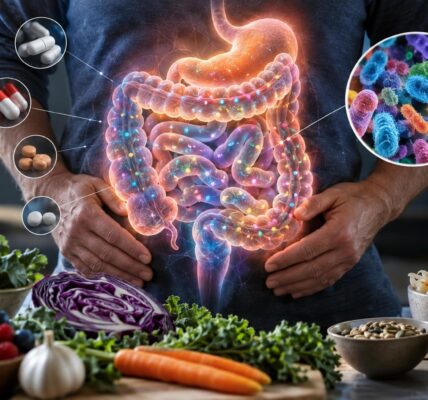
But there is a trade-off. Those same fermentable carbohydrates are food for your beneficial bacteria. A systematic review with meta-analysis found that a low-FODMAP diet consistently lowered levels of Bifidobacteria, a well-known group of friendly microbes. Another review on the low-FODMAP diet and the microbiome noted that the diet can significantly reduce symptoms while also reducing beneficial microbial populations, and it stressed a personalized approach.
The ACG guideline also warns that over-restricting for the long term may lead to micronutrient deficiencies. I have written before about how a high-fiber diet nourishes your gut bacteria, and that principle does not disappear just because your gut is sensitive. It simply means we need to be wiser about which fibers we choose.
How Psyllium and Resistant Starch May Work Together
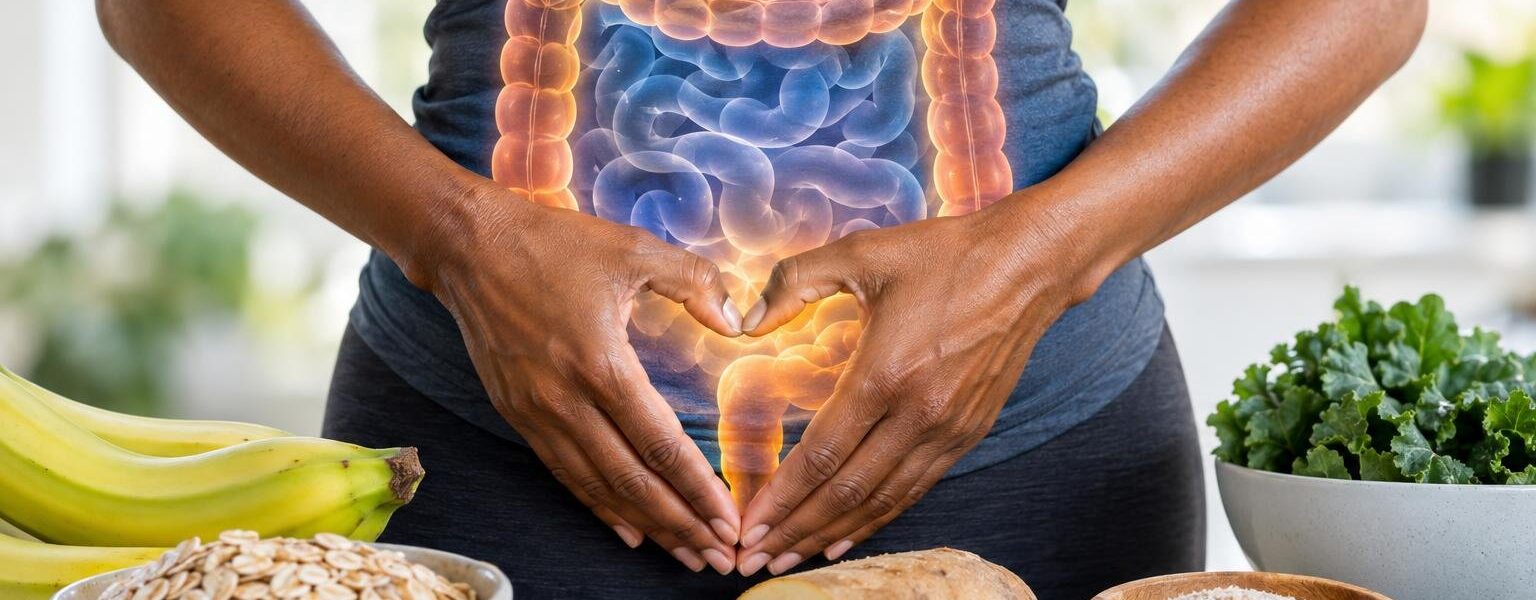
Resistant starch is starch that “resists” digestion in the small intestine and travels on to the colon, where bacteria can ferment it. Psyllium husk is a soluble, viscous fiber, meaning it dissolves in water and forms a thick gel. It ferments slowly.
The researchers propose that psyllium slows the bacterial breakdown of resistant starch, so fermentation happens deeper in the colon. In theory, that could produce helpful compounds with less gas along the way. I want to be clear: that is the authors’ hypothesis, not a proven mechanism.
It does fit with what larger reviews already tell us. The ACG guideline notes that soluble, viscous, poorly fermentable fiber such as psyllium may help IBS, while fibers that ferment quickly can produce gas and worsen bloating. The Seoul Consensus adds that psyllium may act as a prebiotic (food for good bacteria) and help produce short-chain fatty acids such as butyrate, which your colon cells use for fuel. If you want to go deeper, my article on how fiber protects the gut lining explains why that matters.
Brain Science
Your gut and brain are in constant conversation through what scientists call the gut-brain axis. That may help explain why, in this trial, worry focused on gut symptoms eased in the fiber group, even though the symptoms themselves stayed about the same.
🌿 Natural Steps to Support IBS and Gut Health
God made your body with remarkable wisdom. As the psalmist wrote, “I will praise You, for I am fearfully and wonderfully made; Marvelous are Your works, And that my soul knows very well” (Psalm 139:14, NKJV). Your digestive system and the trillions of microbes within it are part of that marvelous design.
So the goal is not just to remove trigger foods. The goal is to plan how you will feed your gut well, ideally with your doctor or a registered dietitian. Here is what I share with my patients.
Treat Low-FODMAP as a Season
The low-FODMAP diet is best done short term with a registered dietitian, who can help you reintroduce foods and find your personal tolerance instead of staying on a narrow menu forever.
Favor Gentle, Slow Fiber
Research reviews single out soluble, viscous, low-fermenting fibers like psyllium husk for bloating, gas and stool consistency. Fast-fermenting fibers are more likely to cause gas.
Go Low, Slow and Hydrated
Increase any fiber gradually and drink plenty of water. A sudden jump in fiber is one of the most common reasons people decide “fiber doesn’t agree with me.”
Know Your Soluble Fiber Foods
The ACG guideline lists psyllium, oat bran, barley and beans as soluble fiber sources. Some, like beans, may be high in FODMAPs, so individual tolerance varies.
Keep Your Body Moving
Gentle daily movement, such as a walk after meals, helps keep the whole digestive tract working in rhythm and is a simple gift to your gut.
Calm the Gut-Brain Axis
Prayer, slow breathing, restful sleep and unhurried meals all send “safe” signals from your brain to your gut. Your gut is listening.
Psyllium Husk for IBS: What the Bigger Picture Shows
Psyllium is not new. The ACG guideline found that fiber beat placebo for IBS symptoms (a risk ratio of not improving of 0.87, with a 95 percent confidence interval of 0.80 to 0.94). It calls soluble, viscous, poorly fermentable fiber a reasonable first option because side effects are few.
A review of diet, fibers and probiotics for IBS found that psyllium had the best results among soluble fibers for bloating, flatulence, distension and stool weight. The same review admits there is not yet enough data to set a best dose or duration, which is one reason I encourage you to work with your physician rather than guess.
Resistant Starch and IBS: Promising but Early
The resistant starch side of this story is much newer. The Edith Cowan trial is one of the first to test resistant starch paired with psyllium in people on a low-FODMAP diet, and it is tiny. I find it promising because it points toward a “both and” approach: calm the symptoms and keep feeding the good bacteria.
For now, I would not rush out to buy any particular blend. Instead, talk with your doctor or dietitian about whether gently increasing soluble fiber fits your situation. If you are unsure whether your diet is low in fiber to begin with, my article on 10 signs you need more fiber is a helpful place to start.
✦ Dr. Colbert’s Faith Perspective
Stewardship, Not Worry
Scripture reminds us that our bodies are temples of the Holy Spirit, to be cared for in a way that glorifies God (1 Corinthians 6:19 to 20). Caring for your gut is part of that stewardship. But stewardship is different from obsession. Many people with IBS live with a constant, low hum of worry about their next meal or their next flare.
It struck me that gut-focused anxiety eased in this study. Your gut and your mind are deeply connected, just as your body and your spirit are. God invites us to take practical steps and, at the same time, to hand our worries to Him. I encourage you to pray before meals, not as a ritual, but as a real moment of surrender and gratitude.
“Be anxious for nothing, but in everything by prayer and supplication, with thanksgiving, let your requests be made known to God; and the peace of God, which surpasses all understanding, will guard your hearts and minds through Christ Jesus.” (Philippians 4:6 to 7, NKJV)
“Healing the gut is not only about what you take away from your plate. It is also about what you lovingly put back, one gentle step at a time.”
Dr. Don Colbert, MD
Over the years I have seen that people do best when they understand their gut, not just their list of trigger foods. That is why I wrote Dr. Colbert’s Healthy Gut Zone, and why I followed it with a cookbook full of gut-friendly meals, so you can rebuild variety at your own pace.
From Dr. Colbert’s Bookshelf
Dr. Colbert’s Healthy Gut Zone
In Healthy Gut Zone, I walk you through how digestion works, how your microbiome shapes your health, and how the gut-brain connection affects your mood and peace of mind, all with practical, faith-filled guidance. When you are ready to put it on your plate, the companion Dr. Colbert’s Healthy Gut Zone Cookbook offers food-first recipes to help you bring fiber and variety back to your table.
✅ Your Gut-Friendly Action Plan
- Get a proper evaluation first. Blood in the stool, unintended weight loss, new bowel symptoms after age 50 or persistent pain all need a doctor’s evaluation to rule out other conditions before you assume it is IBS.
- Partner with a professional. If you follow a low-FODMAP diet, do it with a registered dietitian and your physician, and plan the reintroduction phase from the start.
- Ask about soluble fiber. Talk with your doctor about whether a gentle, soluble fiber such as psyllium is right for you.
- Start low and go slow. Add fiber gradually over several weeks and pay attention to how your body responds.
- Drink plenty of water. Soluble fiber works by absorbing water, so make water your main beverage throughout the day.
- Check your medication timing. Psyllium can affect the timing of medications. If you take any medication, ask your pharmacist or doctor when to take fiber. Never stop or change a medication on your own.
- Move every day. Gentle walking supports healthy digestion; my article on walking and gut health explains why.
- Make meals peaceful. Sit down, slow down, chew well and begin with a simple prayer of thanks. Calm meals support a calmer gut.
❓ Frequently Asked Questions
Is fiber good or bad for IBS?
It depends on the type. The American College of Gastroenterology found that fiber outperformed placebo for IBS symptoms, especially soluble, viscous, slowly fermenting fiber like psyllium. Fibers that ferment quickly can produce more gas and bloating, so your choices should be individualized with your doctor.
Is psyllium husk good for IBS?
Research reviews single out psyllium as the soluble fiber with the best results for bloating, flatulence, distension and stool weight. Experts consider it a reasonable first option because side effects are few. There is not yet enough data to set a best dose or duration, so talk with your physician, increase it gradually and drink plenty of water.
Does the low-FODMAP diet hurt gut bacteria?
It can affect them. A meta-analysis found that a low-FODMAP diet consistently lowered Bifidobacteria, a group of beneficial bacteria, though it had no clear effect on overall microbiome diversity. That is why experts recommend following it short term with a dietitian and reintroducing foods as you are able.
What is resistant starch, and does it work for IBS?
Resistant starch is starch that passes through the small intestine undigested and reaches the colon, where bacteria ferment it. In one small 3-week trial of 26 adults, resistant starch combined with psyllium shifted gut bacteria without worsening IBS symptoms. The evidence is very early, so it is best discussed with your doctor or dietitian before trying it.
When should I see a doctor about IBS symptoms?
See your doctor if you notice blood in your stool, unintended weight loss, new symptoms after age 50 or persistent abdominal pain. These need a professional evaluation to rule out other conditions. It is also wise to check with your physician before making major dietary changes.
🙏 A Final Word of Hope
If you live with IBS, I want you to know that you are not stuck choosing between comfort and a healthy gut. This new study is small and early, but it points toward a hopeful idea: with wisdom, patience and the right kind of fiber, you may be able to calm your symptoms and still nourish the good bacteria God placed within you.
Take it one gentle step at a time. Work with your doctor, stay curious about your own body, and bring every worry to the Lord in prayer. As the apostle John wrote, “Beloved, I pray that you may prosper in all things and be in health, just as your soul prospers” (3 John 1:2, NKJV). That is my prayer for you as well.
Dr. Don Colbert, MD
Sources
- A new fiber supplement could help millions suffering from irritable bowel syndrome, ScienceDaily, 2026
- Yan R, Devine A, Lo J, et al. Dietary fibre blend improves gut health in patients with irritable bowel syndrome following a low FODMAP diet: a randomised, double-blind control trial, European Journal of Nutrition (Edith Cowan University repository), 2026
- ACG Clinical Guideline: Management of Irritable Bowel Syndrome, American Journal of Gastroenterology, 2021
- Effects of a low FODMAP diet on the colonic microbiome in irritable bowel syndrome: a systematic review with meta-analysis, PubMed Central (NIH)
- Diet, fibers, and probiotics for irritable bowel syndrome, PubMed Central (NIH)
- 2025 Seoul Consensus on Clinical Practice Guidelines for Irritable Bowel Syndrome, Journal of Neurogastroenterology and Motility, 2025
- Low-FODMAP Diet for Irritable Bowel Syndrome: Insights from Microbiome, PubMed Central (NIH)
Was this helpful?
Get Dr. Colbert's weekly health tips
Simple, faith-filled health tips in your inbox once a week. Plus a free gift: the 21-Day Keto Zone Challenge.
Unsubscribe anytime. We never share your email.
What stood out to you most, and have you tried any of this yourself?
Tell us on Facebook