
Walking for Constipation: A 20-Minute Stroll May Wake Your Gut
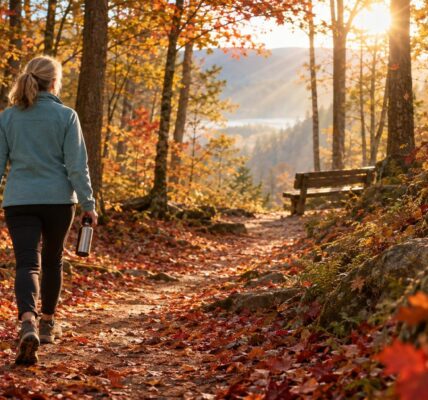
Picture this: it is a crisp autumn morning, and you have been feeling sluggish and “stuck” for days. You lace up your shoes, step outside and stroll around the block for 20 minutes. Inside your belly, something you cannot see is already stirring to life.
That quiet scene now has a bit of science behind it. A small new study from Fujita Health University in Japan, reported by ScienceDaily, found that a comfortable 20-minute walk switched on gut activity within just 1 to 2 minutes. If you have ever wondered about walking for constipation, this research offers a fascinating glimpse of what may be happening inside you.
In my practice I often see patients over 50 who quietly struggle with sluggish bowels and feel too embarrassed to bring it up. Let me walk you through what this study found, what it does not prove, and the simple, God-given habits I recommend for a healthier gut.
🔬 What the Walking Study Actually Found
The research team, led by senior author Professor Yohei Otaka, published their work in the journal Scientific Reports. They wanted to know whether physical activity has an immediate effect on gut motility, which simply means the wave-like muscle movements that push food and waste through your digestive tract.
Here is how they did it. Twenty-one healthy young adults first lay quietly for 1 minute while researchers recorded their bowel sounds with an electronic stethoscope. Those gurgles and rumbles you sometimes hear are actually the sounds of your intestines moving things along.
Next, each person walked for 20 minutes on a treadmill at a comfortable pace they chose themselves. No racing, no sweating buckets. Then the team recorded bowel sounds again at several points over the next 15 minutes.
The Results
- Within 1 to 2 minutes after the walk, all three measures of gut activity rose significantly above resting levels: how loud the bowel sounds were, how much of the recording time had detectable sounds, and how many sound events occurred per minute.
- According to the ScienceDaily report, bowel-sound amplitude (loudness) nearly doubled.
- The boost was brief. It faded within about 2 to 3 minutes.
The researchers also suggest that recording bowel sounds could become a useful, non-invasive tool for studying how the gut works. In other words, no tubes, no scopes, just a stethoscope and a computer.
Honest Limitations You Should Know
I always want you to understand exactly what a study shows. This one is encouraging, but it is small and it has real limits:
- Only 21 people took part, and they were healthy young adults, not people over 40.
- None of the participants had constipation.
- Bowel sounds are an indirect stand-in for gut movement, not a direct measurement.
- The study did not measure actual bowel movements or relief of symptoms.
- It was a single group measured before and after, not a randomized controlled trial, and the effect lasted only minutes.
So this study does not prove that one walk will relieve constipation. What it does offer is a plausible window into why movement has long been linked to healthier bowels. One study is never the final word, but it fits beautifully with the bigger picture.
Did You Know?
According to National Institute of Diabetes and Digestive and Kidney Diseases (NIDDK) figures cited by UF Health’s Norman Fixel Institute, about 16% of adults have constipation symptoms, and that number climbs to 33% in people over 60.
🚶 Does Walking Help Constipation? Why Movement Matters
Your gut is run largely by your autonomic nervous system. That is the automatic part of your nervous system that keeps your heart beating and your food digesting without you ever having to think about it.
Professor Otaka suggests two possible reasons a walk might wake up the gut. First, walking may shift the activity of that autonomic nervous system. Second, the gentle, natural rocking and bouncing of the body as you walk may trigger reflexes in the intestines. These are hypotheses, not proven mechanisms, but they make good sense.
I like to think of it this way: your body was designed to move. When you sit for hours, many systems slow down. When you walk, you send a signal throughout your body that it is time to get things going again. Truly, we are fearfully and wonderfully made.
The Bigger Body of Evidence
This small study joins larger research pointing in the same direction. A systematic review in the Journal of Global Health pooled 13 cohort studies with 119,426 participants. People with higher physical activity had about a 31% lower risk of constipation than those with low activity. Because these were observational studies, they show an association, not proof of cause.
A meta-analysis in the Scandinavian Journal of Gastroenterology looked at 9 randomized trials with 680 participants. Those who exercised were roughly twice as likely to see their constipation symptoms improve, and aerobic exercise such as walking looked especially promising. The authors were honest, though: the trials carried a high risk of bias and varied a great deal from one another.
More Is Not Always Better
Here is something many people do not know. A review in Quality in Sport found that light to moderate activity lasting under 60 minutes appears helpful for colon movement, while very long or intense exercise may actually slow the gut down. The authors note that the best exercise routines still need more research.
That is good news for most of my patients. You do not need to run a marathon. A comfortable, steady walk is exactly the kind of movement this research supports.
🌿 6 Natural Steps for Constipation After 50
When patients ask me about natural constipation relief, I always come back to a simple foundation: movement, fiber and water, supported by rest and a peaceful heart. I teach these foundations in my book The Seven Pillars of Health, and they work together like the strands of a rope.
Take a Comfortable Daily Walk
Aim for about 20 minutes at a pace where you can still talk. Since the study effect was brief, short walks spread through the day, such as after meals, may be a smart way to keep things moving.
Add Soluble Fiber Slowly
European guidelines and an American College of Gastroenterology position paper favor fiber, mainly soluble fiber. Think chia and ground flax seeds, oats, beans, lentils, berries and apples. Increase gradually to avoid bloating.
Drink Enough Water
Soluble fiber forms a gel with water that helps regulate stool consistency. Without enough fluid, extra fiber can backfire and leave stools hard. Keep a water bottle with you on your walks.
Feed Your Good Bacteria
Soluble fiber acts as a prebiotic, meaning food for your friendly gut bacteria. They turn it into short-chain fatty acids, helpful compounds that nourish the lining of your colon.
Break Up Long Sitting
If you sit for long stretches, stand and stroll around your home every hour. Walk while you take phone calls, or take a lap after breakfast. Every bit of gentle movement counts.
Walk in Peace, Not Pressure
Your gut and your nervous system are closely connected. Turn your walk into a time of prayer, gratitude or quiet worship music, and let the stress of the day roll off your shoulders.
Nutrition Spotlight
According to Medical News Today, NIDDK advises adding fiber gradually and drinking enough fluids. Not sure whether you are getting enough? Read my article on the 10 signs you need more fiber.
Many of my patients also ask about their morning cup. If you enjoy coffee, you may find my article on coffee, decaf and gut health helpful. And if you would like to make movement more social and fun, take a look at the health benefits of pickleball.
✦ Dr. Colbert’s Faith Perspective
Walking With God, One Step at a Time
Walking is one of the oldest forms of devotion. Scripture describes Enoch in a single beautiful line: “And Enoch walked with God; and he was not, for God took him” (Genesis 5:24, NKJV). Throughout the Bible, walking is a picture of daily fellowship with our Creator.
When you take a prayer walk, you care for your body and renew your spirit at the same time. Simple habits like moving, drinking water and eating whole foods are part of how we honor the body God gave us. The apostle John prayed for his friend to “prosper in all things and be in health, just as your soul prospers” (3 John 1:2, NKJV). Body and soul were meant to flourish together.
“Or do you not know that your body is the temple of the Holy Spirit who is in you, whom you have from God, and you are not your own? For you were bought at a price; therefore glorify God in your body and in your spirit, which are God’s.” (1 Corinthians 6:19-20, NKJV)
“Some of the most powerful health habits cost nothing at all. Put on your shoes, step outside, thank God for the morning, and let your body do what He designed it to do.”
Dr. Don Colbert, MD
If you want to go deeper, I wrote Dr. Colbert’s Healthy Gut Zone to help you understand how digestion, your microbiome and even your brain are connected. It is the guide I wish every one of my patients had on their nightstand.
From Dr. Colbert’s Bookshelf
Dr. Colbert’s Healthy Gut Zone
In Healthy Gut Zone, I explain how your digestive system works, why your gut bacteria matter so much, and how the gut and brain talk to each other every day. You will learn how movement, fiber, water and a healthy microbiome work together, along with practical eating plans you can follow at home. If this study has you curious about what is happening inside your belly, this book is your next step.
For the bigger foundation of water, food, movement and rest, The Seven Pillars of Health remains one of my most loved books for readers who want to build healthy habits from the ground up.
✅ Your Walking for Constipation Action Plan
- Start with 20 minutes. Choose a comfortable pace where you can still carry on a conversation. If 20 minutes feels like too much, begin with 5 to 10 and build up.
- Try a walk after meals. Because the study effect was short, several gentle walks during the day may suit your gut better than one long session.
- Keep it moderate. Light to moderate activity under 60 minutes appears most helpful. Very long or intense exercise may slow the gut.
- Add soluble fiber gradually. Add one serving at a time of foods like oats, beans, chia, flax or berries over a week or two.
- Drink water through the day. Fiber needs fluid to do its work. Sip before, during and after your walk.
- Make it a prayer walk. Use your walk to pray, give thanks or meditate on a verse. A calm heart supports a calm gut.
- Walk with someone. A spouse, friend or neighbor keeps you accountable and makes the time fly.
- Talk with your doctor. Some medications can cause constipation, so never stop or change a medication on your own. Ask your physician before starting fiber supplements if you take medications or have a bowel condition.
When to See Your Doctor
Please do not self-treat for long. See your physician if constipation lasts, or if you notice blood in your stool, black stools, unexplained weight loss, severe or worsening abdominal pain, or a sudden change in your bowel habits.
❓ Frequently Asked Questions
Does walking help constipation?
Larger studies link higher physical activity with lower constipation risk, and randomized trials suggest exercise may improve symptoms, though those trials had a high risk of bias. The new Japanese study adds that a 20-minute walk briefly boosted gut activity in healthy young adults. Walking is a safe, free habit worth building, but it is not a guaranteed fix.
How long should I walk to get my gut moving?
The study used a 20-minute walk at a comfortable, self-chosen pace. Research also suggests light to moderate activity under 60 minutes appears helpful, while very long or intense workouts may slow the gut. For most adults, 20 to 30 minutes of easy walking is a sensible goal.
Why is constipation more common after 50?
According to NIDDK figures, about 16% of adults have constipation symptoms, rising to 33% in people over 60. Many factors can play a role, including less activity, lower fluid and fiber intake, and medications. If you are over 50 and notice a change, it is wise to mention it to your doctor.
What is the best natural approach for constipation?
I recommend a foundation of regular moderate movement, soluble fiber added gradually, and plenty of water. Guidelines from European experts and the American College of Gastroenterology support fiber, mainly soluble fiber. Always talk with your physician if constipation is persistent or comes with warning signs.
💙 A Final Word of Encouragement
This small study reminds us of something wonderful: your body responds to the simplest acts of care, sometimes within minutes. The evidence is still early, and it was gathered in healthy young adults, so I do not want to overpromise. But a comfortable daily walk, paired with fiber and water, is one of the kindest gifts you can give your gut.
So tomorrow morning, step outside. Breathe in the autumn air, thank God for the day, and walk with Him for a while. Your body, your mind and your spirit will all be better for it.
Blessings on your health,
Dr. Don Colbert, MD
Sources
- Easing constipation: A 20-minute walk can get your gut moving almost immediately, ScienceDaily (source: Fujita Health University), 2026
- Katagiri K, Koyama S, Takeda K, et al. Immediate effect of physical activity on gut motility in healthy adults, Scientific Reports, 2025
- Physical activity and constipation: A systematic review of cohort studies, Journal of Global Health (PMC/NIH)
- Exercise therapy in patients with constipation: a systematic review and meta-analysis of randomized controlled trials, Scandinavian Journal of Gastroenterology, 2019
- Constipated? Here’s Why and How to Fix It, Norman Fixel Institute for Neurological Diseases, UF Health, 2025
- Does fiber help constipation? Research and more, Medical News Today
- Clinical management of constipation: the role of physical activity, Quality in Sport
Was this helpful?
Get Dr. Colbert's weekly health tips
Simple, faith-filled health tips in your inbox once a week. Plus a free gift: the 21-Day Keto Zone Challenge.
Unsubscribe anytime. We never share your email.
What stood out to you most, and have you tried any of this yourself?
Tell us on Facebook