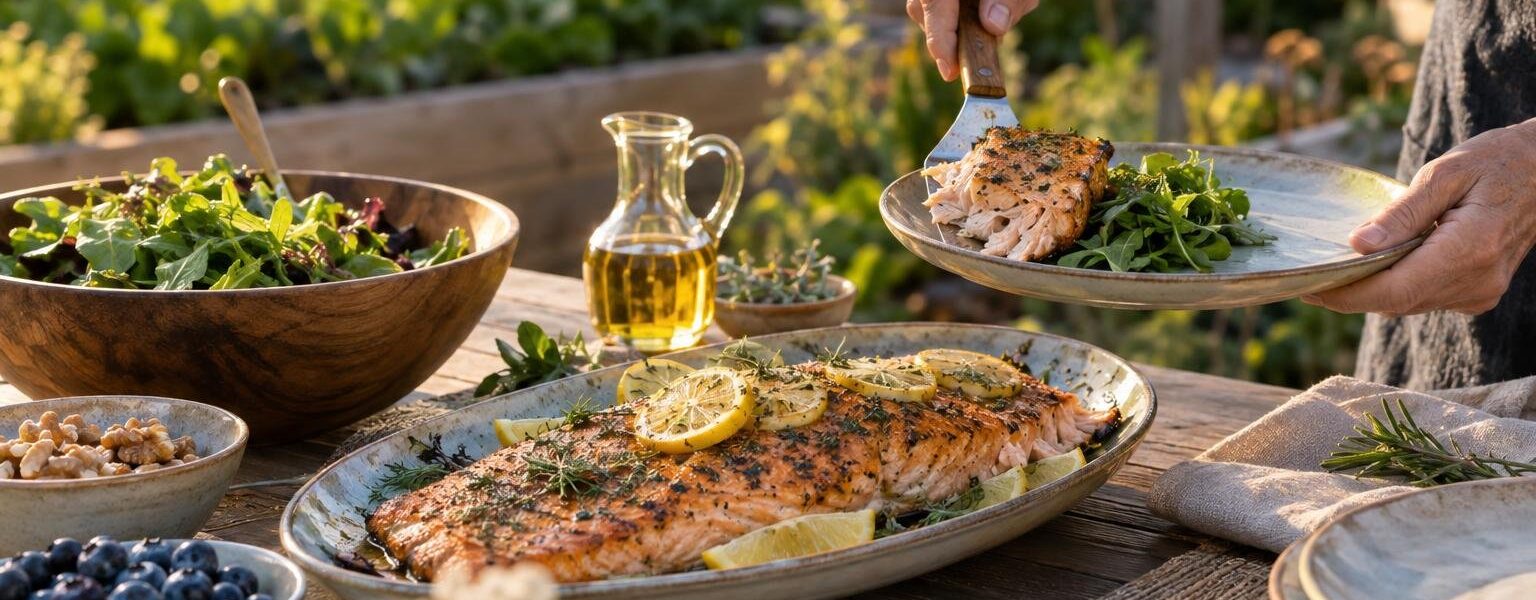
Fish Oil for Brain Health? A 2-Year Study Found No Benefit

Picture a kitchen counter at seven in the morning. Next to the coffee maker sits a bottle of fish oil capsules, and every day someone swallows one or two, hoping it will keep their memory sharp for the grandchildren’s names, the church directory and the stories they want to keep telling.
If that sounds like your kitchen, you are in good company. Fish oil for brain health has become one of the most popular habits among adults over 50. In my practice I am asked about it almost every week.
Now a careful two-year study from the University of Southern California has put that habit to the test. As ScienceDaily reported, high-dose DHA fish oil did reach the brain, yet it did not improve memory or slow shrinkage of the brain’s memory center in older adults at higher risk for Alzheimer’s disease.
Before you toss that bottle or feel discouraged, stay with me. This study is a reality check on the “one pill” idea, not a verdict against omega-3s or fish. And it points us toward something more hopeful: the way God designed us to be nourished, through whole foods, movement, rest and a peaceful heart.
🔬 What the Fish Oil for Brain Health Study Found
This was a randomized, double-blind, placebo-controlled trial, the strongest kind of study we have in medicine. “Randomized” means a coin-flip style process decided who got the real supplement. “Double-blind” means neither the volunteers nor the researchers knew who was taking what until the end, which keeps hopes and expectations from coloring the results.
The team, led by Hussein Yassine, MD, at USC’s Keck School of Medicine, enrolled 365 adults between 55 and 80 years old. All of them rarely ate fish, and all were considered at elevated risk for Alzheimer’s. Nearly half (47 percent) carried a gene variant called APOE4, which is linked to higher Alzheimer’s risk. The work was funded by the National Institutes of Health and the Alzheimer’s Drug Discovery Foundation, and it was published in the journal eBioMedicine.
The DHA Got Where It Was Supposed to Go
Half the volunteers took a daily supplement providing 2,000 mg of DHA (docosahexaenoic acid, one of the main omega-3 fats found in fish). The other half took a placebo. After six months, DHA in the cerebrospinal fluid, the clear fluid that bathes the brain and spinal cord, had risen an average of 17 percent in the supplement group.
That matters. For years, one explanation for disappointing supplement studies was that the omega-3s simply were not reaching the brain. This trial showed they did.
But Memory and the Hippocampus Did Not Benefit
After two full years, the fish oil group did no better than the placebo group on memory and other thinking tests. Brain imaging also showed the supplement did not prevent shrinkage of the hippocampus, a seahorse-shaped area deep in the brain that acts as our memory center.
Dr. Yassine said plainly that the results do not support fish oil supplements as a way to prevent Alzheimer’s. At the same time, the researchers stressed that this does not mean omega-3s are unnecessary or that eating fish is not beneficial.
What This Study Does Not Tell Us
I always want you to see the whole picture, so here are the honest limits. This trial tested one specific thing: a single high-dose, DHA-only supplement in older adults who rarely ate fish and were already at elevated risk.
- It does not tell us about people who already eat fish regularly.
- It did not test blends that combine EPA (eicosapentaenoic acid, the other major fish omega-3) with DHA.
- It says nothing about omega-3s for heart health or other roles they have been studied for.
- Diet and lifestyle were not tested, so the idea that food may work better is a hypothesis, not a proven result.
One study is never the final word. But this one fits a larger pattern, and that pattern is worth understanding.
Recent Research
This is not the first supplement trial with this result. The NIH’s AREDS2 study followed about 4,000 older adults for five years, and an omega-3 supplement (350 mg DHA plus 650 mg EPA) did not slow cognitive decline. A UK trial of 748 adults over 24 months also found no effect.
🧠 Omega-3 and Alzheimer’s Prevention: Why Food May Differ From a Capsule
Here is the puzzle. DHA is a key structural part of brain cell membranes, the thin outer layers that wrap each brain cell and help it communicate. Your brain truly is fearfully and wonderfully made (Psalm 139:14), and DHA is part of its framework.
On top of that, observational studies, which watch what people eat over many years without assigning them anything, consistently link fish and DHA intake to better brain aging. According to the NIH Office of Dietary Supplements, a 2016 analysis of 21 groups of people found that each extra 100 mg of DHA per day was tied to a 14 percent lower risk of dementia and a 37 percent lower risk of Alzheimer’s.
So why do capsule trials keep coming up empty? The honest answer is that we do not fully know yet. But the researchers and the NIH offer a few thoughtful possibilities.
1. The Fish Is More Than Its Oil
The NIH notes it is hard to tell whether the benefits of eating seafood come from omega-3s, from other components of fish, or from the other healthy habits fish eaters tend to have. A salmon dinner is a whole package, not a single isolated nutrient.
2. The Whole Plate May Matter
The USC team’s earlier work suggests omega-3s may work better as part of a broader dietary pattern, such as the Mediterranean diet. A fish fillet usually shows up next to vegetables, olive oil and herbs, not next to fries and a soda. The researchers suspect that combination may be part of the story.
3. Timing May Matter Too
In discussing the AREDS2 results, a National Institute on Aging scientist suggested that timing or dietary pattern might make a difference, as the National Eye Institute reported. A lifetime of eating fish may be quite different from starting a capsule later in life.
Here is what I tell my patients: your brain was never designed to run on one nutrient. It thrives on a whole way of living.
“A capsule can carry a nutrient to your brain, but it cannot carry a lifetime of good choices. The meals you share, the walks you take and the rest you receive are the real foundation of a sharp mind.”
Dr. Don Colbert, MD
🥗 Mediterranean Diet and Brain Health: Being Honest About the Evidence
I love the Mediterranean way of eating, and I have written about it for decades. But I want to be straight with you about where the science stands, because you deserve the truth more than you deserve hype.
The National Institute on Aging says no vitamin or supplement is recommended for preventing Alzheimer’s or cognitive decline. It also notes that regular fish consumption is associated with higher cognitive function and slower decline. Mediterranean and MIND diets show some benefit in observational studies, but the evidence is mixed. One 600-person MIND diet trial found only small improvements, similar to those seen with the comparison diet.
The Mayo Clinic agrees that there are no proven prevention strategies yet. Still, it says healthy habits such as diet, exercise and not smoking may reduce risk, and that the Mediterranean diet is associated with lower risk of Alzheimer’s and dementia. If you want a deeper look at one of these eating patterns, I recently wrote about the MIND diet and brain aging.
So where does that leave us? With a sensible, hopeful middle ground. No single food or pill is a guarantee. But a whole-food pattern built around fish, vegetables, olive oil and nuts nourishes the entire body, and many studies associate it with healthier aging.
This is also the way of eating I describe in my book What Would Jesus Eat? Jesus lived in a Mediterranean culture of fish, olive oil, vegetables, grains and fruit. After His resurrection, the disciples offered Him a meal: “So they gave Him a piece of a broiled fish and some honeycomb” (Luke 24:42, NKJV). I find that a beautiful picture of whole food shared at the table.
Nutrition Spotlight
A cooked 3 oz serving of wild Atlantic salmon provides about 1.22 g of DHA and 0.35 g of EPA. Canned sardines (3 oz) offer about 0.74 g DHA and 0.45 g EPA, and herring about 0.94 g DHA and 0.77 g EPA. The American Heart Association recommends 1 to 2 servings of seafood per week.
🌿 Foods to Support Memory After 50, Plus the Habits That Go With Them
The USC team recommends regular exercise, quality sleep and a balanced diet. To be fair, these habits were not directly tested in this trial. But they line up with what the NIH and the Mayo Clinic advise, and with what I have watched help my patients for more than 30 years. Here is how I would spend your effort.
Put Fatty Fish on the Menu
Aim for at least 1 to 2 servings of seafood a week, as the American Heart Association suggests. Wild salmon, sardines, herring and trout are rich in natural omega-3s. Baked, grilled or broiled is best.
Build a Mediterranean Plate
Fill half your plate with vegetables, add a palm-sized portion of fish or lean protein, and dress it with extra virgin olive oil. Mayo Clinic suggests vegetables, fruits and lean protein, especially omega-3 sources.
Add Color and Crunch
Leafy greens, berries and a small handful of walnuts are easy, everyday additions to a Mediterranean-style pattern. Swap processed snacks for these whole foods a little at a time.
Keep Moving
Physical activity is on Mayo Clinic’s list of healthy habits that may lower risk. A daily walk is a wonderful start, and I explain why in my article on daily steps and brain health.
Protect Your Sleep
The USC researchers named quality sleep as part of a brain-healthy life. Keep a steady bedtime and a dark, cool room. Learn more in my piece on sleep loss and brain health.
Stay Connected and Know Your Numbers
Mayo Clinic also lists social activity, managing blood pressure and cholesterol, treating hearing and vision loss, limiting alcohol and not smoking. Ask your doctor to review these with you.
Notice that none of these steps costs much, and several of them are free. That is one of the encouraging takeaways from this study: the things most worth your effort are already within reach.
✦ Dr. Colbert’s Faith Perspective
Whole-Person Care for a Wonderfully Made Mind
There is something freeing in this study. We do not have to put our hope in a capsule. God designed us to flourish through the gifts He placed all around us: good food from His creation, the strength of our bodies in motion, the renewal of sleep, the joy of fellowship and the peace of prayer.
Scripture calls our bodies temples: “Or do you not know that your body is the temple of the Holy Spirit who is in you, whom you have from God, and you are not your own? For you were bought at a price; therefore glorify God in your body and in your spirit, which are God’s” (1 Corinthians 6:19-20, NKJV). Stewardship is not about finding a shortcut. It is about daily, faithful care of the whole person, body, mind and spirit together.
And if you worry about your memory, bring that worry to the Lord. Fear never sharpened anyone’s mind, but peace can steady a heart while we take wise, practical steps.
“Beloved, I pray that you may prosper in all things and be in health, just as your soul prospers.” (3 John 1:2, NKJV)
From Dr. Colbert’s Bookshelf
Dr. Colbert’s Healthy Brain Zone
If this study has you thinking, “So what should I actually do for my brain?”, this book is my answer. In Healthy Brain Zone I walk you through a whole-life brain plan: the foods I recommend, the movement and sleep habits that matter, and the risk factors worth discussing with your doctor. It is practical, encouraging and rooted in faith, exactly the kind of foundation this new research points toward instead of a single pill.
✅ Your Brain-Healthy Action Plan for This Week
- Plan two fish meals. Choose wild salmon, sardines, herring or trout, and mark the nights on your calendar. Even if you have never been a fish lover, start with one meal and build from there.
- Switch your cooking fat. Use extra virgin olive oil for dressings and gentle cooking in place of processed vegetable oils.
- Add one plant food a day. A bowl of leafy greens, a cup of berries or a small handful of walnuts are simple places to begin.
- Walk most days. Start where you are, even 10 minutes after a meal, and gradually lengthen your walks.
- Guard your bedtime. Set a consistent bedtime and wind down with prayer or Scripture instead of screens.
- Call a friend or join a group. Social activity is on Mayo Clinic’s list of healthy habits, and fellowship nourishes the soul too.
- Talk with your doctor about your supplements and numbers. Review blood pressure, cholesterol, hearing and vision, and ask whether your current supplements still make sense for you. If you take warfarin or another blood thinner, or have a heart condition, ask before changing any omega-3 amount, and never stop a prescribed omega-3 or any medication without your doctor’s guidance.
- Keep learning. Pick up Dr. Colbert’s Healthy Brain Zone for a complete, step-by-step plan you can follow at home.
❓ Frequently Asked Questions
Does fish oil help memory?
In this two-year trial of 365 at-risk older adults who rarely ate fish, a daily 2,000 mg DHA supplement did not improve memory or thinking compared with a placebo. Other large trials, including AREDS2 and a UK study of 748 adults, also found no cognitive effect in older adults. Eating fish, however, is associated with better cognitive function in observational studies.
Should I stop taking my fish oil?
Please do not make that decision on your own based on one article. Many people take omega-3s for reasons other than memory, and some take a prescribed omega-3. Talk with your doctor, especially if you take a blood thinner such as warfarin or have a heart condition, since fish oil may affect clotting time.
What are the best food sources of omega-3s?
Cold-water fatty fish are the richest food sources of DHA and EPA. A cooked 3 oz serving of wild Atlantic salmon provides about 1.22 g of DHA, and herring and canned sardines are also excellent choices. The American Heart Association recommends 1 to 2 servings of seafood each week.
Is the Mediterranean diet proven to prevent Alzheimer’s?
No eating plan is proven to prevent Alzheimer’s yet. The Mediterranean diet is associated with lower risk in observational studies, but the National Institute on Aging describes the overall evidence as mixed. It remains a nourishing, whole-food pattern that many experts encourage as part of healthy living.
Does this study apply to heart health or EPA and DHA blends?
No. This trial tested only a high-dose, DHA-only supplement and its effect on memory and the hippocampus in at-risk older adults. It did not study EPA and DHA blends, people who already eat fish regularly, or omega-3s for heart health.
🙏 A Final Word of Encouragement
When a headline says a popular supplement “found no benefit,” it is easy to feel let down. I see it differently. This careful study reminds us that a healthy brain is not bought in a bottle. It is built, one meal, one walk, one good night of sleep and one prayer at a time.
So enjoy that salmon dinner. Drizzle the olive oil, toss the greens, take the evening walk and call the friend you have been missing. Talk with your doctor, keep learning and rest in the knowledge that the God who made your mind cares about every part of you.
You are fearfully and wonderfully made, and your best years can still be ahead of you.
Dr. Don Colbert, MD
Sources
- Millions take fish oil for brain health. A two-year study found no benefit, ScienceDaily (source: University of Southern California, Health Sciences), 2026
- Yassine HN, et al. CNS target engagement of high-dose DHA supplementation in older adults at risk for dementia: a randomised, double-blind, placebo-controlled trial, eBioMedicine, 2026
- NIH Study Shows no Benefit of Omega-3 or Other Nutritional Supplements for Cognitive Decline, National Eye Institute (NIH), 2015
- What Do We Know About Diet and Prevention of Alzheimer’s Disease?, National Institute on Aging (NIH), 2023
- Alzheimer’s prevention: Does it exist?, Mayo Clinic
- Omega-3 Fatty Acids: Health Professional Fact Sheet, NIH Office of Dietary Supplements, 2025
Was this helpful?
Get Dr. Colbert's weekly health tips
Simple, faith-filled health tips in your inbox once a week. Plus a free gift: the 21-Day Keto Zone Challenge.
Unsubscribe anytime. We never share your email.
What stood out to you most, and have you tried any of this yourself?
Tell us on Facebook