Autophagy and Aging: Why More Cleanup Isn’t Always Better

A patient of mine, a retired schoolteacher in her seventies, recently asked me a question I hear more and more: “Dr. Colbert, how do I turn my autophagy back up? I read it shuts down as we get older.” She had been reading about fasting, cellular cleanup and longevity, and she wanted to do everything right.
It is a wonderful question, and it shows a heart that wants to care for the body God gave her. But a brand new study on autophagy and aging suggests the answer is not as simple as “more is always better.” In fact, the researchers found something they called a paradox.
Scientists at Sanford Burnham Prebys, working with UC San Diego, measured cellular recycling directly in human cells. They discovered that autophagy does not simply fade with age. It can rise, fall or hold steady depending on the type of cell and whether you are a man or a woman. And in people over 70, higher autophagy was linked to poorer physical function, not better. You can read the summary in ScienceDaily’s report on the study.
Let me walk you through what they found, what it does and does not mean, and the simple, time-tested steps I believe matter most.
🔬 What the New Autophagy and Aging Study Found
First, a quick definition. Autophagy is your cells’ built-in recycling system. It gathers worn-out parts inside the cell, breaks them down and reuses the pieces. Think of it as a cleanup crew that keeps each cell’s house in order.
For years, a popular idea has said this cleanup crew slows down as we age, so we should push it harder. As Medical Xpress noted, a decline in autophagy is widely considered a hallmark of aging. This study set out to test that assumption in real human cells.
Who Was Studied and How
The team recruited healthy volunteers aged 23 to 72 who reported no chronic medical conditions. Each person gave blood and skin samples. In the lab, the researchers also converted some skin cells into neurons (nerve cells), which let them look at brain-type cells without touching anyone’s brain.
Here is what makes this study stand out: they measured autophagy flux, which simply means the actual rate at which recycling is happening, not just which recycling genes were switched on. The findings were published in the journal Aging Cell.
The Key Results
- No simple decline. Autophagy went up, went down or stayed the same depending on the cell type and sex.
- Men and women differed. Autophagy fell with age in male skin cells but stayed fairly stable in female skin cells. In neurons made from women’s skin cells, it actually rose with age.
- Genes did not tell the whole story. The activity of autophagy genes did not reliably match the measured recycling rate. The lead author cautioned that gene readouts alone can be misleading.
- The paradox after 70. Among people 70 and older, higher autophagy was associated with poorer physical function in all three cell types. In blood cells, it was linked to lower aerobic fitness. In skin cells, to a higher BMI (body mass index, a weight-to-height measure). In the lab-made neurons, to weaker grip strength, lower metabolism and a higher resting heart rate.
Senior author Caroline Kumsta put it plainly. She said increased autophagy flux “may be good in younger people yet problematic in older people.” She also said the human evidence that autophagy declines with age is “very thin.”
The Gentle Exercise Pilot
The researchers added a small pilot study. Five adults aged 77 to 88 took part in a 12-week mild, fall-prevention exercise program. Afterward, their blood-cell autophagy moved toward more youthful (lower) levels, and their physical performance improved.
That is encouraging, but I want to be honest with you. Five people with no comparison group is a hint, not proof. According to the Sanford Burnham Prebys press release, the team calls it suggestive only, and larger studies are already underway with UC San Diego.
Honest Limitations
This was an observational study at a single point in time, so it shows a link, not cause and effect. Autophagy was measured in cells in the lab, not in whole organs. The study did not test fasting, diet or supplements. One study is never the final word, and the authors themselves say larger studies are needed.
🧬 Does Autophagy Decline With Age? Why This Matters
Many of my readers practice intermittent fasting, and many have heard that fasting turns on autophagy. So it is natural to ask: if autophagy fades with age, shouldn’t we fast harder and longer to make up for it?
This study gently challenges that thinking. Earlier reviews, like one in Aging Cell, reported that autophagic activity declines during aging and discussed exercise and caloric restriction as influences on the body’s protein quality control. The new work suggests that, in actual human cells, the story is far more varied.
Why might higher autophagy go along with weaker function in older adults? The researchers did not prove a reason, so I will not pretend to know. Here is an analogy I use with patients, and please take it only as an analogy: if the recycling trucks on your street are running overtime, it may mean the cleanup is going well, or it may mean there is simply more trash piling up. The busy truck alone does not tell you which.
That is exactly why the lead author warned against relying on one measurement. Your body is not a machine with a single dial. It is a living system of balance, designed by a wise Creator.
What About Fasting?
I want to be very clear here, because I know many of you fast. This study did not test fasting at all. It does not tell us that fasting is good or bad for people over 70, and it is not a reason to abandon a sensible fasting practice your doctor supports.
It does remind us of something I have taught for years: fasting is a tool to use wisely, not a magic switch. A 2026 review in Biochemical Society Transactions reports that evidence for prolonged fasting (24 hours or more) stimulating autophagy in humans is limited and inconsistent. In my book Dr. Colbert’s Fasting Zone, I guide readers toward a gradual, balanced approach rather than extremes. If you want a refresher on the basics, see my article on what happens when you fast.
If you are 65 or older, take medications (especially for blood sugar or blood pressure) or have a chronic condition, please talk with your doctor before starting extended fasting or a new exercise program.
🚶 Autophagy and Exercise: 6 Gentle Steps for Healthy Aging
Notice what improved in that small pilot: not a pill, not an extreme protocol, but mild, consistent movement aimed at preventing falls. The National Institute on Aging says it is never too late to start, and that older adults benefit from aerobic, muscle-strengthening and balance exercise. Here is how I encourage my patients to build a foundation.
Walk Most Days
The NIA cites 150 minutes of moderate aerobic activity each week. That can be as simple as a brisk 20 to 30 minute walk on most days, broken into shorter walks if needed.
Practice Balance
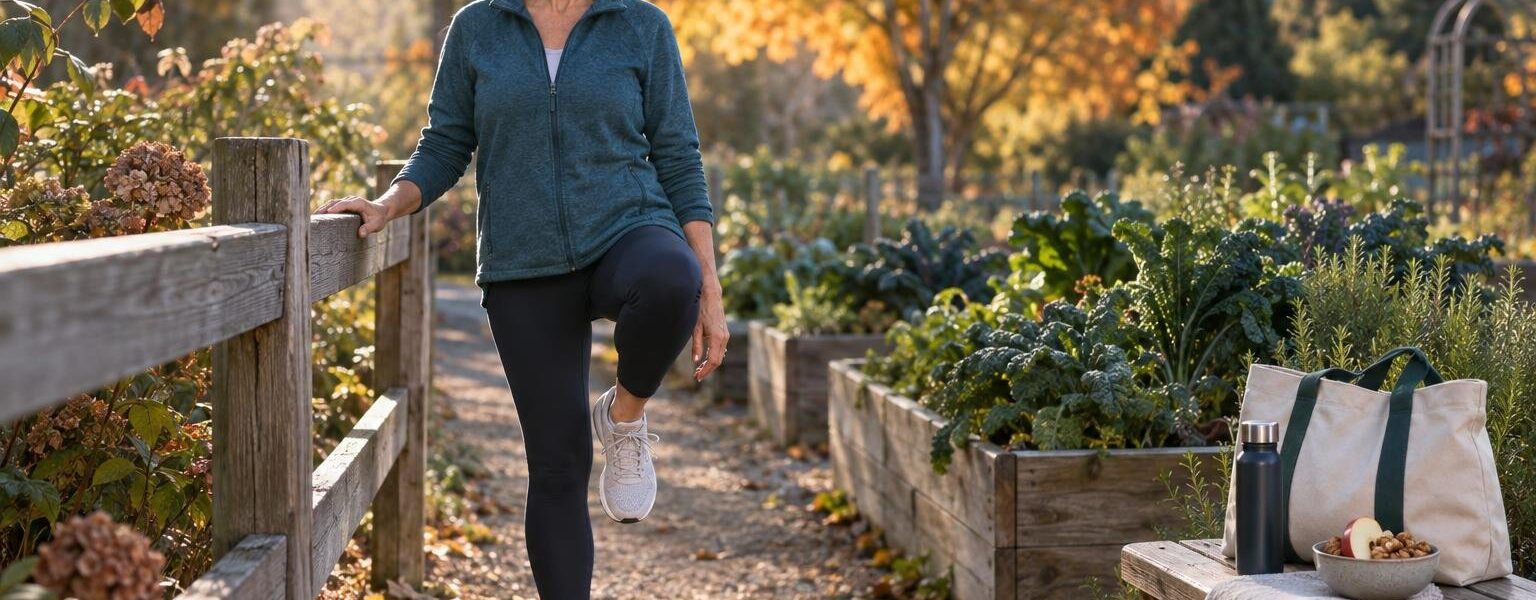
The pilot used a fall-prevention program. Standing on one foot near a counter, heel-to-toe walking and slow tai chi style movements train steadiness, and movement can reduce fall risk.
Strengthen Twice a Week
The NIA recommends muscle strengthening on 2 days a week. Wall push-ups, sit-to-stands from a chair and light bands help maintain strength, which may protect against sarcopenia (age-related muscle loss).
Eat With Balance
Build meals around vegetables, quality protein, healthy fats like olive oil, nuts and fish, and colorful berries. Wise, balanced eating supports the muscle you are working to keep.
Fast Wisely, Not Wildly
If you fast, favor a gradual, sustainable rhythm your doctor approves. More hours is not automatically more benefit, especially if fasting leaves you too weak to move.
Move With Others
A walking partner, a church fitness group or a balance class makes consistency easier and more joyful. Encouragement keeps us showing up.
Muscle and strength deserve special attention after 50. If this subject interests you, I wrote about another study on age-related muscle loss that pairs well with what we are discussing here. And if you are married, you may enjoy my thoughts on exercising with your spouse.
✦ Dr. Colbert’s Faith Perspective
Fearfully and Wonderfully Made, Down to Every Cell
Every cell in your body carries its own cleanup and repair system. I never get over the wonder of that. God did not create us as simple machines with one dial to turn up. He designed us with balance, timing and wisdom woven into our very biology.
Studies like this one call for humility. Science keeps showing that the body is more complex than the slogans. That is a good reason to steward our bodies with patience and balance rather than chasing extremes. Paul reminds us that “bodily exercise profits a little, but godliness is profitable for all things” (1 Timothy 4:8, NKJV). Movement matters, and our walk with God matters most.
And as our outward strength changes with the years, we hold onto this promise: “Even though our outward man is perishing, yet the inward man is being renewed day by day” (2 Corinthians 4:16, NKJV).
“I will praise You, for I am fearfully and wonderfully made; Marvelous are Your works, And that my soul knows very well.” (Psalm 139:14, NKJV)
“Your cells were never designed to be pushed to extremes. They were designed to be stewarded with patience, faithful movement and simple wisdom, one day at a time.”
Dr. Don Colbert, MD
❤️ Strength, Fitness and the Health Markers That Matter
What struck me most about this study was not the autophagy numbers. It was what they were connected to: aerobic fitness, grip strength, resting heart rate and metabolism. These are real-world measures of how well you can live, climb stairs, carry groceries and play with your grandchildren.
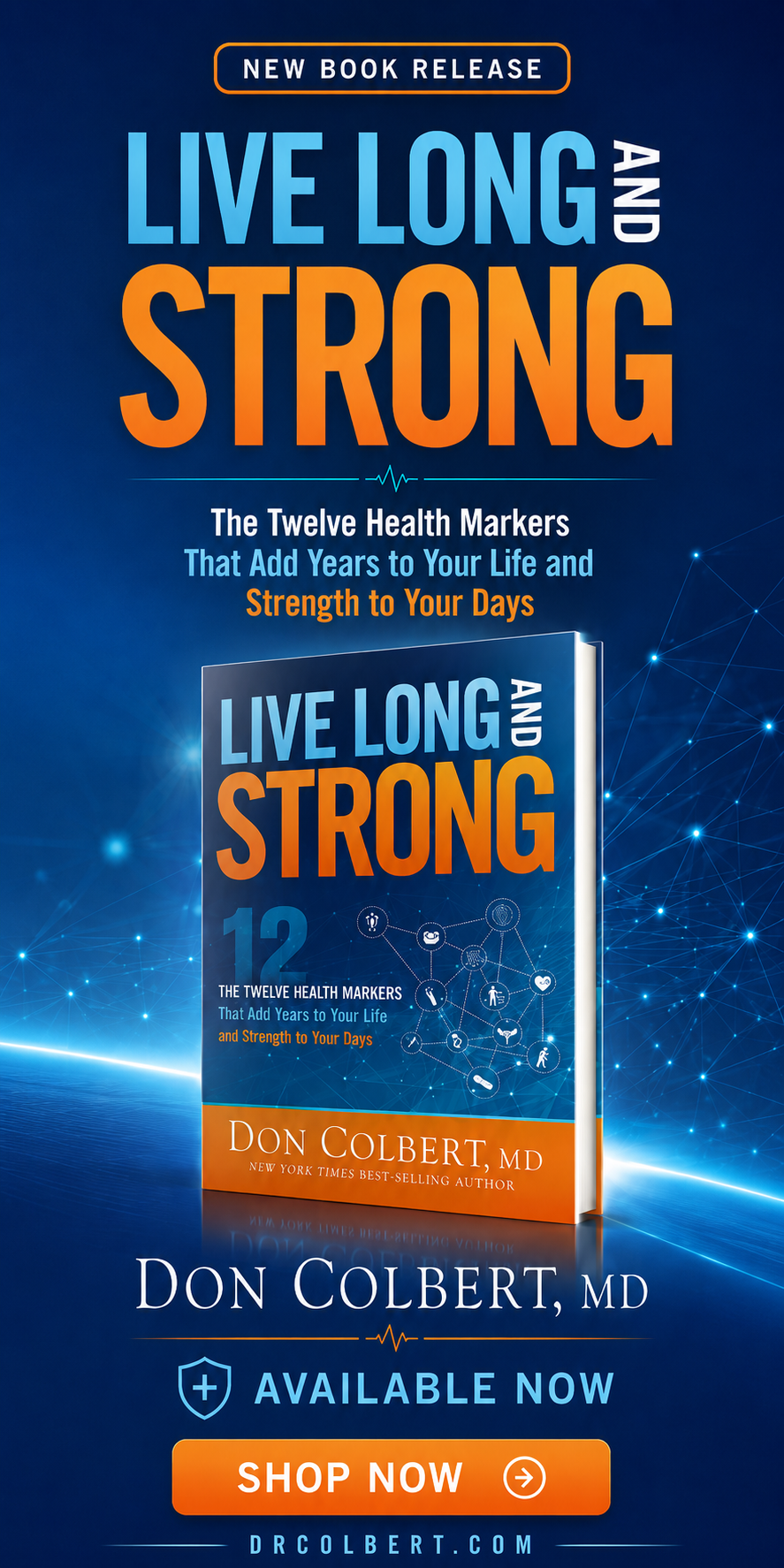
That is why I wrote my newest book, Live Long and Strong. In it, I walk through twelve health markers that help you understand where you stand and how to build strength for the years ahead. Rather than chasing one trendy cellular process, I want you to focus on the markers you can actually track and improve with your doctor.
From Dr. Colbert’s Bookshelf
Live Long and Strong
This study tied cellular aging to the very things that shape daily life after 70: fitness, grip strength and resting heart rate. In Live Long and Strong, I explain twelve health markers that add years to your life and strength to your days, with practical, faith-filled guidance on movement, muscle, nutrition and rest. It is the book I wish every patient over 50 could read before their next checkup.
📋 Your Action Plan for Gentle Exercise and Healthy Aging
- Talk with your doctor first. Especially if you are over 65, take medications or manage a health condition, get a green light before starting a new exercise or fasting plan.
- Start with a daily walk. Begin with 10 minutes and build gradually toward the NIA’s 150 minutes a week.
- Add balance practice. Spend 5 minutes a day on simple, supported balance moves, like the fall-prevention approach used in the pilot.
- Strengthen two days a week. Chair stands, wall push-ups and light resistance bands are a safe place to begin.
- Eat for strength. Include quality protein, vegetables and healthy fats at each meal so your body has what it needs to maintain muscle.
- Fast with wisdom. If you fast, choose a sustainable rhythm instead of chasing longer and longer fasts for autophagy alone.
- Track real-world markers. Ask your doctor about measures like resting heart rate, fitness and strength, and watch how they change over time.
- Invite God into the process. Begin each walk with a short prayer of gratitude for the body He has given you.
❓ Frequently Asked Questions
Does autophagy decline with age?
Not in a simple way, according to this new study. In human cells, autophagy went up, down or stayed the same depending on the cell type and whether the person was male or female. The senior author said the human evidence that it declines with age is “very thin.”
What are the benefits of autophagy?
Autophagy is the cell’s recycling system, clearing worn-out parts and reusing them, which helps keep cells in good working order. This study suggests that more is not always better, especially in older adults. Balance appears to matter more than simply pushing it higher.
Is there a link between autophagy and exercise?
In a tiny pilot of 5 adults aged 77 to 88, 12 weeks of mild fall-prevention exercise moved blood-cell autophagy toward more youthful levels, and physical performance improved. With no control group, this is only a hint. Larger studies are underway.
Should I stop fasting if I am over 70?
This study did not test fasting, so it cannot answer that question. Fasting is a tool to use wisely, and your plan should fit your health, medications and goals. Please talk with your doctor before starting or changing any extended fasting routine.
What is the best gentle exercise for older adults?
The National Institute on Aging encourages a mix of aerobic activity like walking, muscle strengthening on 2 days a week, and balance exercises. It also says it is never too late to start. Begin slowly and build up with your doctor’s guidance.
🌅 A Final Word on Autophagy and Aging
When my patient heard about this study, she laughed and said, “So I don’t need to chase my cells around after all?” Exactly. Science is still learning how autophagy and aging fit together, and the picture keeps getting richer and more surprising.
What we do know is wonderfully simple: faithful movement, balanced eating, wise fasting, good rest and a heart at peace with God. You do not have to master cellular biology to care for your body well. You simply need to take the next small step, and then the next.
Your body is fearfully and wonderfully made. Steward it with patience, and trust the One who designed every cell.
Blessings and good health,
Dr. Don Colbert, MD
Sources
- Scientists discover a surprising paradox in how our cells age, ScienceDaily, 2026
- Moreno TM, et al. Autophagy Flux Is Remodeled Sex- and Cell Type-Specifically During Human Aging, and Is Linked to Reduced Physical Function in Older Adults, Aging Cell, 2026
- Cellular recycling changes with age, but not how we expected, Sanford Burnham Prebys, 2026
- Cellular recycling changes with age, but not how we expected, Medical Xpress, 2026
- Health Benefits of Exercise and Physical Activity, National Institute on Aging, 2025
- Increasing autophagy with fasting and diet: separating fact from fiction, Biochemical Society Transactions, 2026
- Autophagy and aging: Maintaining the proteome through exercise and caloric restriction, Aging Cell via PubMed Central
Was this helpful?
Get Dr. Colbert's weekly health tips
Simple, faith-filled health tips in your inbox once a week. Plus a free gift: the 21-Day Keto Zone Challenge.
Unsubscribe anytime. We never share your email.
What stood out to you most, and have you tried any of this yourself?
Tell us on Facebook