
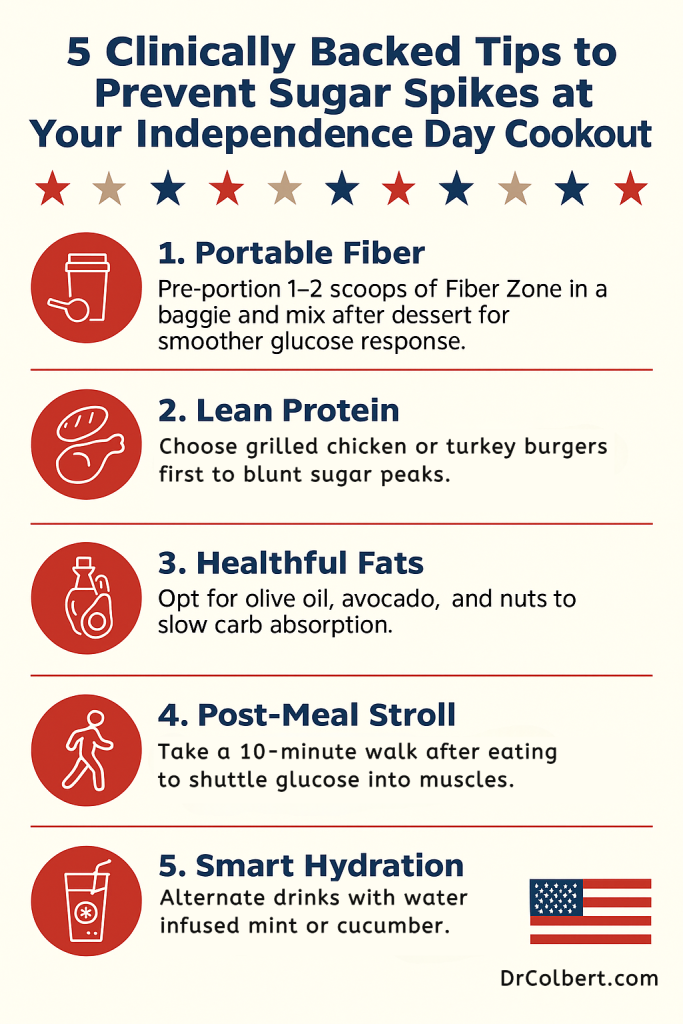
Summer cookouts, sweet treats and celebratory drinks can send your glucose on a wild ride—unless you have a plan. These five common-sense strategies, each backed by peer-reviewed research, will help you enjoy your July 4th without the sugar spikes. Let’s dive in.
1. Pack Portable Fiber—Your “Dietary Insurance”
“Fiber covers a multitude of dietary sins,” I always say.
Why It Works: Soluble fiber forms a gel in the gut that slows carbohydrate absorption, blunting the post-meal glucose surge. In a review of 17 clinical trials, high-fiber diets improved A1C (average blood sugar) by nearly 0.5% on average¹.
How to Do It:
-
Spoon 1–2 heaping scoops of Fiber Zone into small resealable baggies before you leave home.
-
Tuck the baggies into your pocket or cooler.
-
After you’ve sampled pie, ice cream or cookies, stir a baggie into water within 30 minutes of your last bite.
Did You Know? Just 10–15 g of soluble fiber added after a meal can lower the glucose peak by up to 30%².
2. Double Down on Lean Protein
Build your plate around protein first.
Why It Works: Protein has minimal impact on blood glucose and slows gastric emptying. In one trial, adding 25 g of lean protein to a carb-heavy meal reduced the glucose rise by nearly 40%³.
How to Do It:
-
Begin your meal with grilled chicken skewers, turkey burgers or shrimp.
-
Even a hard-boiled egg appetizer gives your system a head start, taming sugar surges when dessert arrives.
3. Embrace Healthful Fats
Not all fats are created equal.
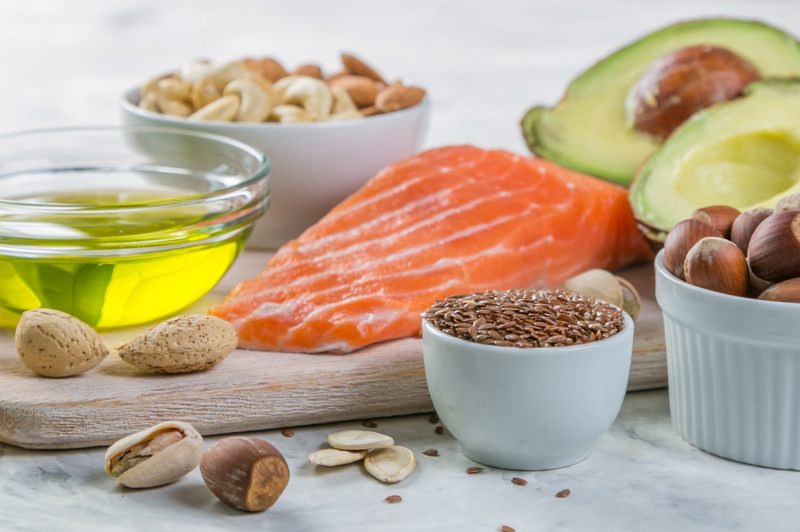
Why It Works: Monounsaturated fats (olive oil, avocado, nuts) slow carb digestion and improve insulin sensitivity. A meta-analysis found replacing just 10% of carbs with unsaturated fats cut post-meal glucose by 20% on average⁴.
How to Do It:
-
Drizzle extra-virgin olive oil over your summer salads.
-
Snack on almonds or walnuts instead of chips.
-
Top burgers with avocado slices for a tasty fat-plus-fiber combo.
4. Take a 10-Minute Post-Meal Stroll
Move your body—your blood sugar will thank you.
Why It Works: Light activity after eating shuttles glucose into muscles and boosts insulin sensitivity. Even 10 minutes of walking can reduce peak blood sugar by 12–15%⁵.
How to Do It:
-
After the main course, invite friends and family on a quick lap around the yard.
-
Make it fun: who can collect the most patriotic leaf or spot the first firework sparkler?
Little-Known Fact: Post-meal spikes predict heart disease risk more strongly than fasting glucose—so that brief walk is more powerful than you think.
5. Hydrate Strategically
Don’t let dehydration sabotage your efforts.
Why It Works: When you’re even mildly dehydrated, your blood concentrates and glucose levels rise. In a population study of over 3,000 adults, those drinking less than 1 liter of water per day had a 17% higher risk of elevated blood sugar⁶.
How to Do It:
-
Alternate every sweet cocktail or soda with a glass of water.
-
Infuse your water with cucumber slices, mint or a squeeze of lemon—zero sugar, all refreshment.
Why Taming Spikes Matters for Aging & Disease Prevention
Every glucose surge triggers oxidative stress and inflammation. Over years, these repeated hits accelerate cellular aging, damage blood vessels, and fuel chronic disease—from heart attacks and Alzheimer’s to certain cancers. By keeping those peaks in check—whether via fiber, protein, fats, movement or water—you’re not just avoiding crashes; you’re protecting your future health and staying strong into your 90s.
References
-
Weickert MO et al. “Dietary fiber and glycemic control in type 2 diabetes: review and meta-analysis.” Nutrition Reviews 2012.
-
Jenkins DJA et al. “Effect of viscous fiber on post-prandial glycemia.” The Lancet 1978.
-
Leidy HJ et al. “Additional dietary protein reduces post-meal glycemic response.” American Journal of Clinical Nutrition 2015.
-
Schwingshackl L et al. “Unsaturated fats reduce postprandial glucose: meta-analysis.” Diabetes Care 2011.
-
Karstoft K et al. “Ten minutes of walking reduces post-meal glycemia.” Journal of Applied Physiology 2016.
-
Perrier ET et al. “Water intake and hyperglycemia risk: population study.” PLoS ONE 2014.