Why It’s a Bad Idea to Use and Refill Plastic Water Bottles
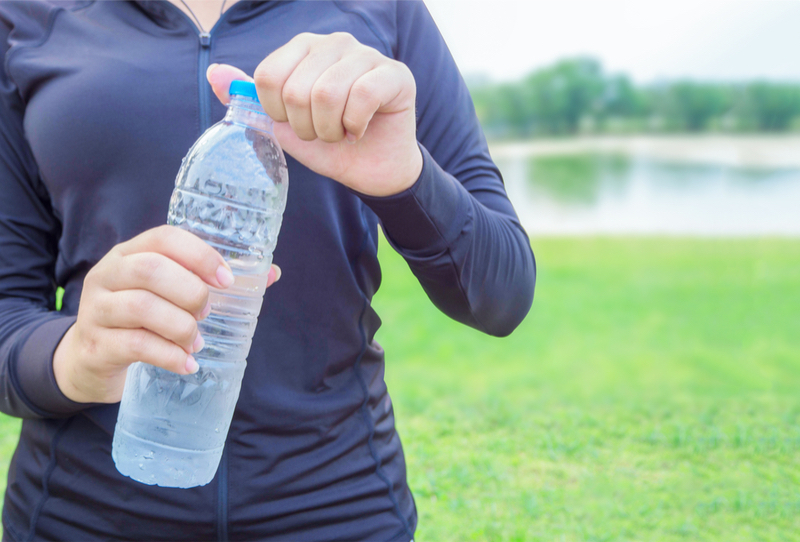
When the temperatures get high, it’s important to stay hydrated by drinking lots of water. Unfortunately, for many people this means grabbing a plastic water bottle from the nearest convenience store or grocery store. That same person might even refill the water bottle to use throughout the day.
But doing this could actually be harming your health.
Here’s why refilling plastic water bottles this summer (or any time of year) is a bad idea—and what you can do instead.
Plastic Water Bottle Chemicals Leach Into Your Drink
There are two main types of plastics used in plastic water bottles:
- Polycarbonate plastics: containing a chemical known as bisphenol A, or BPA.
- Polyvinyl chloride plastics (PVCs): containing chemicals known as phthalates.
Repeated use of a plastic water bottle can break down the plastic, leaching these chemicals into your drinking water. And ingesting these chemicals may pose a range of health risks, including:
Hormon Dysregulation
These chemicals in plastic, even BPA-free bottles, can leech into the water or whatever you’re drinking, causing hormonal dysregulation [1]. This can not only interfere with weight loss but also throw your whole body off.
Risks to Cognitive Ability
A 2018 study published in the Journal of Neuroscience found adult rats that were exposed to phthalates, chemicals used in PVC plastic products like water bottles, before birth and during nursing had poorer brain development than rats not exposed to the chemicals. Researchers found the rats had [2]:
- a smaller medial prefrontal cortex (mPFC)—the area of the brain responsible for executive functions and connection to neuropsychiatric disorders
- worse performance on a task involving attention-switching
- fewer neurons and synapses in the mPFC
Bacterial Contamination
Even the manufacturers of disposable bottled waters recommend not reusing their products because bacteria can develop in the cracks and scratches with repeated use. This bacteria buildup can make you very sick, causing food poisoning-like symptoms such as vomiting and nausea.
Washing after each use can help, but it’s still not safe, especially if the bottle shows signs of wear and tear. Plus, high temperatures from dishwashing or sitting in the sun can make the situation worse.
Environmental Hazard
Besides the health risks, plastic bottles have a poor carbon footprint. Most are not very biodegradable or recycled, either.
Healthier Plastic Water Bottle Alternatives
Obviously drinking water is important, especially if you’re following the Keto Zone diet, so here are some ways to hydrate without the risk:
- Choose reusable: Stainless steel and glass reusable bottles are much safer day-to-day, and you can use them for a long time. Just make sure you clean them often, as bacteria can build up on them too.
- Know your types of plastic: There are seven types of plastic. Plastics #2, 4, and 5 are the safest. If you use plastic water bottles, try to find out which types are used and choose the safer options.
- Don’t reuse or refill: If you use a plastic water bottle, don’t keep it around or re-use it. Like we’ve said above, the longer you use it the more harmful it can become.
If you’re stuck in the heat choosing between a plastic bottle of water and no hydration, by all means choose the water bottle! Just don’t make it a regular habit, don’t refill it to reuse it, and use alternative methods are often as you can.
Sources:
- https://www.ncbi.nlm.nih.gov/pmc/articles/PMC3222987/
- http://www.jneurosci.org/content/early/2018/07/16/JNEUROSCI.0607-18.2018
Was this helpful?
Get Dr. Colbert's weekly health tips
Simple, faith-filled health tips in your inbox once a week. Plus a free gift: the 21-Day Keto Zone Challenge.
Unsubscribe anytime. We never share your email.
What stood out to you most, and have you tried any of this yourself?
Tell us on Facebook