Medications and Gut Health: 5 Common Drugs Your Gut Remembers

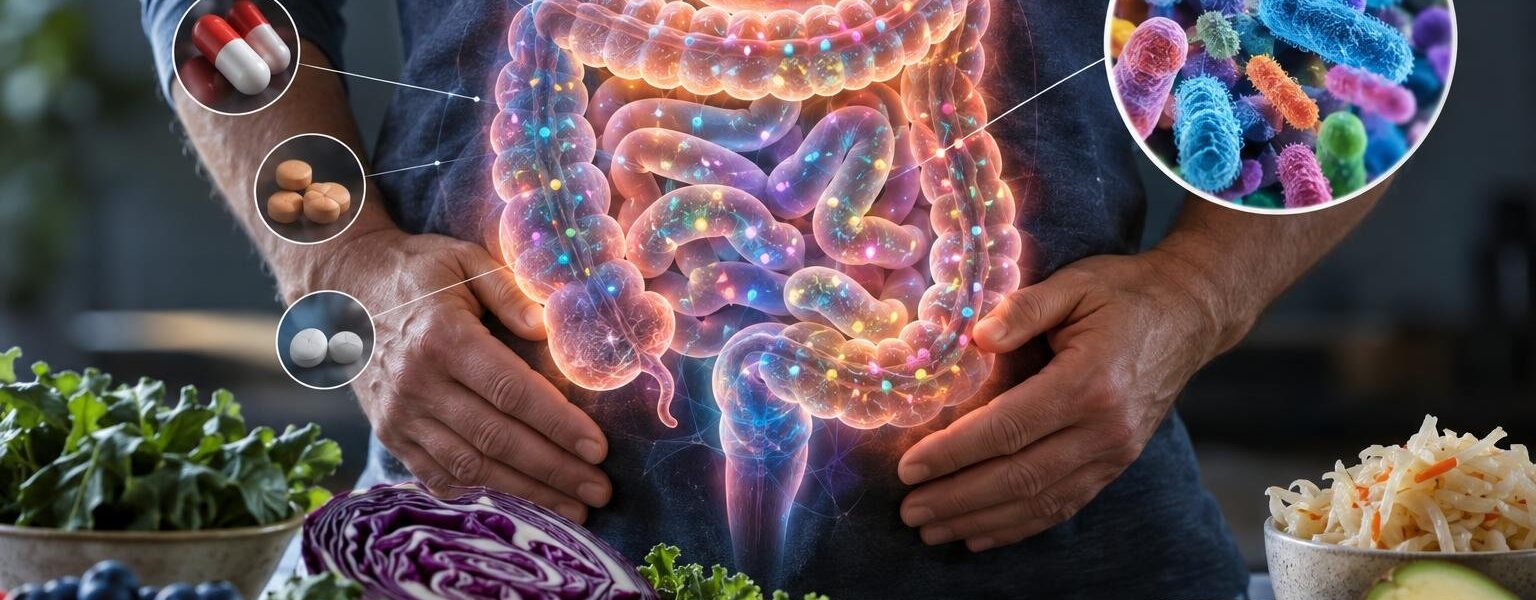
Open almost any medicine cabinet and you will find a story. Most of us assume that once a prescription bottle is empty, the medicine is gone and forgotten. But when it comes to medications and gut health, your body may have a longer memory than you think.
Maybe there is a box of acid reducers from the season heartburn kept you up at night. A blood pressure pill you take every morning. A sleep or anxiety prescription from a hard year, or the last few tablets of an antibiotic you were told to finish.
A large study of more than 2,500 people in the Estonian Biobank found that many common prescriptions were linked to measurable differences in gut bacteria, and some left detectable “fingerprints” years after people stopped taking them. ScienceDaily recently shared the research again under the headline Common medications may secretly rewire your gut, with effects lasting for years.
Let me say this clearly from the start: this is not a reason to panic, and it is never a reason to stop a medication on your own. It is, however, a wonderful reason to take daily care of the gut God gave you. Let me walk you through what the researchers found, what it does and does not mean, and the simple, food-first steps I share with my own patients.
🔬 What the Study Found About Medications and Gut Health
The research comes from a team at the University of Tartu Institute of Genomics in Estonia, led by Dr. Oliver Aasmets. Their paper, titled “A hidden confounder for microbiome studies: medications used years before sample collection”, was published in the journal mSystems in 2025. ScienceDaily first reported it in October 2025, so this is not brand-new research. It is a large, thoughtful study that is worth a closer look.
The researchers worked with more than 2,500 people in the Estonian Biobank’s Estonian Microbiome cohort. They compared each person’s stool sample, which reveals the bacteria living in the gut, with that person’s prescription history from health records. That allowed them to look not only at what people were taking now, but at what they had taken years earlier.
Here is what stood out:
- Most medications left a mark. Most of the medications studied were associated with measurable differences in gut bacteria, and a substantial number left detectable microbial fingerprints years after people stopped taking them.
- It was not just antibiotics. Antidepressants, beta-blockers (a type of blood pressure and heart medicine), proton pump inhibitors (acid reducers often used for reflux), and benzodiazepines were all linked to differences in the gut microbiome.
- Some surprises. Benzodiazepines, which are commonly prescribed for anxiety, were associated with microbiome changes comparable to those seen with broad-spectrum antibiotics.
- Starting and stopping mattered. In a smaller follow-up group, starting or stopping certain drugs produced predictable shifts in gut bacteria. Lasting effects were confirmed for proton pump inhibitors, SSRIs (a common type of antidepressant), and certain antibiotics, specifically penicillin combinations and macrolides.
Dr. Aasmets described past drug use as a surprisingly strong factor in explaining why one person’s gut bacteria differ from another’s. In other words, your medical history may be written, in part, in your microbiome.
Recent Research
Drugs in the same family did not always act alike. Two well-known benzodiazepines, diazepam and alprazolam, appeared to differ in how strongly they disrupted gut bacteria. That is one more reason every person’s situation is unique and worth discussing with your own doctor.
What This Study Does Not Tell Us
I always want you to know how strong the evidence is. This was an observational study, which means it found associations between medications and gut bacteria, not absolute proof that one caused the other. The start and stop follow-up does support a likely cause and effect link, but that follow-up group was small.
Most important of all, the researchers say their findings do not show that these microbial changes are harmful or that they lead to specific health problems. A different gut community is not automatically a damaged one. The paper was mainly a message to other scientists: when you study the microbiome, account for medication history, because it is a hidden “confounder” (a background factor that can muddy results). The study also did not test any diet or supplement for restoring gut bacteria. One study is never the final word.
🦠 Why Your Gut Remembers: Medications and the Gut Microbiome
Your gut microbiome is the vast community of bacteria and other tiny organisms living in your digestive tract. I like to picture it as a garden. Many different “plants” grow side by side, each with its own job, and the whole garden is shaped by what you feed it and the conditions around it.
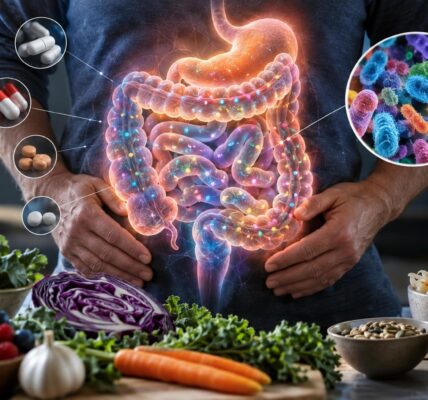
Medications change those conditions. An antibiotic is designed to knock back bacteria, and it does not always choose only the troublemakers. An acid reducer changes the chemistry of your stomach. Other medicines may affect the gut environment in ways researchers are still working to understand. When conditions shift, some bacterial species thrive while others recede.
Here is the part that I find fascinating. A garden that has been disturbed does not always grow back exactly as it was. It may settle into a new pattern, and that pattern can persist for years. That appears to be what the Estonian team detected: a lasting imprint on the community of microbes long after the pills were gone.
Acid Reflux Medication, Gut Bacteria and the Over-40 Reader
In my practice I often see adults over 40 who have taken acid reflux medication for years, along with a blood pressure pill, a course or two of antibiotics each winter, and sometimes a prescription for sleep, anxiety or mood. If that describes you, this study is relevant. Proton pump inhibitors were one of the drug groups where lasting effects were confirmed in the follow-up samples.
That does not mean you did anything wrong. Many of these medicines are important, even lifesaving, and I am thankful for them. It simply means your gut deserves some extra, intentional care.
Please Read This
Never stop, reduce or change a prescription on your own because of this study. Some medicines, including benzodiazepines, can cause serious withdrawal or rebound effects when stopped suddenly. If you have questions about your medications, bring this article to your prescribing doctor and talk it through together.
🥗 How to Rebuild Gut Bacteria Naturally: 6 Food-First Habits
Many people search for how to heal gut after antibiotics or after years on acid reducers. Here is my honest answer. This study did not test any remedy, and no food can promise to erase a microbial fingerprint. But I have spent over 30 years helping patients care for their digestive health, and the daily habits below are the foundation of my approach to nourishing a diverse, well-fed gut community.
Think of these habits as tending the garden every day, rather than hoping for a single dramatic fix.
Feed Them Fiber Daily
Fiber is food for your gut bacteria. Lentils, beans, vegetables, berries, nuts, seeds and flax give them what they need. Increase slowly and drink plenty of water.
Add Fermented Foods
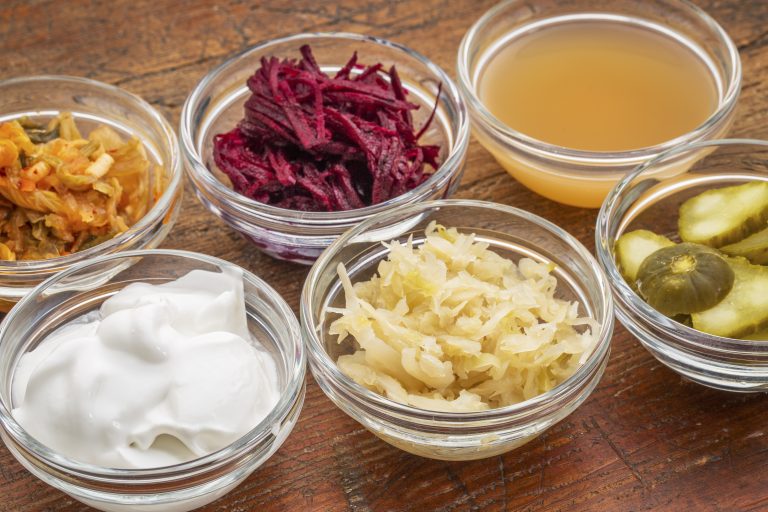
Sauerkraut, kimchi, unsweetened yogurt, kefir and traditionally fermented pickles bring living cultures to the table. Start with a forkful or two a day.
Eat a Variety of Plants
A diverse garden needs diverse food. Rotate your vegetables, herbs, berries, nuts and seeds each week rather than eating the same few foods every day.
Go Easy on Sugar
Sweets and refined starches feed the wrong crowd. Be especially mindful while taking an antibiotic, a time when your gut is already under strain.
Move Every Day
A daily walk keeps digestion moving and supports regularity. Even 10 to 15 minutes after a meal is a gift to your gut.
Rest and Release Stress
Your gut and your mind talk constantly. Consistent sleep, slow meals, prayer and gratitude help create a calmer environment for digestion.
Why Fiber Comes First
If I could ask you to change only one thing, it would be fiber. Your gut bacteria depend on it. In fact, another report highlighted on ScienceDaily described how gut bacteria may start feeding on the protective mucus lining of the intestines when fiber runs short. I explained that research in detail in my article on fiber and your gut lining, and you can learn more about how a high-fiber diet shapes your gut bacteria.
Fiber works best as a daily rhythm, not a once-a-week salad. A spoonful of ground flaxseed at breakfast, a cup of lentil soup at lunch, and a plate filled halfway with vegetables at dinner add up quickly.
A Word About Sugar and Antibiotics
Antibiotics are sometimes absolutely necessary, and you should take them exactly as your doctor prescribes. What you eat alongside them still matters. A recent ScienceDaily report noted that eating more sugar while taking antibiotics was linked to greater gut disruption and growth of potentially harmful bacteria. During a course of antibiotics, I encourage patients to lean on vegetables, gentle soups, eggs, fish and fiber-rich foods, and to set the desserts aside.
Movement and the Gut
Your digestive tract loves motion. A brisk walk, gardening, or a few flights of stairs helps food move along and keeps things regular. I covered this in my article about walking and your gut. Pair your walk with a meal and you get a double benefit for digestion.
✦ Dr. Colbert’s Faith Perspective
Wisdom, Not Fear, in Caring for Your Temple
I believe medicine and doctors can be a gift from God. Many of my patients are alive and well today because of a medication that came at the right time. So this study is not a call to fear the pharmacy. It is a call to stewardship.
Good stewards pay attention. We learn about what we put into our bodies, from food to medicine, with humility and wisdom. We partner with our physicians, ask good questions, and then do our part by tending the body God entrusted to us. Feeding your gut well after a season of medication is a quiet, daily act of gratitude for the life you have been given.
“Or do you not know that your body is the temple of the Holy Spirit who is in you, whom you have from God, and you are not your own? For you were bought at a price; therefore glorify God in your body and in your spirit, which are God’s.” (1 Corinthians 6:19-20, NKJV)
“Your gut may remember the past, but it is fed in the present. Every meal is a fresh opportunity to nourish the garden God planted inside you.”
Dr. Don Colbert, MD
When patients ask me where to begin, I point them to the plan I laid out in Dr. Colbert’s Healthy Gut Zone. I wrote it because so many people I see have years of medications, stress and processed food behind them, and they need a clear, food-first path for caring for their digestive system.
From Dr. Colbert’s Bookshelf
Dr. Colbert’s Healthy Gut Zone
In this book I explain how your gut microbiome works, how medications such as antibiotics and acid reducers can disrupt it, and the step-by-step, food-first plan I use with patients to restore balance to the digestive system. You will learn which foods feed your beneficial bacteria, how the gut and brain communicate, and how faith and peace fit into the picture. For everyday meals, the companion Dr. Colbert’s Healthy Gut Zone Cookbook gives you fiber-rich, gut-friendly recipes your whole family can enjoy.
📋 Your 7-Step Gut Care Action Plan
Here is what I tell my patients who want to start this week. Pick two or three steps, master them, then add more.
- Make a medication list. Write down every prescription you take now and the major ones from past years, including antibiotics and acid reducers. Bring it to your next appointment and ask your doctor whether each one is still the right fit for you. Never change a medication on your own.
- Add one fiber food at every meal. Ground flaxseed or berries at breakfast, beans or lentils at lunch, a large serving of vegetables at dinner. Increase slowly and drink plenty of water.
- Enjoy a fermented food daily. A forkful of sauerkraut or kimchi, a small bowl of unsweetened yogurt, or a few ounces of kefir.
- Shop for variety. Each week, try one vegetable, herb or fruit you have not eaten recently. Diversity on your plate supports diversity in your gut.
- Cut back on sugar and refined starches. This matters every day, and especially during any course of antibiotics.
- Walk after meals. Aim for 10 to 15 minutes after your largest meal of the day.
- Protect your rest and your peace. Keep a steady bedtime, eat slowly, and spend a few quiet minutes in prayer and gratitude each day.
❓ Frequently Asked Questions
Can medications change your gut bacteria for years?
A large study of more than 2,500 people in the Estonian Biobank found that many medications were linked to differences in gut bacteria, and some left detectable fingerprints years after people stopped taking them. The study was observational, so it shows an association. A small follow-up group supported a likely cause and effect link for some drugs.
Which medications affect gut health?
Antibiotics were linked to gut changes, but so were antidepressants, beta-blockers, proton pump inhibitors (acid reducers) and benzodiazepines. Lasting effects were confirmed in follow-up samples for proton pump inhibitors, SSRIs, penicillin combinations and macrolide antibiotics. Effects also varied between individual drugs in the same class.
Should I stop my medication to protect my gut?
No. Never stop, reduce or change a prescription without talking with your prescribing doctor, because some medicines can cause serious withdrawal or rebound effects. The researchers also did not show that these gut changes are harmful. Talk with your physician, and focus on nourishing your gut with good daily habits.
How can I support my gut after antibiotics?
Take antibiotics exactly as prescribed, and during that time lean on vegetables, fiber-rich foods and gentle, home-cooked meals while limiting sugar. Afterward, keep up daily fiber, fermented foods, a variety of plants, movement and good sleep. These habits do not promise to erase a microbial fingerprint, but they give your gut bacteria what they need to thrive.
🌅 A Final Word of Hope
I find this research both humbling and encouraging. Humbling, because it reminds us how deeply connected every part of the body is, down to the tiny microbes we cannot see. Encouraging, because a garden that can be shaped by medications can also be shaped by what we choose to feed it, one meal at a time.
You cannot change the prescriptions of the past, and you do not need to carry worry about them. What you can do is partner with your doctor, fill your plate with fiber and color, walk, rest, and give thanks. Your body is truly a marvel of God’s design.
“I will praise You, for I am fearfully and wonderfully made; Marvelous are Your works, And that my soul knows very well.” (Psalm 139:14, NKJV)
My prayer for you echoes the apostle John’s: “Beloved, I pray that you may prosper in all things and be in health, just as your soul prospers.” (3 John 1:2, NKJV)
Dr. Don Colbert, MD
Sources
- Common medications may secretly rewire your gut, with effects lasting for years, ScienceDaily, 2026
- Aasmets O, Taba N, Krigul KL, Andreson R, Org E, Metspalu M, Metspalu A, Milani L, Esko T. A hidden confounder for microbiome studies: medications used years before sample collection, mSystems, 2025
- Common medications may secretly rewire your gut for years, ScienceDaily / Estonian Research Council, 2025
- Taking antibiotics? Sugar may be making the damage worse, ScienceDaily, 2026
- When your gut bacteria run out of fiber, they may start eating your gut lining, ScienceDaily, 2026
Was this helpful?
Get Dr. Colbert's weekly health tips
Simple, faith-filled health tips in your inbox once a week. Plus a free gift: the 21-Day Keto Zone Challenge.
Unsubscribe anytime. We never share your email.
What stood out to you most, and have you tried any of this yourself?
Tell us on Facebook