Exercise for Bone Health: Why Walking Alone May Fall Short

Picture your morning walk. Same route, same pace, same comfortable rhythm you have kept for years. It clears your head, lifts your mood and keeps your heart happy. But here is a question I hear more and more in my practice: is that walk doing everything you hoped for your bones?
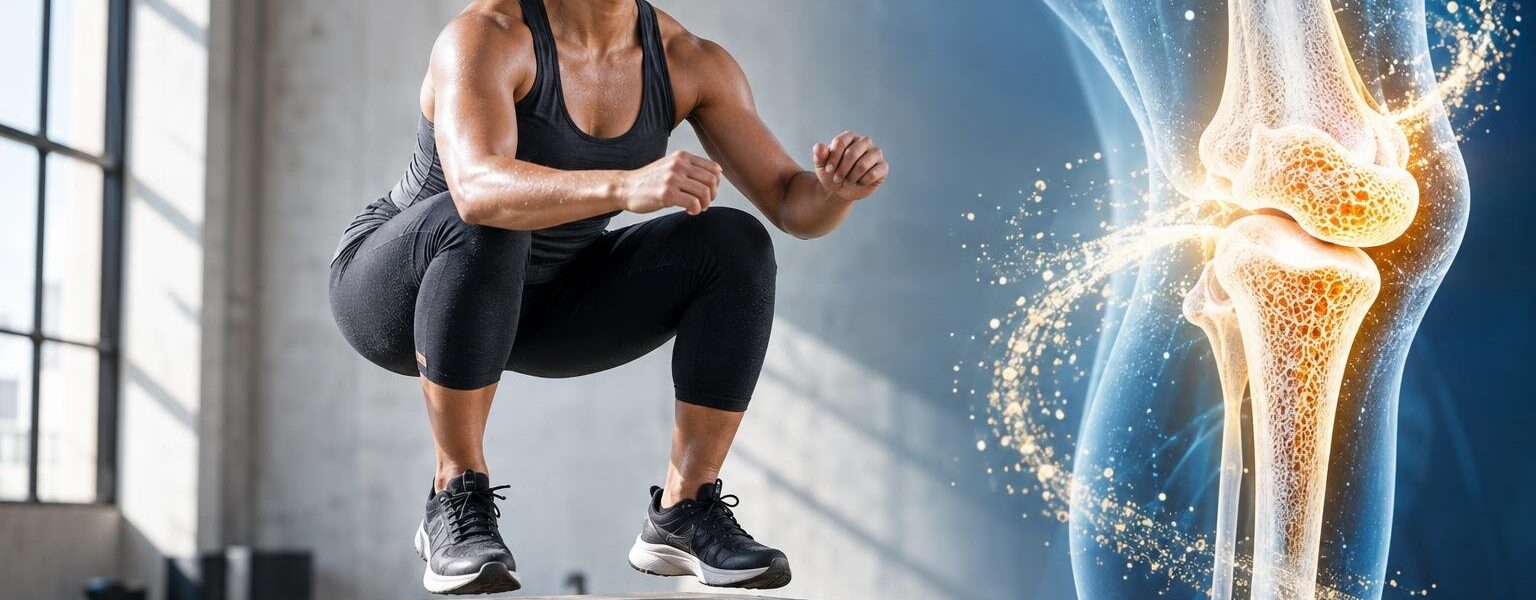
A new review of the research suggests the answer may be “not quite.” When it comes to exercise for bone health, scientists at Semmelweis University in Hungary found that quick, powerful, change-of-direction movements were linked to the biggest jumps in the blood markers of new bone formation. Steady walking and standard gym routines showed weaker responses in those same markers.
The story ran in ScienceDaily under the headline “Walking and weight training may not be enough to keep your bones strong.” That headline is bolder than the study itself, so let me walk you through what the researchers actually found, what they did not find, and the simple, safe steps you can take this week.
Please hear me clearly at the start: keep walking. The researchers themselves stress that walking still has important health benefits. What this study offers is a reason to add a little something, not to give anything up.
🔬 What the New Exercise for Bone Health Study Found
This was a meta-analysis, which means the researchers did not run a single new experiment. Instead, they gathered results from many earlier trials and analyzed them together. According to the published abstract in Sports Medicine – Open, they included only randomized controlled trials (studies where people are assigned by chance to an exercise group or a comparison group) of training programs lasting more than two weeks.
In total, the review pooled 24 clinical studies with 1,238 healthy adults. Rather than measuring bone density, which takes many months to change, the team looked at blood markers of new bone formation. These markers can shift within weeks, giving an early window into how bone responds to training.
The Two Markers They Measured
The first was osteocalcin, a protein made by bone-building cells and one of the main proteins in bone. The second was bone alkaline phosphatase, an enzyme those same cells use while laying down new bone. When these markers rise, it suggests bone-building activity has picked up.
The Results
- High-intensity training significantly increased osteocalcin. Statistically, the average difference was 6.88, with a confidence interval (the range where the true effect most likely falls) of 0.37 to 13.38.
- Recreational football (what Americans call soccer) and handball, sports full of sprints, pivots and quick stops, were linked to increases of up to 45 to 46 percent in bone-formation markers, according to ScienceDaily and the researchers’ release.
- Walking, step aerobics and standard gym resistance training produced weaker responses in these markers, ScienceDaily reports.
- Power training showed no significant change in osteocalcin, and the authors said other training types had no effect on the measured markers.
First author Viktória Barna called the lack of effect from resistance training the most surprising finding, since guidelines recommend it. I understand the surprise. Strength training remains one of the best things you can do for muscle, balance and metabolism, and I still recommend it to nearly every patient.
Honest Limitations
I always want you to know how much weight a study can carry. Here is what keeps this one in perspective:
- It measured blood markers, not bone density or fractures. A rising marker is encouraging, but it is not the same as stronger bones on a scan.
- The confidence interval is wide, and its lower end (0.37) sits close to zero. That means the true effect could be quite small.
- The long-duration endurance subgroup did not reach significance.
- Participants were healthy adults, and the trials that could be reviewed averaged roughly mid-20s to about 40 years old. We simply do not know yet whether the results hold for adults 60 and older.
As an editorial in Frontiers notes, exercise is a key lifestyle tool for bone health, but the best type, intensity, duration and amount still need more investigation. This study adds a useful clue. It is not the final word.
Recent Research
The researchers caution against suddenly starting strenuous exercise without preparing. They advise anyone with cardiovascular, musculoskeletal or metabolic conditions, or existing osteoporosis, to see a doctor first.
🦴 Why Quick, Powerful Movement Matters for Your Bones
Many people think of bone as dry, lifeless scaffolding. In truth, your skeleton is living tissue that is constantly being rebuilt. The Psalmist got it right: “I will praise You, for I am fearfully and wonderfully made” (Psalm 139:14, NKJV).
Two kinds of cells run this renewal project. Osteoblasts build new bone, and osteoclasts clear away old bone. This ongoing cycle is called bone remodeling, and the markers in this study are signals from the building crew.
Bone responds to the forces placed on it. When you walk at an even pace, your bones feel a familiar, repeated load they have long adapted to. Sports like soccer and handball deliver something different: sudden bursts, landings, pivots and quick stops from many directions. The study suggests that kind of varied, high-intensity challenge may be what gets the building crew most active.
Think of it like a conversation. A steady walk is your body hearing the same sentence every day. A burst of quick movement is a new message that says, “Be ready for more.” Your Creator designed bone to answer that kind of message.
Exercise is only half of the picture, though. Osteoblasts need raw materials to work with. As we will see, nutrients like vitamin K2, magnesium, vitamin D and calcium play direct roles in building the very proteins this study measured.
🏃 The Best Exercise for Bone Strength After 50: Safe Power Moves to Add
You do not need to join a soccer league. The goal is to borrow the ingredients of those sports (short bursts, quick changes of direction, light impact) and add them gradually to the routine you already have. Start small, and if you have heart disease, joint or spine problems, balance issues, low bone density, or are new to exercise, please talk with your doctor before trying any of these.
Walk With Bursts
Keep your usual walk, but add a few 20 to 30 second stretches of brisk pace, then return to normal. It turns a steady routine into a more varied signal.
Brisk Stair Climbing
Take a flight of stairs at a lively pace, holding the rail as needed. Walk down slowly. Stairs add load and quickness in one simple move.
Step-Ups
Use a sturdy low step or the bottom stair. Step up with purpose, step down with control. Begin with a handful on each leg.
Short Skips or Heel Drops
If your doctor agrees, try a few gentle skips on grass, or rise onto your toes and let your heels drop lightly to the floor. Light impact, little time.
Dance
Dancing naturally mixes turns, steps and quick shifts of weight. Put on your favorite worship music in the living room and move.
Pickleball or Doubles Tennis
These games are full of short sprints and pivots, much like the sports in the study, with plenty of fellowship. Get cleared by your doctor first.
If pickleball sounds fun, I wrote about the health and longevity benefits of pickleball. And please do not give up your strength work. Muscle protects joints and balance, and even a few minutes of strength training can make a real difference as we age.
🥬 The 4 Nutrients for Strong Bones That Work With Exercise
Movement sends the signal, but nutrients supply the building materials. The NIH Office of Dietary Supplements names calcium, vitamin D and magnesium among the most important nutrients for bones, and lists vitamin K as important too. Here is what each one does, and where to find it in food first.
Vitamin K2 for Bones
Vitamin K helps activate osteocalcin, the very bone protein measured in this study, so low vitamin K could reduce bone mineralization. Supplement trials are mixed. K2 forms include MK-4 and MK-7. Food sources include fermented foods and some cheeses.
Magnesium
Involved in bone formation and the activity of bone-building and bone-clearing cells. It also influences parathyroid hormone and active vitamin D. Adults need 310 to 420 mg a day. Find it in nuts, seeds, beans and leafy greens.
Vitamin D
Helps your body absorb calcium. Adults need 600 to 800 IU (15 to 20 mcg) daily. Benefits for bone are clearest in people who run low, so ask your doctor to test your level. Salmon and sensible sunshine help.
Calcium
A main building block of bone. Adults need 1,000 to 1,200 mg daily, ideally from food: dairy, sardines or salmon with bones, kale and bok choy.
What the Research Says About Vitamin K2 for Bones
This is where the exercise study and nutrition meet. According to the NIH vitamin K fact sheet, vitamin K helps “carboxylate” osteocalcin. In plain English, it switches the protein on so it can help bind minerals into bone. Exercise may prompt your body to make more osteocalcin, and vitamin K helps that osteocalcin do its job.
I want to be honest: clinical trials of vitamin K supplements have been mixed. The NIH consumer fact sheet notes that a few studies found improved bone strength, while others found no effect on bone density in older adults. That is why I see K2 as one supportive piece of a bigger plan.
Magnesium and Bone Health
Magnesium is one of the most overlooked minerals I check in my practice. The NIH magnesium fact sheet explains that several population studies link higher magnesium intake to better bone mineral density. Keep in mind that population studies show associations, not cause and effect. NIH sets the upper limit for supplemental magnesium at 350 mg a day, since too much can cause diarrhea, nausea and cramps.
Keeping Vitamin D and Calcium Expectations Realistic
The NIH vitamin D fact sheet says vitamin D and calcium supplements slightly increase bone strength in older adults. A review by Professor Susan Lanham-New found calcium supplements appear to reduce bone loss mainly in late postmenopausal women with low calcium intake, while vitamin D had little effect on bone density in women who were not deficient. The lesson: know your levels and fill real gaps. I explain more about choosing the right form in my article on vitamin D3 versus D2.
Dr. Colbert Recommends
Divine Health Super K2
Because vitamin K helps activate osteocalcin, the bone protein this research tracked, Super K2 is a natural partner to your new movement routine. It provides vitamin K2 and is designed to support bone health and healthy calcium utilization.* If you take a blood thinner such as warfarin, or any prescription medication, talk with your doctor before using vitamin K2, since vitamin K affects clotting.
- ✔ Supports healthy bones*
- ✔ Supports healthy calcium utilization*
- ✔ Supports the activity of osteocalcin, a key bone protein*
Dr. Colbert Recommends
Divine Health High Potency Magnesium
This formula uses chelated magnesium malate and magnesium taurate, gentle forms of the mineral NIH describes as involved in bone formation. It is designed to support muscle, nerve, heart and bone function, which makes it a good companion when you start asking more of your body with brisk stairs and quick bursts.* If you have kidney concerns, ask your doctor first.
- ✔ Supports healthy bone function*
- ✔ Supports muscle function and relaxation*
- ✔ Supports healthy nerve and heart function*
Dr. Colbert Recommends
Divine Health Silical System
If you would rather keep things simple, the Silical System brings together the nutrient team NIH names for bones. Silical 1 provides calcium, vitamin D and magnesium citrate, and Silical 2 provides bamboo silica and vitamin K2. It is designed to support bone density, collagen and connective tissue.* Because it contains vitamin K2, check with your doctor first if you take a blood thinner or other prescription medication.
- ✔ Supports healthy bone density*
- ✔ Supports collagen and connective tissue*
- ✔ Combines calcium, vitamin D, magnesium and K2 in one system*
✦ Dr. Colbert’s Faith Perspective
Strength to Your Bones
I find it beautiful that Scripture speaks about bones so often. In Proverbs, reverence for God and turning from evil are tied directly to health and strength in the body. Through Isaiah, the Lord promises to guide us continually “and strengthen your bones” (Isaiah 58:11, NKJV).
Paul reminds us that our bodies are temples of the Holy Spirit, bought at a price, and that we are to glorify God in them (1 Corinthians 6:19-20). That is stewardship, not vanity. Keeping your walks, adding a little healthy challenge and feeding your body well are all ways of honoring the One who made you. Do it with joy, not fear, and not in pride, but with gratitude for every step He gives.
“Do not be wise in your own eyes; Fear the Lord and depart from evil. It will be health to your flesh, And strength to your bones.” (Proverbs 3:7-8, NKJV)
“Your bones are listening to how you move. Keep the steady walk that blesses your heart, then give your skeleton a few quick, joyful surprises each week. God built it to answer.”
Dr. Don Colbert, MD
📋 Your Bone-Friendly Action Plan
- Talk with your doctor first. Especially if you have heart, joint, spine or balance concerns, low bone density, or are new to exercise. Ask about a vitamin D blood test while you are there.
- Keep your daily walk. It remains good for your heart, mood and overall health.
- Add bursts twice a week. During your walk, pick up the pace for 20 to 30 seconds a few times, then return to normal.
- Practice one power move. Choose brisk stairs or step-ups, start with just a few, and add a little more each week as you feel ready.
- Make it play. Dance in your kitchen, join a pickleball group or toss a ball with grandchildren. Quick, varied movement counts.
- Keep strength training. Muscle supports balance and joints, which matters greatly as we age.
- Eat for your bones. Fill your plate with leafy greens, nuts, seeds, beans, salmon or sardines with bones, and calcium-rich foods.
- Fill true gaps with smart supplements. Consider vitamin K2, magnesium, vitamin D and calcium where your diet or lab work falls short, and check with your doctor if you take any medication.
❓ Frequently Asked Questions
Is walking still good exercise for bone health?
Yes. The researchers stress that walking and other lower-intensity activity still have important health benefits. This study simply suggests that adding short, quicker movements may give bone-building markers an extra nudge.
Should I stop lifting weights?
No. Although standard resistance training showed weaker responses in these particular blood markers, strength training remains valuable for muscle, balance and metabolism. Think of power moves as an addition to your routine, not a replacement.
What is the best exercise for bone strength after 50?
We do not have a final answer, and this study mostly included adults under about 40. A sensible approach is a mix: walking, strength training and gradual, doctor-approved bursts like brisk stairs, step-ups or dancing. Start small and build slowly.
How does vitamin K2 relate to bones?
According to NIH, vitamin K helps activate osteocalcin, one of the main proteins in bone and a marker measured in this study. Supplement trials have been mixed, so K2 is best seen as one supportive part of a broader plan. If you take a blood thinner, talk with your doctor before taking it.
Can I get enough bone nutrients from food?
Many people can, with a varied diet rich in leafy greens, nuts, seeds, beans, dairy and fish with edible bones. NIH lists daily needs of 1,000 to 1,200 mg calcium, 600 to 800 IU vitamin D and 310 to 420 mg magnesium for adults. A blood test can show whether vitamin D is a gap for you.
🌅 A Final Word of Encouragement
I have watched many patients in their 50s, 60s and beyond grow stronger and more confident simply by adding a little variety to how they move. You do not need to sprint across a soccer field. You only need to take the next faithful step, maybe a brisk flight of stairs, a few step-ups or a joyful dance in your living room.
Pair that movement with nourishing food, smart support where you need it, and a heart at peace with God. This study is one piece of a growing picture, and the message is hopeful: your bones are alive, and they respond when you care for them.
As the apostle John prayed, “Beloved, I pray that you may prosper in all things and be in health, just as your soul prospers” (3 John 1:2, NKJV). That is my prayer for you today.
Dr. Don Colbert, MD
Sources
- Walking and weight training may not be enough to keep your bones strong, ScienceDaily (source: Semmelweis University), 2026
- Barna V, et al. High-Intensity Training Increases Osteocalcin Levels: A Meta-Analysis of Effects of Exercise on Bone Remodeling Biomarkers, Sports Medicine – Open, 2026
- Vitamin K: Health Professional Fact Sheet, NIH Office of Dietary Supplements
- Vitamin K: Consumer Fact Sheet, NIH Office of Dietary Supplements
- Magnesium: Health Professional Fact Sheet, NIH Office of Dietary Supplements
- The Scoop: Nutrients for Bone Health, NIH Office of Dietary Supplements, 2024
- Vitamin D Fact Sheet for Consumers, NIH Office of Dietary Supplements
- Vitamin D and bone health, Susan Lanham-New, BMC Musculoskeletal Disorders, 2015
- Editorial: Exercise and bone: loading characteristics, mechanisms and adaptation, Frontiers
Was this helpful?
Get Dr. Colbert's weekly health tips
Simple, faith-filled health tips in your inbox once a week. Plus a free gift: the 21-Day Keto Zone Challenge.
Unsubscribe anytime. We never share your email.
What stood out to you most, and have you tried any of this yourself?
Tell us on Facebook