
Last reviewed and updated: October 17, 2026
Are you interested in lowering your cholesterol? Do you want to use Medium Chain Triglycerides (MCT)?
If you’re like most Americans, you are. You’re looking for foods, exercise, and lifestyle to reduce your risk of heart disease.
After all, according to the American Heart Association, cardiovascular disease is the leading cause of death in the United States.
It takes more than 800,000 American lives each year, about 1 in 3 deaths, which works out to roughly one death every 38 seconds (1).
While these numbers are clear, reducing cholesterol and heart disease risk isn’t.
The last several decades have been marred with misinformation concerning diet, cholesterol, and cardiovascular risk.
Many foods like MCT, a saturated fat, are falsely classified as detrimental.
But does MCT lower cholesterol?
Here’s what you need to know: types of cholesterol, their link to heart disease risk, and how MCT affects it.
What is Cholesterol?
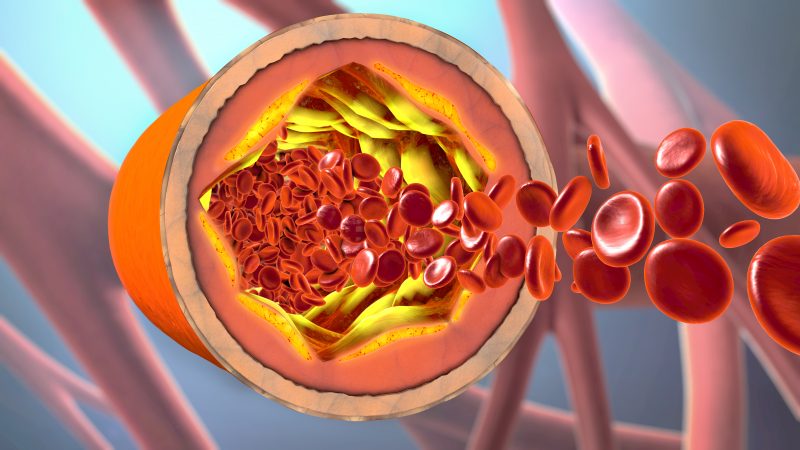
Cholesterol is a fat compound. Our bodies and those of animals make it.
It is vital to human life.
Cholesterol forms about 30% of our cell membranes, is essential for the creation of health-promoting Vitamin D, plays a large role in neonatal nervous system development, and is a key component for important hormones like estrogen and testosterone.
Being fat-soluble, it needs help getting around the body in the water-soluble circulatory system. It needs lipoproteins.
Lipoprotein Function and Health Implications
Lipoproteins are protein compounds that carry cholesterol throughout the body.
They are classified based on their size and density. Most commonly, low-density lipoprotein (LDL) and high-density lipoprotein (HDL) are discussed.
HDL is the “good cholesterol.” It picks up excess cholesterol from tissues and artery walls and carries it back to the liver to be processed and removed (2).
LDL is the “bad cholesterol,” and often thought as unequivocally detrimental to health.
However, this is not the whole story.
In fact, in an analysis of more than 136,000 hospital admissions for coronary artery disease, nearly half of the patients had LDL cholesterol below 100 mg/dL, the level considered healthy at the time (source).
What’s more, a 2016 systematic review of 30 groups of older adults (more than 68,000 people over age 60) found that high LDL cholesterol was not linked to a higher risk of death in this age group, and in most of these groups, people with higher LDL actually lived longer (3).
Admittedly, there are limitations to a review like this, and it’s not necessarily the final word.
But it does show that the story is more complicated than “high cholesterol always means higher risk,” especially as we age.
There’s definitely more to investigate.
LDL and Heart Disease Risk
First, note that LDL cholesterol is not dangerous unless it becomes oxidized and enters the cell wall to form plaques.
Next, only one type of LDL is usually tested.
In fact, the risk is actually more associated with LDL cholesterol size, density, and the number of particles (LDL-P). Two LDL numbers are important and are highly variable in adults: LDL-C and LDL-P.
Cholesterol Tests, Types of LDL, and Triglycerides
Cholesterol tests usually include total cholesterol, LDL, and HDL levels.
As discussed, total cholesterol is somewhat insignificant. High cholesterol may simply mean high HDL. And again, there’s not a solid link between total cholesterol and heart disease.
LDL tests are usually a test of LDL-C only (LDL and LDL-C are used interchangeably). However, most cardiovascular risk is associated with LDL-P (number of particles), and not LDL-C.
LDL-C can be harmful or not harmful. When the LDL-C quality improves and they become bigger and fluffier cholesterol (not dense), this is a positive for health. Cutting sugar and refined carbohydrates is one of the best ways to shift LDL toward these larger, more buoyant particles.
When LDL particles are small and dense (low quality), they are more harmful. Small, dense LDL tends to go along with high triglycerides, and it takes more of these small particles to carry the same amount of cholesterol, which means a higher LDL-P.
Many experts now consider LDL-P (or the related test, apolipoprotein B) and triglycerides to be better markers of cardiovascular risk than LDL-C alone. High LDL-P is associated with metabolic syndrome and several risk factors (4).
More Cardiovascular Risk Factors
High triglycerides, high LDL-P, and many cardiovascular risk factors correlate (5). These include:
- Obesity, specifically abdominal fat
- Diabetes and Insulin Resistance
- Metabolic Syndrome
- Chronic Inflammation and Oxidative Stress
- Hypertension
- Low HDL
When assessing risk, LDL-P, triglycerides, and these factors above should be taken into account, much more than total cholesterol or LDL-C.
Watch: How to Lower Cholesterol Naturally
In this episode, Mary and I break down LDL, HDL, small dense LDL, Lp(a), and advanced lipid testing, and explain why a standard cholesterol panel does not tell the whole story.
MCT Oil: Does MCT Lower Cholesterol?
The honest answer is: sometimes, and the research is mixed.
In one controlled study of overweight women, an oil blend made with MCT, plant sterols, and omega-3 fats lowered total and LDL cholesterol compared with olive oil (7). Plant sterols lower cholesterol on their own, though, so MCT may not deserve all the credit. In another controlled feeding study, a diet rich in medium-chain fatty acids raised total and LDL cholesterol compared with a diet rich in oleic acid, the main fat in olive oil (8). Other research has looked at MCT and weight, waist size, and other risk factors (6, 9), and a review of randomized trials found that replacing long-chain fats with MCT led to modest reductions in body weight and body fat (10).
Some studies show MCT lowers LDL and raises HDL (6).
Others show an increase in total cholesterol and LDL-C. LDL-P is not often tested, even in research, so we do not yet know how MCT affects particle number for most people.
Here is how I recommend using MCT oil: treat it as one part of a whole-food, Mediterranean-style Keto Zone plan. Use it in place of sugar, refined starches, and processed seed oils rather than on top of them. Start with about 1 teaspoon and work up to 1 tablespoon to avoid stomach upset, and recheck your lipid panel (ideally including LDL-P or apoB and triglycerides) about 8 to 12 weeks after you start.
Bottom Line
Does MCT oil lower cholesterol? Sometimes, but the studies are mixed, and in some people it raises LDL. A better question is how your whole diet affects your cardiovascular risk. Used wisely, in place of sugar, refined carbohydrates, and processed oils, MCT oil can be a helpful part of a heart-healthy, low-carb lifestyle. Know your numbers and work with your doctor. If you want a simple plan to get started, join my free 21 Day Keto Zone Challenge.
Frequently Asked Questions
Does MCT oil raise LDL cholesterol?
It can in some people. A controlled feeding study found that a diet rich in medium-chain fats raised total and LDL cholesterol compared with a diet rich in olive oil’s main fat, while other studies show little change. The best way to know how you respond is to recheck your lipid panel after you start.
Is MCT oil better than coconut oil for cholesterol?
MCT oil is a concentrated form of the medium-chain fats (mainly caprylic and capric acid) found in coconut oil. Coconut oil itself is mostly lauric acid, which behaves more like a long-chain fat and tends to raise LDL. Neither one should replace extra virgin olive oil as your main everyday fat.
How much MCT oil should I take per day?
Most studies have used about 1 to 2 tablespoons a day. Start with 1 teaspoon and increase slowly, because larger amounts can cause cramping or diarrhea, and count the calories, since each tablespoon has about 100 to 120.
Can MCT oil help with weight loss?
It may help a little. A review of randomized trials found that replacing long-chain fats with MCT led to modest reductions in body weight and body fat. MCT works best as part of a low-sugar, whole-food diet, not as an add-on to a poor one.
Should I use MCT oil if I have high cholesterol?
Talk with your doctor first. If you use it, use it in place of other fats rather than on top of them, recheck your cholesterol, LDL particle number or apoB, and triglycerides in 8 to 12 weeks, and keep the foundations in place: fiber, olive oil, omega-3 rich fish, and very little sugar.
References
- Tholstrup T, Ehnholm C, Jauhiainen M, et al. Effects of medium-chain fatty acids and oleic acid on blood lipids, lipoproteins, glucose, insulin, and lipid transfer protein activities. Am J Clin Nutr. 2004.
- St-Onge MP, et al. Consumption of an oil composed of medium chain triacyglycerols, phytosterols, and n-3 fatty acids improves cardiovascular risk profile in overweight women. Metabolism. 2003.
- Mumme K, Stonehouse W. Effects of medium-chain triglycerides on weight loss and body composition: a meta-analysis of randomized controlled trials. J Acad Nutr Diet. 2015.
- Ravnskov U, et al. Lack of an association or an inverse association between low-density-lipoprotein cholesterol and mortality in the elderly: a systematic review. BMJ Open. 2016.
- Sachdeva A, et al. Lipid levels in patients hospitalized with coronary artery disease: an analysis of 136,905 hospitalizations in Get With The Guidelines. Am Heart J. 2009.
This article is for educational purposes only and is not medical advice. Talk with your own doctor before changing your diet, starting a supplement, or changing any medication. These statements have not been evaluated by the Food and Drug Administration. Products mentioned are not intended to diagnose, treat, cure, or prevent any disease.
Was this helpful?
Get Dr. Colbert's weekly health tips
Simple, faith-filled health tips in your inbox once a week. Plus a free gift: the 21-Day Keto Zone Challenge.
Unsubscribe anytime. We never share your email.
What stood out to you most, and have you tried any of this yourself?
Tell us on Facebook