
5 Natural Ways to Avoid Loose Skin After Weight Loss

Last reviewed and updated: October 17, 2026
We receive hundreds of testimonials from people on the Keto Zone Diet losing weight nearly effortlessly while improving their blood pressure, cholesterol, and more to heal their bodies. Losing weight is a fantastic way to turn your health around and feel better. But today, we’re addressing a fairly common area of concern that comes up (from any diet): saggy or loose skin after weight loss.
Below, you’ll learn why saggy and loose skin happens (note: it’s not just from weight loss!) and natural ways to support healthier, firmer skin on your whole body.
Why We Get Loose Skin
As you get older, it’s common to notice your skin getting thinner, less supple, and looser or saggier. You might also notice thinning hair or more ridges on your nails. When this happens, it means you’re losing an important component in skin health: collagen.
Here’s why it matters:
- Collagen is a protein found in your skin, connective tissues, cartilage, bones, muscles, and even your blood vessels.
- Along with elements like elastin and glycosaminoglycans (GAGs), collagen is what keeps skin healthy, firm, and hydrated.
- After the age of 20, you start making about one percent less collagen in your skin each year as a normal part of the aging process.
- As you lose this collagen, skin can become more fragile, thinner, and more prone to sagging and wrinkles.
If you lose weight, especially a large amount later in life, it’s common to experience sagging or loose skin after weight loss. This could be noticeable in your face as well as other places.
Without the same amount of elasticity as before, your skin doesn’t have the same potential to “bounce back” and fit your new body.
Best Natural Remedies for Loose Skin After Weight Loss (or at Any Time)
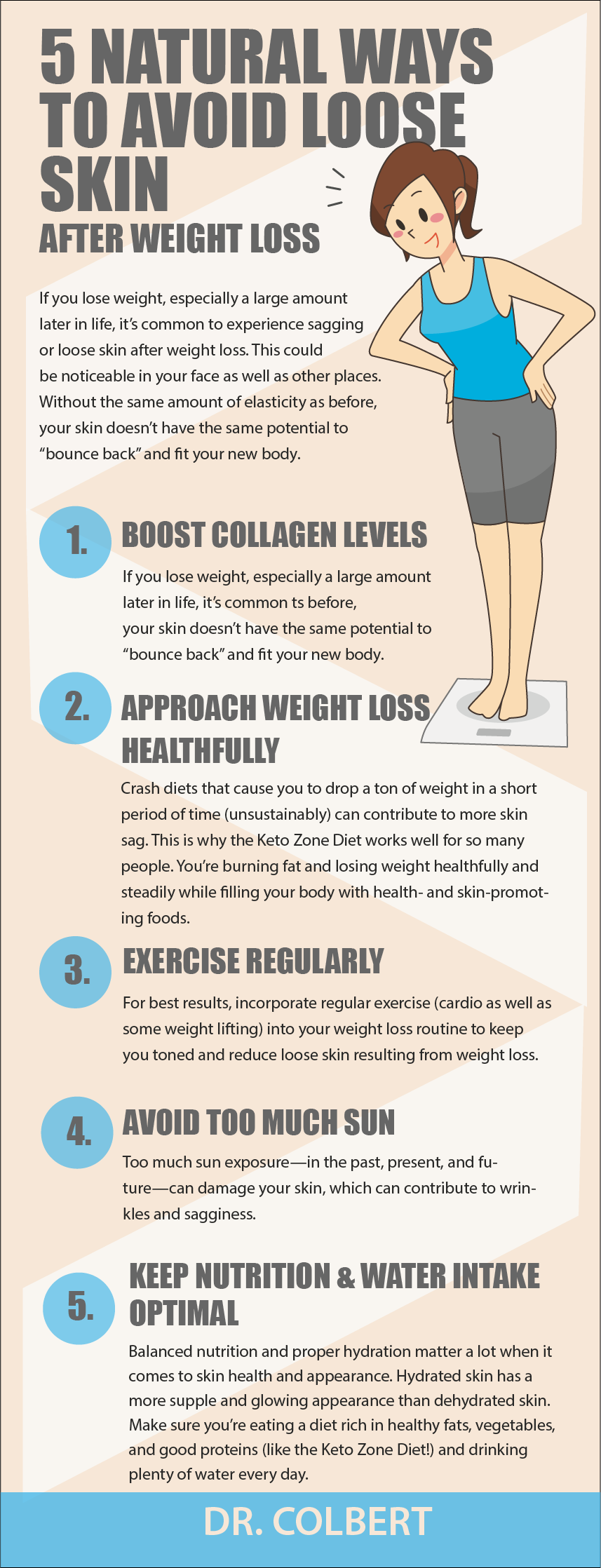
So, dealing with saggy or loose skin after weight loss is pretty normal, but chances are it bothers you. So here are some of the best preventative approaches to saggy skin. It’s best to already be utilizing these before and during your weight loss journey, but they are beneficial at any time in life.
1. Boost Your Collagen Levels
Since you’re losing collagen every year, it’s always a good idea to support more collagen in your body. You can do this by taking a trusted collagen supplement.
Daily collagen supplementation can help boost your levels to not only reduce signs of aging but also help keep skin healthy, strong, and supple as you lose weight. In a 2021 review of 19 studies with more than 1,100 participants, hydrolyzed collagen supplements improved skin hydration and elasticity compared with placebo [1].
Related: Collagen Benefits: 5 Science-Backed Reasons to Take It Daily
Some of the best times to take collagen are before bed or in the morning stirred into your coffee, but you can use it at any time.
Take a scoop of Keto Zone Hydrolyzed Collagen up to three times per day to support healthy, thick, and more elastic skin.
2. Approach Weight Loss Healthfully
Crash diets that cause you to drop a ton of weight in a short period of time (unsustainably) can contribute to more skin sag:
- When you lose weight extremely quickly, your skin doesn’t have time to shrink at the same rate as your body.
- And if you were very overweight before, it can leave you with more stretched and loose skin after weight loss.
- Losing weight through a healthy diet may be slightly slower than a crash diet, but it can give your skin time to adapt, reducing saggy skin from weight loss. Plus, it’s far healthier over the long-term.
This is why the Keto Zone Diet works well for so many people. You’re burning fat and losing weight healthfully and steadily while filling your body with health- and skin-promoting foods.
3. Engage in Regular Exercise
Collagen is at the foundation of your muscles as well! So daily exercise helps tone your muscles to reduce appearance concerns related to saggy skin.
For best results, incorporate regular exercise (cardio as well as some weight lifting) into your weight loss routine to keep you toned and reduce loose skin resulting from weight loss.
4. Avoid Too Much Sun
Too much sun exposure, past and present, can damage your skin and break down collagen, which contributes to wrinkles and sagginess.
Obviously you can’t change your past sun exposure, so start today by limiting it and, especially, avoiding sunburns.
5. Keep Your Nutrition and Water Intake Optimal
Balanced nutrition and proper hydration matter a lot when it comes to skin health and appearance. Hydrated skin has a more supple and glowing appearance than dehydrated skin.
Make sure you’re eating a diet rich in healthy fats, vegetables, and good proteins (like the Keto Zone Diet!) and drinking plenty of water every day.
Watch: Collagen for Healthier Skin
In this short clip, we explain what goes into my Vanilla Collagen Powder, Types I, II, and III collagen from marine peptides and chicken collagen, and how it is designed to support healthy skin, hair, nails, and joints.
Bottom Line
There are a few factors in skin health you can’t control, including natural aging and genetics. But the above tips focus on things you can do to support stronger, firmer, healthier skin, which is key in reducing the amount of loose skin after weight loss.
Frequently Asked Questions
Does loose skin go away after weight loss?
Mild loose skin often improves over time, especially when weight comes off gradually and you build muscle with strength training. After very large weight loss, the skin may not fully shrink back, and some people choose body contouring surgery. Supporting collagen, eating enough protein, and staying hydrated give your skin the best chance to adapt.
Does collagen really help with loose skin?
Research is encouraging. A 2021 review of 19 studies found that hydrolyzed collagen supplements improved skin hydration and elasticity compared with placebo. In one trial, women ages 35 to 55 who took collagen peptides daily for 8 weeks had better skin elasticity than women who took a placebo.
How much collagen should I take per day?
Most skin studies used about 2.5 to 10 grams of hydrolyzed collagen a day. I personally take two scoops of collagen powder daily, often stirred into coffee or a smoothie. Consistency over several months matters more than the exact time of day.
How fast can I lose weight without getting loose skin?
A steady pace of about 1 to 2 pounds per week is a healthy goal for most people. Losing weight more slowly gives your skin time to adapt and helps you keep muscle, which fills out the skin and keeps you looking toned.
What nutrients support skin elasticity?
Your body needs enough protein to build collagen, plus vitamin C, which is required for collagen production. Healthy fats like omega-3s, colorful vegetables rich in antioxidants, and plenty of water also support firm, supple skin.
References
- de Miranda RB, et al. Effects of hydrolyzed collagen supplementation on skin aging: a systematic review and meta-analysis. Int J Dermatol. 2021.
- Proksch E, et al. Oral supplementation of specific collagen peptides has beneficial effects on human skin physiology: a double-blind, placebo-controlled study. Skin Pharmacol Physiol. 2014.
- Proksch E, et al. Oral intake of specific bioactive collagen peptides reduces skin wrinkles and increases dermal matrix synthesis. Skin Pharmacol Physiol. 2014.
- Varani J, et al. Decreased collagen production in chronologically aged skin: roles of age-dependent alteration in fibroblast function and defective mechanical stimulation. Am J Pathol. 2006.
This article is for educational purposes only and is not medical advice. Talk with your own doctor before changing your diet, starting a supplement, or changing any medication. These statements have not been evaluated by the Food and Drug Administration. Products mentioned are not intended to diagnose, treat, cure, or prevent any disease.
Was this helpful?
Get Dr. Colbert's weekly health tips
Simple, faith-filled health tips in your inbox once a week. Plus a free gift: the 21-Day Keto Zone Challenge.
Unsubscribe anytime. We never share your email.
What stood out to you most, and have you tried any of this yourself?
Tell us on Facebook